Think about your house for a moment. If every single light turned on with just one switch, you’d probably think that’s pretty wasteful, right? And yet, that’s exactly how most standard HVAC systems operate—treating your entire home as one big room that needs to be heated or cooled all at once.
A zone control system fixes this. It’s like giving your heating and cooling a set of individual switches for different areas of your home.
Understanding Your Home's Climate Control Problem
Most of us have experienced it. The upstairs is sweltering in the summer, but the basement feels like a meat locker. Or maybe you're cranking up the heat in a rarely used guest room just to keep the living room comfortable. This isn't just an annoying comfort problem; it's a huge waste of energy and money.
A standard HVAC system relies on a single thermostat. That thermostat can only read the temperature in one spot, so it forces your furnace or AC to run until that one area is satisfied, completely ignoring what's happening everywhere else.
This is where a zone control system comes in. Also known as an HVAC zoning system, it cleverly divides your home's ductwork into separate areas, or "zones," that can be heated or cooled independently of one another. As more homeowners look for smarter, more efficient ways to stay comfortable, this market is booming—valued at USD 3.5 billion in 2024, it's expected to more than double to USD 6.8 billion by 2033.
Customized Comfort, Right Where You Need It
Imagine each zone as its own little climate-controlled territory. Each one gets its own thermostat, giving you the power to set different temperatures for different parts of your home, all at the same time.
A zone control system gives you the power to stop heating empty guest rooms or cooling a chilly basement. It redirects conditioned air only to the occupied spaces that need it, creating personalized comfort while cutting down on wasted energy.
This targeted approach delivers a few key wins:
- Ends Hot and Cold Spots: It finally puts an end to those frustrating temperature battles between floors and rooms. For more on this, check out our guide on professional air balancing services.
- Slashes Energy Waste: Why pay to heat or cool rooms you aren't even using? A zoning system runs less often, which means lower utility bills every month.
- Boosts Personal Comfort: Family members can finally set the temperatures they prefer in their own spaces. Consider the thermostat wars officially over.
To make it even clearer, let's break down the advantages.
Zone Control System Benefits at a Glance
This table sums up the core benefits you'll see after installing a zone control system, highlighting its impact on your home's comfort, costs, and even the lifespan of your HVAC equipment.
| Benefit | Impact on Your Home |
|---|---|
| Personalized Comfort | Ends thermostat battles; everyone can set their own preferred temperature in their zone. |
| Energy Savings | Stops wasting money heating or cooling unused rooms, potentially saving up to 30% on utility bills. |
| Consistent Temperatures | Eliminates frustrating hot and cold spots, ensuring even comfort from room to room and floor to floor. |
| Longer HVAC Lifespan | Reduces wear and tear by allowing your furnace and AC to run less often and more efficiently. |
Ultimately, a zone control system puts you back in charge of your home's climate, room by room. It’s a smarter way to manage comfort and one of the most effective upgrades you can make for both your wallet and your well-being.
How a Zone Control System Directs Conditioned Air
So, what exactly is a zone control system doing? It helps to think of it like an air traffic control system for your home’s ductwork. Instead of sending one big blast of air everywhere, it’s constantly coordinating to send heated or cooled air exactly where it’s needed—and nowhere else. This whole operation hinges on three core components working together in perfect sync.
This infographic really nails how a zoned system gets rid of the waste you see in a standard HVAC setup.
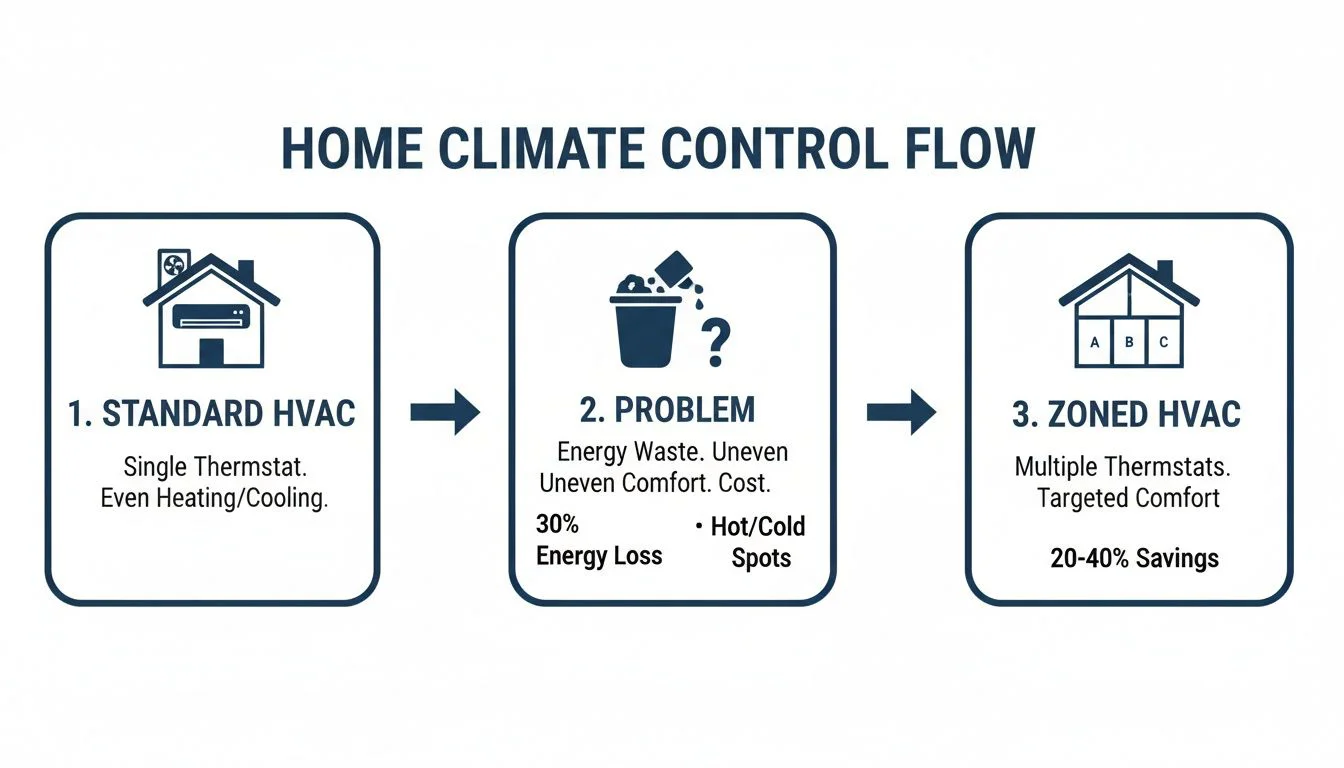
You can see the clear shift from a clunky, one-size-fits-all approach to a much smarter, targeted method of climate control. Let's break down the parts that make this all happen.
The Three Key Components of Zoning
A zone control system’s magic comes from the seamless chatter between its parts. Each piece has a specific job, from sensing the temperature in a room to physically redirecting the airflow.
- Zone Thermostats (The Ground Crew): Instead of one thermostat bossing everyone around, each designated "zone" gets its own. This thermostat’s only job is to monitor the temperature in its specific area—whether that’s the upstairs bedrooms, the main floor, or a single home office.
- The Central Control Panel (The Control Tower): This is the brain of the whole operation. It takes in all the temperature readings from the individual zone thermostats and uses that intel to decide which areas need heating or cooling.
- Automated Dampers (The Gates): These are basically motorized valves installed right inside your ductwork. When the control panel gives an order, these dampers automatically swing open or shut to either allow or block air from flowing to a particular zone.
This trio works together in a constant feedback loop. If a zone’s thermostat reports it’s too cold, the control panel tells the furnace to fire up and orders the dampers to direct warm air only to that zone, keeping the others closed off. This process is a huge part of understanding how a central air conditioner works in a more advanced, zoned setup.
A Step-by-Step Airflow Example
Let's walk through a super common scenario to see how these components manage your home’s climate in real time.
Imagine it’s a scorching summer afternoon. The upstairs bedrooms (Zone 1) are getting baked by the sun and are way warmer than the cooler, shaded living room downstairs (Zone 2).
A zone control system transforms your HVAC from a blunt instrument into a precision tool. It stops the cycle of overheating one room just to cool another, ensuring every part of your home gets just the right amount of conditioned air.
Here’s how the system kicks into gear:
- The thermostat in Zone 1 reads 78°F, which is way above its 72°F setting. It sends a "call for cool" signal to the central control panel.
- Meanwhile, the Zone 2 thermostat reads a comfortable 71°F. It sends a "satisfied" signal, basically telling the system, "I'm good."
- The control panel processes this information. It immediately activates the central AC and sends a signal to the dampers.
- The damper leading to Zone 1 opens, letting that cool air rush to the hot upstairs rooms.
- At the same time, the damper leading to Zone 2 closes, stopping the already-cool living room from turning into an icebox.
Once the upstairs thermostat finally hits its 72°F target, it signals the control panel. The panel then closes the Zone 1 damper and shuts off the air conditioner. This smart management of airflow makes sure you’re only using energy when and where it's truly needed, maximizing both your comfort and your system's efficiency.
The Real-World Benefits of HVAC Zoning
Okay, so we've talked about the dampers, panels, and thermostats. But what does a zone control system actually feel like in your home? The real magic isn't in the hardware—it's in solving those everyday frustrations while putting money back in your pocket. It’s about real, tangible comfort and savings you can actually measure.

Think about those classic household comfort battles. Zoning finally provides a truce. Imagine eliminating that stuffy, sweltering upstairs bedroom in the summer while keeping the main floor perfectly cool. That's what zoning does.
Or picture a cold winter evening. You can crank up the heat in the living room for a family movie night without spending a single cent heating empty guest rooms or that chilly, unused basement. This targeted approach is where its true value lies.
Customized Comfort and Lifestyle Improvements
A zone control system fundamentally changes how you interact with your home’s climate. It shifts you from being a passive victim of a one-size-fits-all temperature to being the active director of your own environment.
The key lifestyle improvements are pretty immediate:
- Ending the Thermostat Wars: When everyone gets to control their own space—like a home office, a nursery, or the master suite—those arguments over the central thermostat setting just disappear.
- Accommodating Different Schedules: If you work from home while everyone else is out, you only need to heat or cool your workspace instead of the entire house. It just makes sense.
- Improving Sleep Quality: You can finally set a cooler temperature for the bedrooms at night, which doctors often recommend for better sleep, without turning the rest of the house into an icebox.
By managing temperatures in individual areas, zone control systems directly help to make your house more energy efficient and slash your overall heating and cooling bills. This isn't just a minor tweak; it's a major upgrade in both comfort and efficiency.
Significant Energy and Cost Savings
This personalized comfort has a direct and powerful impact on your wallet. When your HVAC system isn't working overtime to condition unused rooms, it simply runs less often and more efficiently.
According to the U.S. Department of Energy, a properly installed zone control system can slash your heating and cooling expenses by up to 30%. You literally stop paying to condition empty space, and those savings add up fast.
This potential for savings is a huge driver behind the industry's growth. The entire HVAC control system market, which includes zoning technology, was valued at a whopping USD 20.84 billion in 2023 and is projected to more than double to USD 44.10 billion by 2032. This rapid expansion shows just how many homeowners are catching on to the financial and comfort perks of zoning. You can discover more insights about the growing HVAC control market on snsinsider.com.
Finding the Right Zone Control System for Your Home
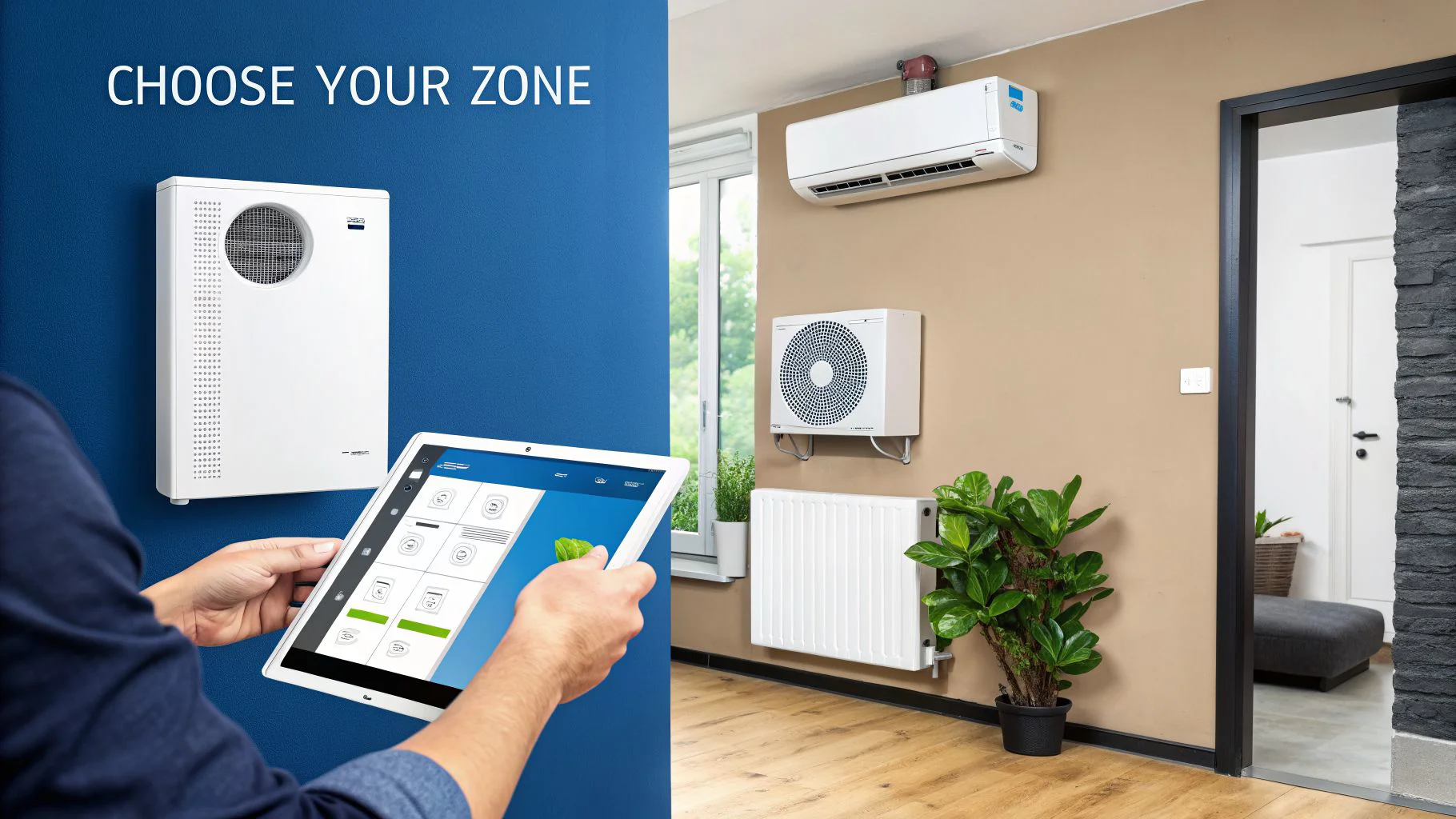
Choosing a zone control system isn't a one-size-fits-all decision. The best setup really comes down to your home's layout, the HVAC equipment you already have, and what your family needs to feel comfortable. By getting to know the main types of systems out there, you can pinpoint the one that makes the most sense for you.
When you're looking at these options, it helps to see it as part of a bigger picture. Checking out an ultimate guide on how to choose the right HVAC system for your home can give you great context. It ensures your new zoning solution will work seamlessly with your heating and cooling equipment for the best possible results.
Damper-Based Zoning Systems
This is the most common approach for homes that already have a forced-air furnace and central AC with ductwork. Think of it as a smart upgrade for your existing setup. We install motorized dampers right inside your ducts, and they open and close based on what the thermostats in each zone are telling them.
Damper-based systems are a fantastic choice for most single-family homes with ducts already in place. They hit that sweet spot of great performance and cost-effectiveness because they build on the equipment you already own.
Ductless Mini-Split Zoning
But what if your home doesn't have ducts? Or maybe you've built an addition, converted a garage, or have one of those stubborn "problem rooms" your main system just can't seem to keep comfortable. This is where ductless mini-split zoning really shines.
These systems use an outdoor condenser that connects to one or more indoor air handlers mounted on a wall or ceiling. Each indoor unit essentially creates its own zone and comes with its own remote control.
- Independent Control: Every indoor unit works on its own, giving you true room-by-room temperature management.
- High Efficiency: Ductless systems are famous for their energy efficiency since there's no air loss through leaky ductwork.
- Flexible Installation: They're perfect for home additions, older houses without ducts, or just supplementing your current system.
Ductless zoning is a powerful and efficient way to get room-by-room comfort without having to install or extend ductwork, making it a super adaptable solution for all kinds of home layouts.
Smart Zoning Systems
The latest step forward in home climate control is smart zoning. These systems take the same ideas from damper-based or ductless zoning and add a layer of advanced tech. They connect with smart thermostats, occupancy sensors, and even your smartphone. For a deeper dive on these advanced controls, you can check out our guide on programmable thermostats and controls.
Smart zoning systems actually learn your family's habits, automatically changing temperatures based on who's home and which rooms are being used. Some use "zone weighting" to deliver just the right amount of air, making sure the system runs as efficiently as possible. This kind of intelligent automation gives you the absolute best in both comfort and energy savings.
To make things a little clearer, we've put together a table that compares these three approaches side-by-side.
Comparing HVAC Zoning System Types
| System Type | Best For | Key Feature |
|---|---|---|
| Damper-Based | Homes with existing ductwork seeking whole-house zoning. | Uses motorized dampers inside ducts to control airflow to different areas. |
| Ductless Mini-Splits | Homes without ducts, additions, or for targeting specific problem rooms. | Each indoor unit creates its own independent temperature zone. |
| Smart Zoning | Tech-savvy homeowners wanting maximum efficiency and automation. | Integrates with sensors and smart thermostats to learn routines and adjust automatically. |
Each of these systems offers a unique way to solve common comfort problems in a home. Whether you're upgrading an existing system or designing a solution for a new space, one of these will likely be the perfect fit.
Understanding the Cost and Installation Process
When you start thinking about a zone control system, two big questions usually pop up right away: how much is this going to cost, and what’s the installation actually like? While every home is different, getting a handle on the main factors that drive the price and process will give you a much clearer picture of the investment.
The final cost really boils down to a few key things. The biggest one is the number of zones you want to create. A simple two-zone system—say, one for upstairs and one for downstairs—is naturally going to be less expensive than a more complex four-zone setup for a master suite, home office, living room, and basement.
Key Factors Influencing Cost
Your home's specific layout and what you’re already working with HVAC-wise also play a huge part. Here’s what a professional technician will look at:
- System Type: For most homes, retrofitting a damper-based system into existing ductwork is the most common and cost-effective path. If you're going with a ductless mini-split system for zoning, that's a whole different cost structure based on how many indoor units you need.
- Ductwork Accessibility: If your ducts are easy to get to in a basement or attic, the job will be simpler and faster. If access is tight, it might take a bit more labor to get those automated dampers in just the right spots.
- Equipment Condition: We also need to look at the age and condition of your furnace and air conditioner to make sure they'll play nice with a zoning upgrade.
Investing in a professional installation isn't just about getting the system up and running. It’s about making sure everything is properly balanced to protect your expensive HVAC equipment from damage and to get the most out of your comfort and long-term energy savings.
The Professional Installation Process
A pro installation is a lot more than just plugging things in; it’s a careful, step-by-step process designed to make the whole system work perfectly. It might sound disruptive, but a good crew knows how to work efficiently to keep the mess and inconvenience to a minimum.
The process usually goes something like this:
- System Design: First, a technician will walk through your home with you, talking about your family's lifestyle to figure out the most logical zones for your needs.
- Damper and Panel Installation: Next, our techs will access your ductwork to install the motorized dampers. They'll wire these back to the central control panel, which is the brain of the whole operation.
- Thermostat Placement: New thermostats get installed in each of your new zones to give you that pinpoint temperature control.
- System Balancing and Testing: This is the most important step, hands down. The technician fine-tunes the airflow, making sure no zone is getting blasted with too much air or starved for too little. This balancing act prevents pressure buildup that can damage your HVAC equipment and guarantees the system runs as efficiently as possible.
This careful, expert-led process is backed by our warranties and ensures your investment in a zone control system pays you back for years with reliable comfort and lower utility bills.
So, how do you know if a zone control system is the solution you’ve been looking for? The technology is impressive, but the real test is whether it actually solves the day-to-day comfort frustrations in your house.
Think of this as a practical checklist to help you self-diagnose your home's most common climate control issues. If you find yourself nodding along to more than one of these points, it’s a pretty strong sign that zoning could make a huge difference. These are the classic warning signs that your single-thermostat system just isn’t cutting it anymore.
Signs You Need an HVAC Zoning System
Do any of these scenarios sound a little too familiar? A zone control system directly addresses these common household headaches, turning those daily frustrations into solvable problems.
- You Have Major Temperature Swings Between Floors: This is the number one complaint we hear. If your upstairs is always 10 degrees warmer than the downstairs in summer, or the basement feels like a freezer, your system can't distribute conditioned air evenly.
- Certain Rooms Are Always Too Hot or Cold: It’s that one bedroom at the end of the hall, the sun-drenched home office, or the finished basement that never seems to feel comfortable. Zoning sends air directly to these problem spots, but only when they need it.
- Family Members Fight Over the Thermostat: Constant battles over a single thermostat setting are a clear giveaway that different people in your home need different temperatures to feel comfortable. Zoning gives everyone their own control.
- You Pay to Heat or Cool Unused Rooms: Are you running the furnace for the entire house just to keep the living room warm while guest rooms and other spaces sit empty? Zoning stops this kind of energy waste cold.
If your home has rooms with vaulted ceilings, large banks of windows, or a sprawling, multi-level layout, it's almost guaranteed to have inconsistent temperatures. A zone control system is specifically designed to overcome these architectural challenges.
These issues are more than just minor annoyances—they represent real wasted energy and a constant compromise on your family’s comfort. If these problems resonate with you, it’s time to stop settling. A professional consultation is the logical next step to finally getting the consistent comfort you deserve.
Frequently Asked Questions About HVAC Zoning
You’ve got questions, and that’s a good thing. Deciding to add a zone control system is a big step, so feeling fully informed is key. We’ve pulled together the most common questions we hear from homeowners to clear up any lingering doubts and help you feel confident about your decision.
Can a Zone Control System Be Added to My Existing HVAC System?
Yes, in most cases, you absolutely can. One of the best things about modern zoning is that a damper-based system can often be retrofitted right into your home’s existing ductwork. This is how most people add zoning without having to replace their entire heating and cooling setup.
A qualified technician will need to take a look at your current furnace and air conditioner to make sure they're compatible. After that, they’ll map out a custom zoning plan that works hand-in-glove with your equipment to deliver that pinpoint comfort you're looking for.
How Many Zones Should My House Have?
There's no magic number here—the ideal amount of zones really comes down to your home’s layout and your family's daily routines.
A common starting point is creating one zone per floor, which works great for many homes. But you can get more specific. Think about areas with unique needs, like:
- A master suite you like to keep cooler for sleeping.
- A home office that gets blasted by the afternoon sun and turns into a sauna.
- A finished basement that’s naturally cool and barely needs AC.
A professional can walk through your home with you and help figure out the most logical and effective zoning strategy to get the biggest bang for your buck.
The goal of zoning isn't just to add more thermostats; it's to create distinct climate areas that match how you actually live in your home. A professional consultation helps define these zones for optimal comfort and efficiency.
Will a Zone Control System Damage My HVAC Equipment?
That’s a fair question, but the short answer is no—as long as it’s installed correctly by a certified professional. A critical part of any proper installation is including a bypass system. This little component is a big deal; it manages the static air pressure in your ducts to protect your furnace and AC from unnecessary strain.
When a zone system closes off dampers, it can cause pressure to build up. The bypass gives that extra air a safe escape route to recirculate, which prevents damage to sensitive parts like the blower motor. In fact, a well-designed zoning system can actually help your equipment last longer. By running less often and more efficiently, it reduces overall wear and tear over time.
Ready to put an end to thermostat wars and inconsistent temperatures? The licensed experts at Neighborhood Plumbing, HVAC, and Electrical can design and install a zone control system perfectly suited to your Central Minnesota home. Visit us online or call today to schedule a consultation and take the first step toward personalized comfort.