If you’ve spotted your furnace exhaust pipe dripping water, your first reaction might be a little bit of panic. But don't grab the phone to call for an emergency repair just yet. Whether that drip is a sign of a serious problem or a perfectly normal function all depends on what kind of furnace you have. For modern, high-efficiency furnaces with those white PVC pipes, a little dripping is actually a good thing. But if you see water coming from an older furnace's metal pipe, that's a red flag you can't ignore.
Is a Dripping Furnace Exhaust Pipe a Problem?
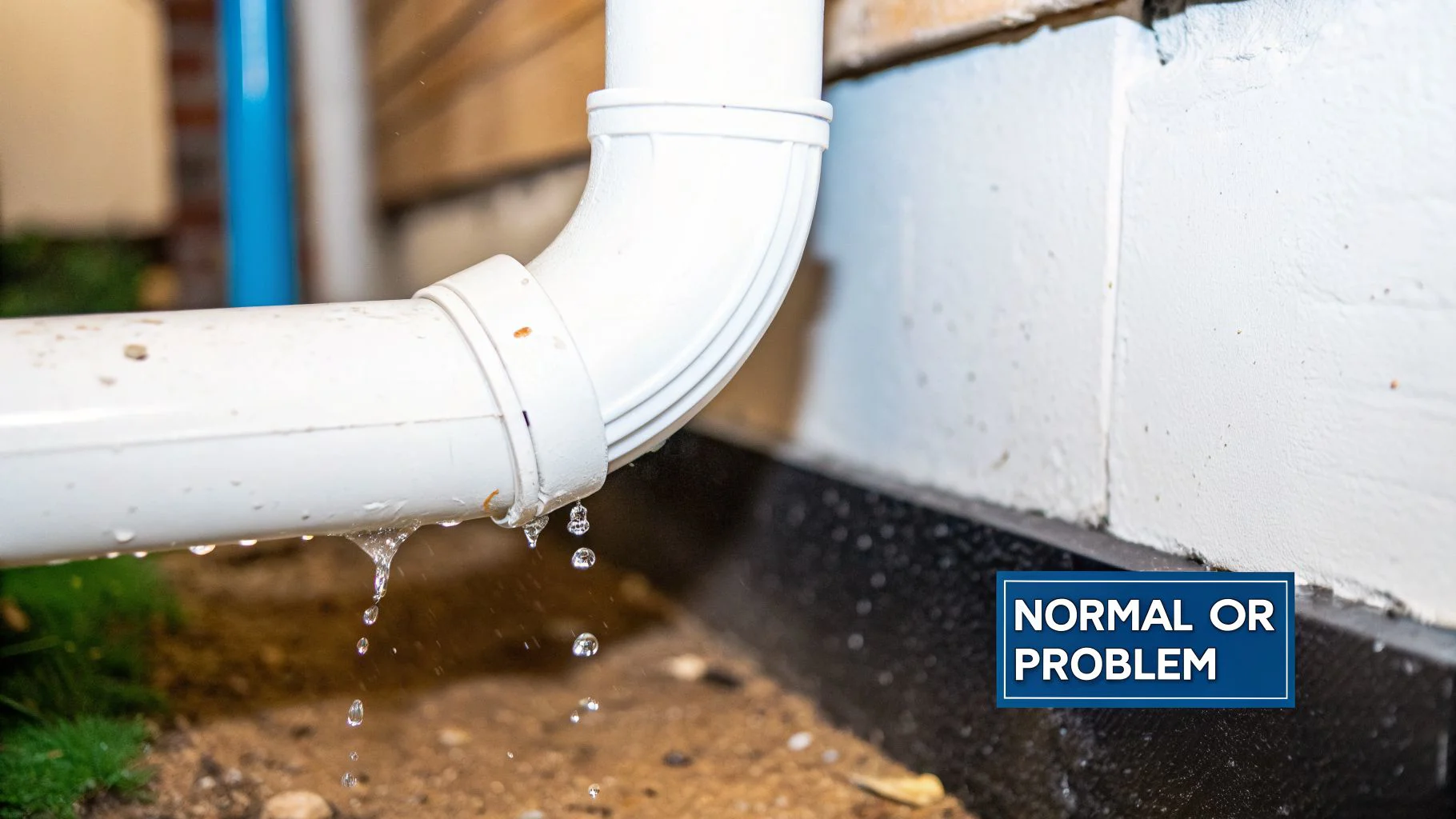
The first step to figuring out what’s going on is to know your furnace type. The answer lies in whether you have a newer, high-efficiency condensing furnace or an older, standard-efficiency model. These two systems are built completely differently and handle their exhaust in opposite ways.
To put it simply, think about a cold can of soda on a humid summer day. A high-efficiency furnace is so good at its job—pulling every last bit of heat from its exhaust gases—that water vapor condenses into liquid, just like the moisture on that can. This very process is what allows them to hit those impressive 90%+ AFUE (Annual Fuel Utilization Efficiency) ratings.
Quick Guide to Dripping by Furnace Type
To quickly tell if the dripping is normal or not, just check what kind of furnace you have. This table breaks down what you need to know at a glance.
| Furnace Type | Exhaust Pipe Material | Is Dripping Normal? | Primary Cause of Dripping |
|---|---|---|---|
| High-Efficiency Condensing Furnace | White PVC Plastic | Yes (a small amount from the exterior vent) | Normal condensation from cooled exhaust gases |
| Standard-Efficiency Furnace | Metal (Single-Wall or B-Vent) | No (this is a serious issue) | Improper venting, flue damage, or backdrafting |
Use this as a starting point. If your situation falls into the "problem" category, it’s time to dig a little deeper or call a professional right away.
High-Efficiency Furnaces and Normal Condensation
High-efficiency furnaces, which you can easily spot by their white PVC exhaust pipes, are specifically designed to create and manage this condensation. In fact, these units have become the go-to choice, making up over 90% of new residential gas furnace installations since 2013 thanks to federal energy standards.
They work by cooling the hot exhaust gases down below 130°F. This cooling process squeezes out a surprising amount of water—often between one to two gallons every single day during a cold Minnesota winter. That slightly acidic water is then channeled safely away through a dedicated drain system. So, a little bit of water dripping from the exterior vent termination is just a sign that your furnace is running at peak efficiency.
When Dripping Is a Red Flag
For older, standard-efficiency furnaces with metal flue pipes, it's a completely different story. These systems are designed to keep their exhaust gases incredibly hot (well over 300°F) specifically to prevent any water from forming inside the flue.
So, if you see water dripping from a metal flue, it's always a problem.
A dripping metal flue means the exhaust is cooling down way too much before it can escape. This can quickly lead to corrosion, blockages from ice or debris, and a dangerous risk of carbon monoxide leaking back into your home. It’s a critical warning that needs an immediate professional inspection.
Even if you have a PVC pipe, you don't want a persistent drip going unmanaged. A constant leak can saturate the ground, damage your home's foundation, or seep into walls. Understanding what happens when drywall gets wet shows just how quickly a "small" drip can turn into a big, expensive headache.
Common Causes of Excessive Dripping
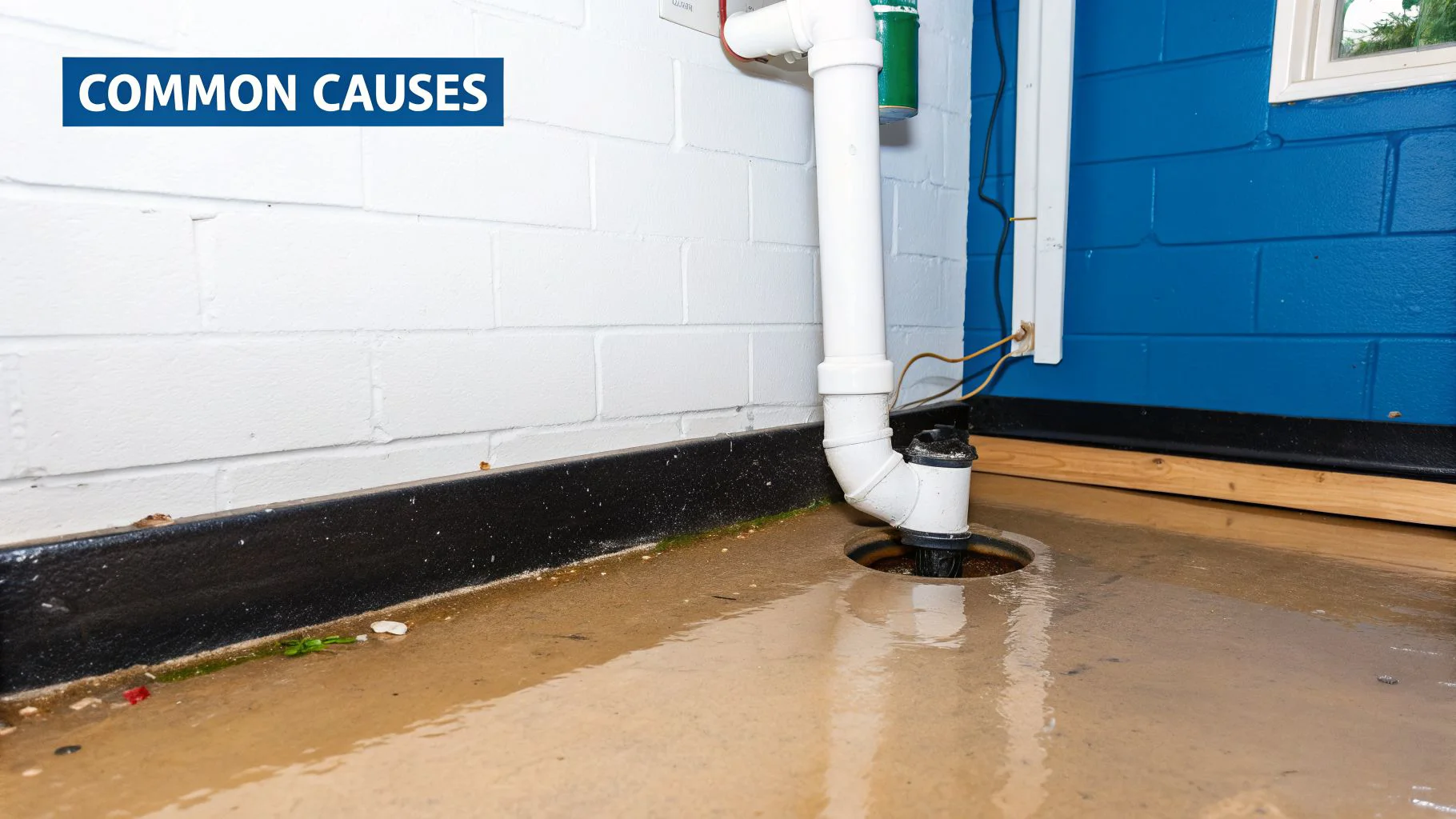
Sure, a little water coming from a high-efficiency furnace exhaust is perfectly normal. But when you notice a sudden jump in dripping, a steady puddle forming on your basement floor, or water showing up inside your house—that’s a clear signal something’s off. This isn't just a minor mess; it's a warning sign from your HVAC system, and it definitely needs your attention.
Getting to the root of the problem is the first step. Several common issues can turn normal condensation into a leak that just won't quit. Let's walk through the most frequent culprits behind a furnace exhaust pipe dripping where it shouldn’t.
Blocked Condensate Drain Line or Trap
Think of the condensate drain system as the dedicated plumbing for your furnace. Your high-efficiency unit creates a fair amount of acidic water as it runs, and all that water has to go somewhere safe. It travels through a small tube and usually passes through a U-shaped pipe called a condensate trap.
Over time, this narrow little pathway can get clogged up with all sorts of gunk—algae, mold, dust, you name it. When that happens, the water has nowhere to go. It starts to back up, eventually overflowing from the trap or leaking out of the pipe joints. It’s a lot like a clogged sink drain, but instead of soapy water, you’ve got acidic condensate that can wreck your furnace parts and your floor.
Improper Vent Pipe Slope
Gravity is a surprisingly critical part of your furnace’s drainage system. For a high-efficiency furnace, that white PVC exhaust pipe needs to be installed with a very specific, slight downward slope back toward the furnace. The rule of thumb is about a quarter-inch of drop for every foot of pipe.
This exact slope is what lets condensation flow back into the furnace’s internal drain, where it can be handled properly. If the pipe is perfectly level—or worse, slopes away from the furnace—water will just sit inside the vent. That trapped water will either freeze up in cold weather and create a dangerous blockage, or it’ll find the nearest joint and start leaking out.
Exterior Vent Blockage
Especially here in Minnesota, what’s happening outside can cause big problems for your furnace inside. The spot where the vent pipe exits your house is an open invitation for all kinds of blockages.
Common culprits include:
- Heavy Snowfall: Drifting snow can easily bury a low-mounted vent, trapping exhaust gases inside.
- Ice Formation: As your furnace runs, moisture in the warm exhaust can freeze right at the vent opening, especially during freeze-thaw cycles. This creates a solid ice dam.
- Debris: Leaves, grass clippings kicked up by a lawnmower, or even a bird deciding it's a great spot for a nest can plug up the opening.
When the vent gets blocked, the exhaust and the water vapor it carries have no choice but to go back into the system. This forces leaks from internal pipe joints and can even cause your furnace to shut itself down on a safety trip—usually when it's coldest outside.
Cracked PVC Pipe or Fittings
PVC pipe is tough, but it's not invincible. The pipes and fittings that make up your furnace’s vent system can get damaged. Maybe someone bumped it while moving storage boxes, or a stray baseball hit the side of the house. Sometimes, the material just gets brittle with age.
Even a tiny hairline crack in a pipe or a poorly glued joint can turn into a major leak. The condensate water itself is also mildly acidic, which can slowly eat away at improperly applied PVC cement over the years. Eventually, the connection gives out and starts to drip.
Why Metal Furnace Flues Should Never Drip
While you might hear that it's normal for some furnaces to produce water, that rule absolutely does not apply to older, standard-efficiency models. If your furnace has a metal exhaust flue and you see it dripping, that’s a major red flag. It’s a sign that something is seriously wrong and needs your immediate attention.
These older furnaces, typically with an AFUE rating of 80% or less, were built on a totally different principle. They're designed to blast incredibly hot exhaust gases—often over 350°F—up and out of the flue. All that heat is intentional. It keeps the exhaust so hot that any water vapor stays as a gas until it’s safely outside your home, preventing condensation from ever forming inside that metal pipe.
The Danger of Condensation in Metal Pipes
So, when you see a furnace exhaust pipe dripping water from a metal flue, it means the whole system is failing at its most basic job. That drip tells you the exhaust gases are cooling down way too fast, which allows acidic, corrosive water to form inside the pipe. This isn’t just a harmless little leak.
The real danger isn't the water itself—it's what that water represents. The acidic condensate eats away at the metal flue from the inside out. This corrosion leads to rust, holes, and weak spots in the very pipe that’s supposed to be protecting your family from toxic combustion gases.
Improper Installation and Carbon Monoxide Risks
So why would the exhaust cool down prematurely? It almost always points back to a problem with the installation. Research shows that for these conventional furnaces—still found in about 40% of Central Minnesota homes built before 2010—improper vent sizing or slope is a common culprit. In fact, Energy Star audits have found this flaw in 15-20% of these older systems.
If the metal pipe doesn't have a consistent upward slope of 1/4-inch-per-foot, or if it's too wide for the furnace, the hot gases slow down, cool off, and create condensation that drips back down. You can learn more about how gas furnace leaks happen by reading expert explanations of the process on Burgesons.com.
Once that acidic water starts corroding the pipe, it’s only a matter of time before it creates a direct path for carbon monoxide (CO) to leak into your living space. This is a huge safety hazard, as poorly vented appliances are a leading cause of home fires and CO poisoning. You can learn more about the connection between your furnace and this invisible danger by checking out our guide on how a furnace can leak carbon monoxide.
A dripping metal flue is never a "wait and see" kind of problem. It requires an immediate inspection from a qualified pro to figure out what’s wrong and make sure your home is safe. A trained technician needs to get their eyes on that flue and assess the safety of the entire system before it leads to a life-threatening situation.
Simple DIY Checks Versus When to Call a Pro
So, you’ve spotted water dripping from your furnace exhaust pipe. It's natural to want to jump in and figure it out yourself. But before you reach for the toolbox, it’s really important to know the difference between a quick, safe visual check and a repair that’s best left to a licensed professional. Knowing where that line is protects your furnace, your home, and your family.
Your first move is easy: figure out what kind of furnace you have. As we've covered, a high-efficiency furnace uses white PVC pipes, while a standard-efficiency furnace has a metal flue. This is the single most important detail in deciding what to do next.
This simple flowchart shows you exactly what to do if you have a metal flue pipe.
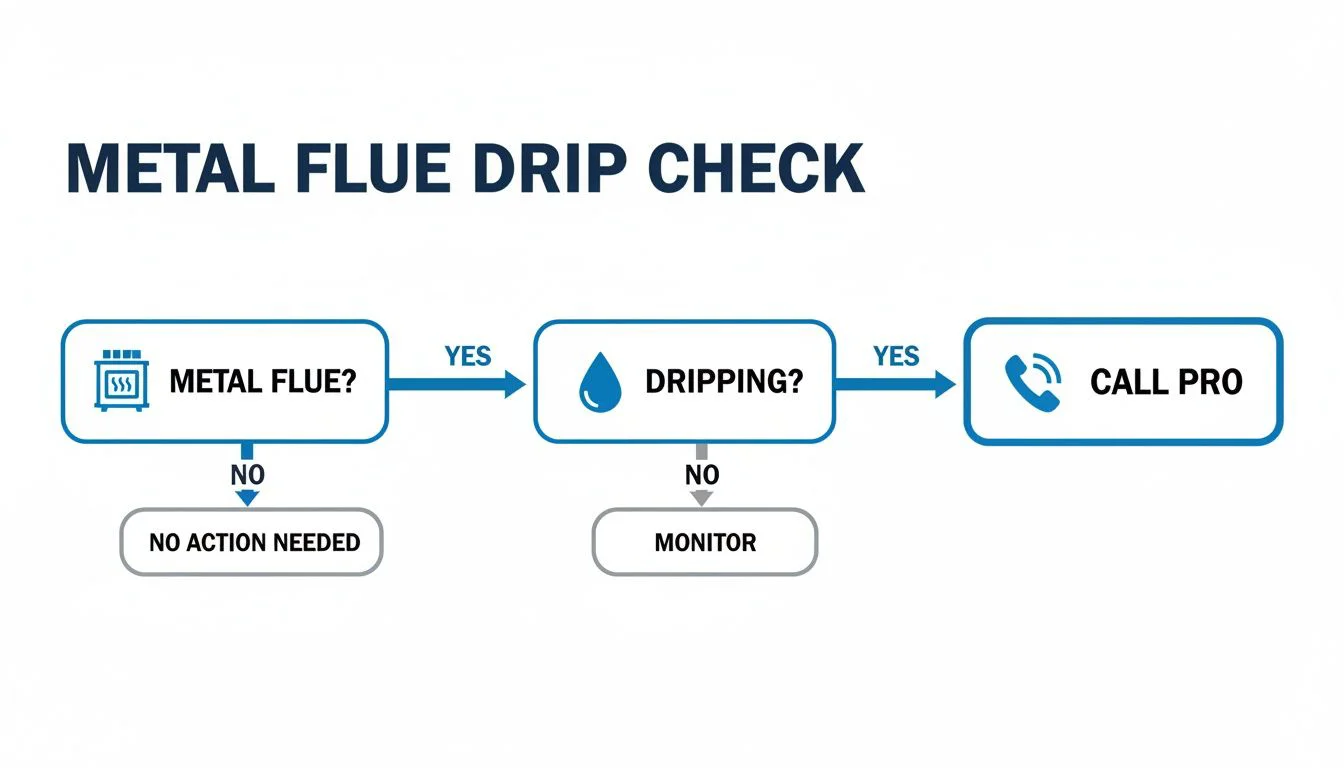
The takeaway here is straightforward: if you have an older furnace with a metal flue, any dripping is an immediate red flag. It’s a safety issue that needs a professional diagnosis, no ifs, ands, or buts.
Safe DIY Inspection Checklist
If you’ve got a modern high-efficiency furnace with those white PVC pipes, there are a few things you can safely check on your own. This quick once-over can often help you find the source of the leak without you having to mess with any complicated parts.
- Visually Inspect Pipes: Just use your eyes. Look over the PVC vent pipes for any obvious cracks, holes, or connections that look loose. Pay extra attention to the joints where two sections of pipe come together.
- Check the Condensate Pump: A lot of basements have a little box near the furnace—that’s the condensate pump. If its reservoir is full of water, the pump might have failed or simply lost power, which causes water to back up.
- Look for Drain Tube Blockages: Follow that small, clear tube running away from the furnace. Check if it's kinked, bent, or if the end is gunked up with grime where it goes into your floor drain.
These checks are all about observation. If you see a super obvious issue, like a clogged end on that drain tube, you can usually clear it out yourself. But that’s pretty much where any DIY work should end.
When to Immediately Call a Professional
Some jobs are strictly for the pros. Trying to tackle them yourself can cause even more damage or, worse, create a serious safety hazard.
Never try to take apart vent pipes, mess with electrical wiring, or change the slope of the exhaust vent. These systems are set up with precision, and a wrong move can lead to equipment failure or even a carbon monoxide risk. Anything beyond a simple visual check is a job for a licensed technician.
Clogged condensate lines and pumps that have given up are a massive source of leaks. In fact, they’re responsible for 25% of all water leak service calls we get for high-efficiency systems. These pumps, which are essential in so many Minnesota homes, often only last about 5-7 years before they fail.
If your quick checks don't reveal an obvious, easy fix, it's time to call in an expert. Our guide on how to know when you need a furnace repair has more signs to look out for. A professional has the right tools and training to figure out the problem correctly and make sure the repair is done safely and up to code.
Preventative Maintenance for a Trouble Free Winter
The best way to deal with a dripping furnace exhaust pipe is to make sure it never becomes a problem in the first place. A little bit of proactive care is your best defense against a mid-winter breakdown and those expensive emergency repair calls.
Think of it less like a chore and more like a small investment in your home's safety and your own peace of mind when Minnesota's temperatures start to plummet. This is especially true for high-efficiency furnaces, which naturally create acidic condensation that can cause some real headaches if you ignore it.
Over time, that moisture can lead to algae and sludge building up inside the condensate line. Eventually, that gunk creates the exact kind of blockage that sends water backing up and leaking all over your utility room.
Your Seasonal Maintenance Checklist
You can head off a lot of the most common furnace problems with just a few simple checks each fall, right before the heating season really kicks into high gear. This short list covers the key spots that keep your furnace’s venting and drainage systems working like they should.
- Clean the Condensate Line: This is one of the easiest and most effective things you can do. Just pour a mix of one part distilled white vinegar and three parts water down the condensate line’s access port. The vinegar solution helps dissolve any algae or sludge that’s starting to form, clearing out clogs before they can even start.
- Keep Exterior Vents Clear: Your furnace has to breathe. Make a habit of checking the spots where your exhaust pipes terminate outside. Clear away any leaves, overgrown bushes, or other debris. Once the snow flies, you’ll want to check on them regularly to knock away any snow drifts or ice that could block airflow.
- Change Your Furnace Filter Regularly: A dirty filter puts a strain on your entire HVAC system. It chokes off airflow, forcing your furnace to work way harder than it needs to. This can cause it to overheat and puts unnecessary wear and tear on all its parts. A clean filter is key for peak performance.
Think of your furnace vent like the exhaust pipe on your car. If it gets plugged with snow, the engine can’t run. Your furnace is the same—a blocked vent means it can't safely expel combustion gases, causing it to shut down or, in a worst-case scenario, send those gases back into your home.
The Value of a Professional Tune-Up
While these DIY steps are a great start, they don't take the place of a professional tune-up. An annual service call lets a trained technician give your entire system a thorough inspection, checking everything from the heat exchanger and gas pressure to the electrical connections.
They have the experience to spot issues an untrained eye would easily miss, like a vent pipe that’s slowly lost its proper slope or the early signs of corrosion. To get a better idea of what a full-service check-up includes, take a look at our guide on the benefits of yearly furnace maintenance.
Combining your own seasonal checks with an annual professional inspection is the most reliable way to prevent a dripping furnace exhaust pipe and guarantee a warm, trouble-free winter. It’s all about catching those small issues before they snowball into big, expensive emergencies.
Your Guide to Furnace Repair and Safety
So, we’ve walked through what it means when you see that furnace exhaust pipe dripping. Sometimes, a little water from a modern PVC vent is just your high-efficiency system doing its job. But if you see any dripping from an older metal flue, that’s a red flag telling you to call a pro, and fast. Your safety comes first, and understanding the difference is key to keeping your home and family protected.
As your local, fourth-generation home service experts here in Central Minnesota, we’re not just here to make repairs. We believe in giving you the knowledge and peace of mind to feel confident in your home. Our licensed technicians are ready to go 24/7 for any heating emergency you might run into.
Your home’s safety goes beyond just the furnace. Getting a handle on potential issues all over your property is the best way to prevent bigger headaches down the road. For a wider look at protecting your home, it’s a smart move to learn how to detect water leaks to keep everything high and dry.
With Neighborhood Plumbing, HVAC, and Electrical, you’re never in the dark. We give you upfront pricing every time, stand behind our work with solid warranties, and are committed to keeping your home comfortable. Don’t leave your family’s safety to guesswork.
Whether you need an emergency fix, a system tune-up, or just some honest advice, let our team make sure your furnace is running safely and efficiently. We’re your trusted partner for all things heating and cooling, and we’re here to build a relationship you can count on.
Frequently Asked Questions
Got a few quick questions about that dripping furnace pipe? You're not the only one. Here are some straightforward answers to the questions we hear most often from homeowners.
How Much Does It Cost To Fix a Leaking Furnace Exhaust?
This is one of those "it depends" situations. The final cost really hinges on what's causing the leak. If it’s just a simple clog in the condensate line, you might only be looking at a basic service call fee.
However, if a part has failed—like the condensate pump—you could be looking at a replacement cost of several hundred dollars. More serious issues, like an improperly sloped vent or, worst-case, a cracked heat exchanger, can lead to much bigger repair bills or even a full furnace replacement. Always ask for a clear, upfront quote before any work begins.
Can I Use Tape To Patch a Cracked PVC Exhaust Pipe?
No, you should never use tape for a permanent fix on a cracked PVC exhaust pipe. I get the temptation—it seems like a quick patch—but it’s just not a safe or reliable solution. While you might find specialty PVC repair tape, it’s only meant for a very temporary emergency seal, not a long-term repair.
These pipes carry acidic condensate and combustion gases. A taped patch can fail, leading to water damage or dangerous exhaust leaks. The entire damaged pipe section must be professionally replaced to ensure a secure, airtight seal and prevent future problems.
Is the Water Dripping From My Furnace Exhaust Dangerous?
The water itself isn't immediately toxic, but it is mildly acidic. It can cause some minor skin irritation, and over time, it will absolutely eat away at surfaces like concrete floors or drywall.
The real danger isn't the water—it's what the leak is telling you. A blockage or leak can shut your furnace down, cause serious water damage in your home, or, if the problem is with a metal flue, create a very real risk of carbon monoxide exposure.
Don't let a small drip turn into a major headache. If you're unsure about the cause of a leak or need a professional inspection, contact Neighborhood Plumbing, HVAC, and Electrical. Our licensed technicians can diagnose the issue and ensure your system is operating safely and efficiently. Book your furnace service online or call us for 24/7 emergency repairs.