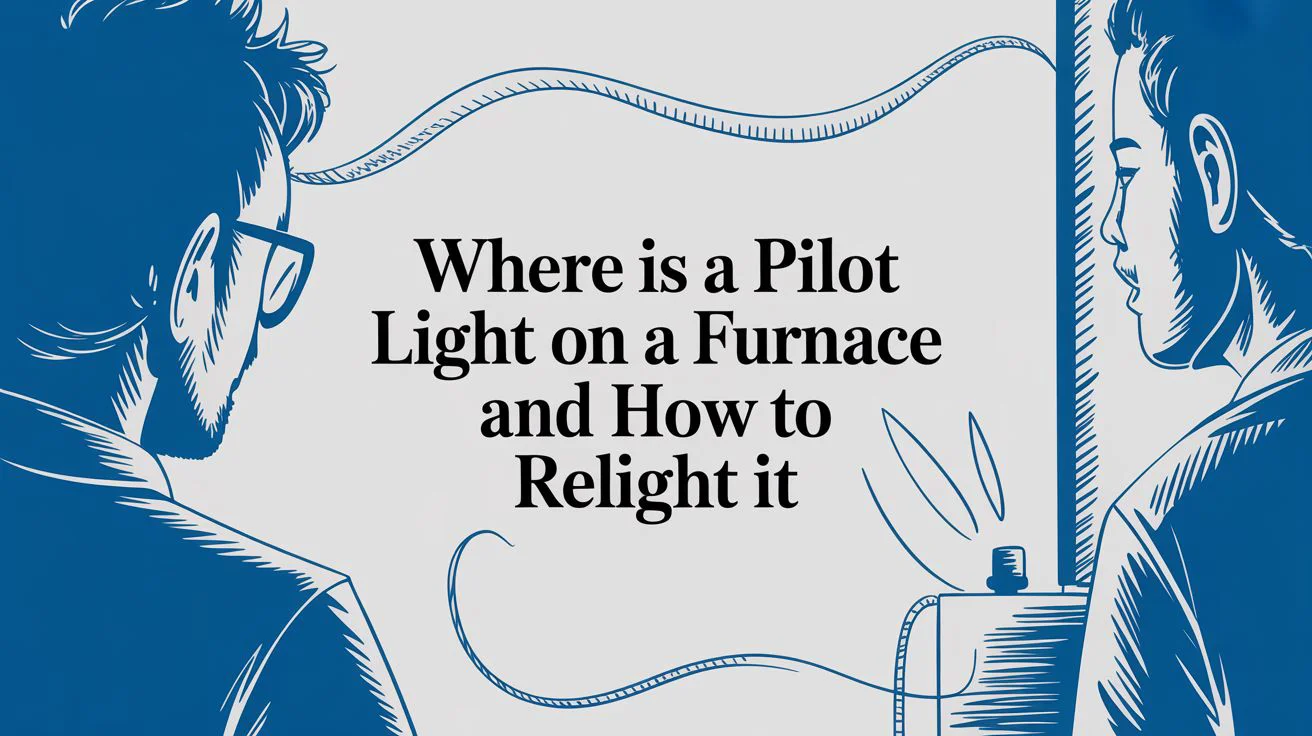
It’s a classic Minnesota homeowner nightmare: the temperature plummets, and suddenly, the heat gives out. Before panic sets in, it’s worth checking on a common culprit—the pilot light. This small, continuous flame is the heart of many older furnaces, and knowing a little about it can save you a lot of stress.
Why Your Furnace Pilot Light Goes Out
In many older gas furnaces, especially those you’ll find in homes built before 2010, the pilot light is usually located at the bottom front of the unit, tucked behind a small access panel. A surprisingly large number of homes still rely on these standing pilot systems, making them a critical, yet often overlooked, part of staying warm during our harsh winters.
So, why does this crucial little flame suddenly disappear? The reasons can range from something incredibly simple to a clear sign that a component has failed. This guide isn't about pushing you into risky DIY repairs; it’s about empowering you to do a few safe initial checks with confidence.
Common Causes of a Pilot Light Failure
Several things can snuff out your pilot light. Here are a few of the most frequent culprits we see in the field.
- A Strong Draft: Sometimes, the simplest explanation is the right one. A sudden gust of air from a nearby door, a drafty window, or even a strong airflow within the ductwork itself can be enough to blow out the flame.
- Dirty Pilot Orifice: Over time, the small opening (the orifice) where the gas comes out can get clogged with dust, dirt, or other tiny debris. This blockage essentially starves the flame of fuel, causing it to get weaker and weaker until it finally goes out.
- Faulty Thermocouple: This is probably one of the most common mechanical failures we run into. The thermocouple is a safety device. Its only job is to sense the heat from the pilot flame and signal the main gas valve to stay open.
If the thermocouple is going bad, it can't detect the flame—even if it's perfectly lit. As a safety precaution, it will shut off the gas supply completely. You can learn more in our guide that explains what a thermocouple does on a furnace.
Alright, so the heat's out and you suspect the pilot light is the culprit. The first order of business is actually finding the thing. It’s usually tucked away behind a small panel, but knowing where to look can save you a lot of time and frustration.
Before you even think about opening a panel, let’s talk safety. This is the most important part, so don’t skip it. You need to turn the furnace power switch off and shut off the gas supply using the valve that leads to the furnace. This makes sure you can poke around and inspect the components without any risk. Safety first, always.
With the power and gas off, your hunt begins. On most older, floor-standing furnaces, you're looking for a small metal access panel near the bottom of the unit. Some of these just pull right off, while others might have a simple latch or a few screws. This is your way into the furnace’s inner workings.
Quick Guide to Finding Your Pilot Light
Furnaces come in a few different shapes and sizes, which can change where the pilot assembly is hiding. This table should help you narrow down your search based on the most common designs we see in homes.
| Furnace Configuration | Access Panel Location | What to Look for Inside |
|---|---|---|
| Floor-Standing (Older) | Small metal door at the bottom front. | A prominent gas control knob near the floor. |
| Upflow/Downflow (Modern) | Larger panel on the front, may have two sections. | The pilot assembly is near the bottom for upflow, top for downflow. |
| Wall-Mounted | Usually a single front cover or a small door. | Components are compact; look for a small valve and tube assembly. |
Use this as your starting point. Once you've got the panel off, you’re ready to look for the key components inside.
Locating the Pilot Assembly
Grab a flashlight—it’s pretty dark in there. The first thing you want to spot is the gas control knob. This is your main landmark. It’s usually a black or red dial with clear markings for ‘ON,’ ‘OFF,’ and ‘PILOT.’ Your pilot light assembly is almost always going to be right next to this knob.
Now, look closely around that control knob for a little cluster of metal tubes. This is the heart of the pilot system. You should be able to see:
- A thin gas tube that points to a specific spot. This is where the tiny pilot flame is supposed to be burning.
- The thermocouple, which is a thin copper-looking wire or rod. Its tip is positioned right in the path where the flame would be.
- The main burner, a much larger part that looks like a series of tubes or a single tray. This is what the pilot light ignites when your thermostat calls for heat.
Expert Tip: At this point, you're just an observer. The goal is to identify these three parts—the pilot tube, the thermocouple, and the burner. Don't touch or try to adjust anything yet. Think of it like a mechanic looking under the hood before grabbing any tools.
This simple flowchart shows how all these pieces work together. The pilot light is the small but mighty link that starts the whole process.
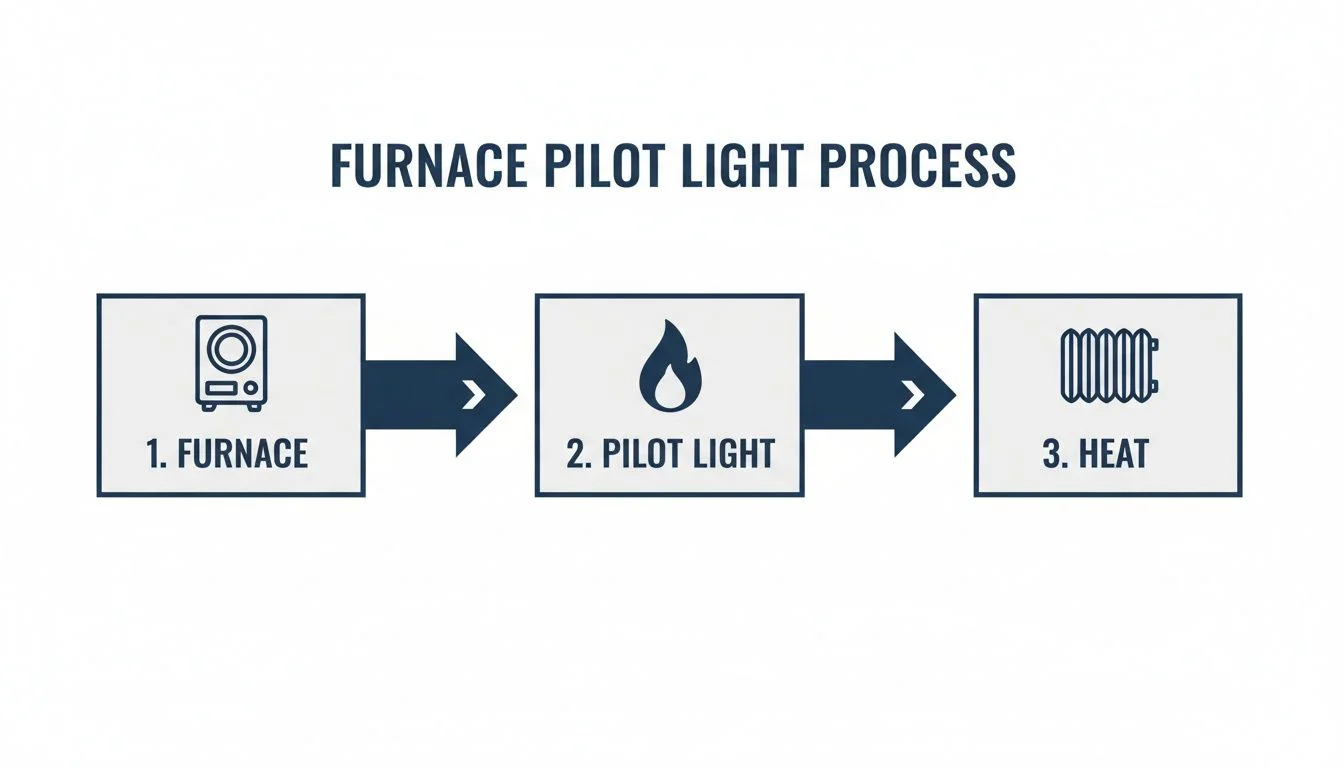
As you can see, without that little flame, the main burners never get the signal to ignite, and your house stays cold. Now that you know how to find it, you're one step closer to figuring out what’s wrong and getting your heat back on.
Diagnosing Your Pilot Light Flame
Alright, now that you’ve found the pilot assembly, you can learn a lot just by looking at the flame. The color and behavior of that tiny flame tell a detailed story about your furnace's health and safety.
A healthy pilot light is pretty unmistakable. You’re looking for a strong, steady blue flame that’s about an inch and a half tall. Think of a tiny, well-controlled blowtorch. Most importantly, the tip of this blue flame needs to be making direct contact with the thermocouple sensor—that’s the metal rod right next to it. This constant heat is what signals to your furnace that it's safe to keep the gas flowing.
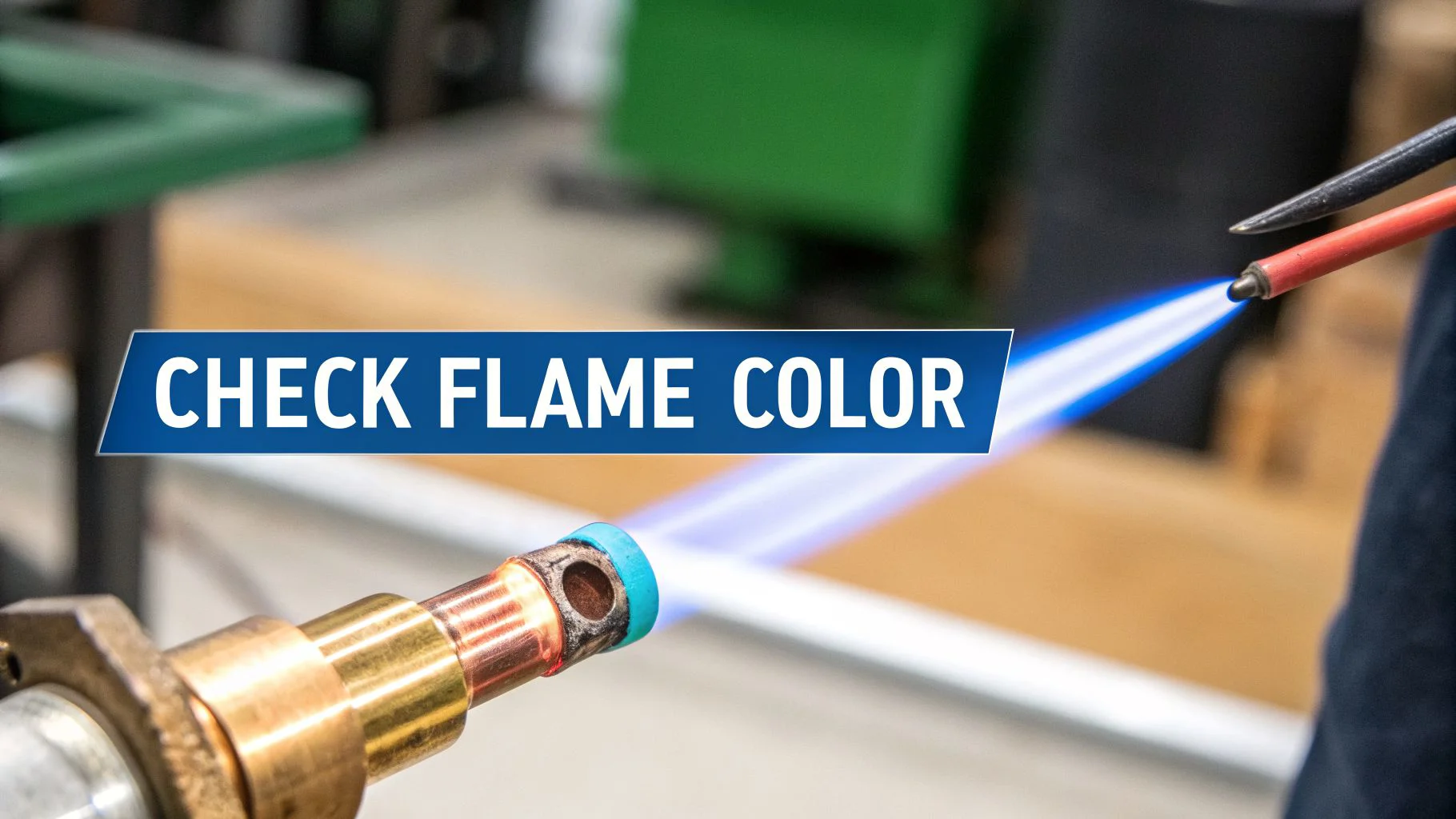
But if you see a lazy, flickering, or mostly yellow flame, that’s a clear sign something is off.
Reading the Warning Signs in the Flame
Different flame characteristics point to different problems. A weak or sputtering flame that seems to struggle to stay lit often means the pilot orifice is dirty and restricting gas flow. A yellow flame, on the other hand, signals a more serious issue.
A yellow or orange flame means the gas isn't burning completely—a condition called incomplete combustion. This is usually caused by a bad air-to-fuel mixture, maybe from dirt in the burner assembly or even a cracked heat exchanger. It’s similar to how a flame sensor detects the presence of a flame, but here, you're visually diagnosing the flame's quality. You can learn more about that part in our guide on where the flame sensor is on a furnace.
A yellow pilot flame is a serious red flag. It points to incomplete gas combustion, which can produce dangerous carbon monoxide. If you see a yellow flame, don’t try to fix it yourself. Shut the furnace off and call a qualified HVAC technician right away.
Understanding these visual cues helps you know when a simple relight might do the trick versus when it's time to call Neighborhood Plumbing, HVAC, and Electrical for some expert help.
A Practical Guide to Relighting Your Pilot Light
So, you’ve figured out your pilot light is out. As long as you don’t smell even a hint of gas, this is often something you can tackle yourself without calling a pro. It’s not a deeply technical job, but getting the steps right—and in the right order—is absolutely critical for doing it safely.
First things first, and this is non-negotiable: if you smell gas at any point, stop what you’re doing immediately. Leave the area, and from a safe distance, call for professional help. Don’t take any chances.
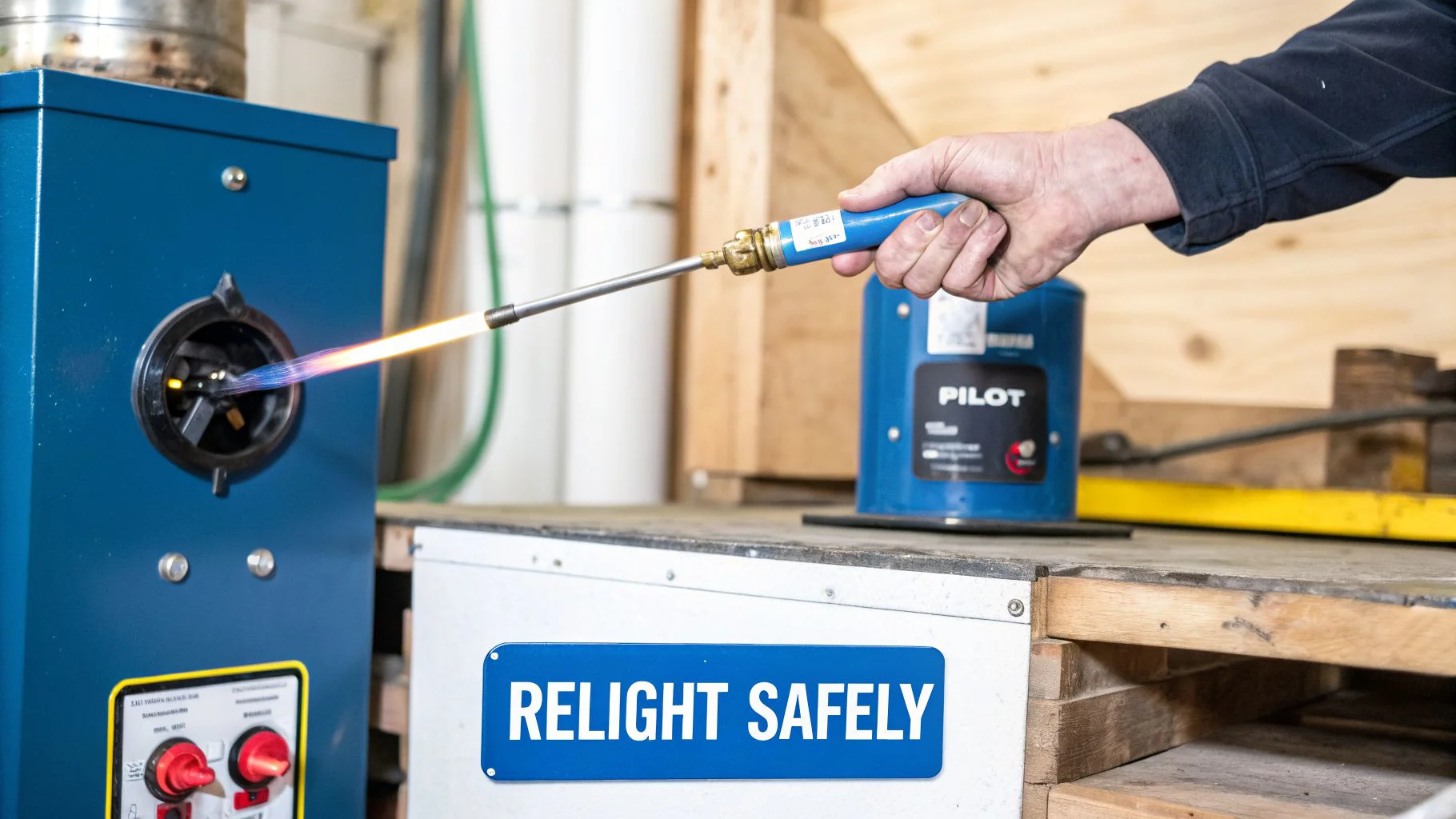
If the coast is clear and you don’t smell anything, your first move is to find the gas control knob on your furnace and turn it to the ‘OFF’ position. Now, set a timer and wait a full five minutes. Seriously, don’t skip this part. It gives any lingering gas in the chamber time to clear out completely.
The Relighting Sequence
After your five-minute wait is up, you’re ready to get that pilot lit. It’s a series of small, deliberate actions.
- Turn the control knob from the ‘OFF’ setting to ‘PILOT’.
- Find the small reset button, which is usually red or black and located near the control knob.
- Press and hold this reset button down. While you’re holding it, bring the flame from a long-reach lighter up to the pilot light’s opening.
The pilot should pop on with a small flame. Don’t let go of that reset button just yet. You need to keep it held down for a solid 60 seconds.
This 60-second hold is essential. It gives the thermocouple enough time to heat up properly. Once it’s hot, the thermocouple sends a tiny electrical signal to the gas valve, telling it that a flame is present and it's safe to stay open. If you let go too soon, the safety system will think the flame is out and shut the gas off.
Once a minute has passed, you can slowly release the reset button. The pilot flame should stay lit. If it does, great job! Now you can turn the control knob to the ‘ON’ position and listen for the main furnace burners to kick in.
This DIY method became common after WWII, when pilot lights became standard in home heating. If you follow the 5-minute wait and 60-second hold, your chances of success are high—around 80% on the first try. You can learn more furnace tips from the experts over at Trane.com.
What if it goes out again? You can try the whole process one more time. But if it fails on the second attempt, that’s a sign of a bigger problem, like a faulty thermocouple or a clogged pilot orifice. It’s also worth knowing if you have to relight a furnace after a power outage, as that can involve different issues.
When to Skip the DIY and Call a Professional
Knowing your limits is a huge part of furnace maintenance. While this guide helps with a simple pilot light outage, some situations are just not negotiable. They’re clear signs you need to put down the tools and call a professional from a company like Neighborhood Plumbing, HVAC, and Electrical.
The biggest red flag, without a doubt, is the smell of gas. If you ever catch that distinct rotten-egg odor in your home, safety comes first. Immediately follow the standard gas oven safety guidelines, which means getting everyone out of the house and calling for help from a safe distance.
Signs That Demand an Expert Eye
Beyond smelling gas, there are a few other symptoms that tell you the problem is bigger than just relighting the pilot. If you notice any of these, it’s time to call in a pro.
- Repeated Failures: You’ve relit the pilot light twice, and it still won't stay lit. That's not just bad luck—it’s a clear signal that a part is failing. Don't keep trying.
- A Weak or Yellow Flame: As we covered, a healthy flame is crisp and blue. A lazy, flickering, yellow flame means poor combustion. This is a serious issue that can produce carbon monoxide, and it’s not something to mess with.
- Visible Soot or Rust: Take a look around the pilot assembly. If you see a buildup of black soot or significant rust, it points to a long-term combustion problem that needs to be diagnosed properly.
These kinds of symptoms often point to deeper issues that are unsafe for a homeowner to tackle. We’re talking about things like a failing thermocouple, a faulty gas valve, or a blocked pilot orifice. A licensed technician has the right diagnostic tools to find the root cause and get your system running safely and efficiently again.
Furnace Pilot Light FAQs
Once you know what you’re looking for, a few more questions usually pop up. It’s smart to understand these little details—they’ll help you spot problems early and keep your furnace running safely.
Do All Modern Furnaces Have a Pilot Light?
Nope. If your furnace was made after 2010, it probably doesn't have a standing pilot light at all. Most newer systems use electronic ignition, like a hot surface igniter, to save energy.
These modern systems only create a flame when your thermostat actually calls for heat. So, if you’ve searched everywhere and can’t find that little blue flame, your furnace almost certainly has an electronic ignition.
Is a Yellow Pilot Light Actually Dangerous?
Yes, absolutely. A pilot flame should be a steady, crisp blue. If it’s mostly yellow, orange, or flickering wildly, that’s a big red flag.
A yellow flame means the gas isn't burning completely. This can release carbon monoxide (CO)—an odorless, invisible, and potentially fatal gas—into your home. If you see a yellow flame, shut the furnace off immediately and call an HVAC professional.
Why Does My Pilot Light Keep Going Out?
It's a frustrating problem, and it usually comes down to one of three things. A simple draft from a nearby window or crack could be just enough to blow it out.
Another common culprit is the thermocouple. That's the little safety sensor that sits in the flame, and if it's dirty, bent, or just plain worn out, it will shut off the gas. Finally, the pilot orifice (the tiny hole the gas comes through) can get clogged with dust or debris, starving the flame of fuel.
If you’re dealing with a pilot light that just won't stay lit, a weird-colored flame, or any other furnace headache, don't guess. Give the experts a call. Contact Neighborhood Plumbing, HVAC, and Electrical for fast, reliable service you can trust in Central Minnesota. You can schedule your repair online at https://4neighborhood.com.