Let's get right to it: yes, a loud furnace is almost always a bad sign. That strange new noise you’re hearing isn’t just an annoying quirk—it's your furnace's version of a check engine light, signaling that something is seriously wrong. It could be a major mechanical failure, a fire hazard, or even a deadly carbon monoxide leak.
Your Quick Guide to Dangerous Furnace Noises
Think of your furnace as the heart of your home during a brutal Minnesota winter. When it's running well, it has a quiet, steady hum. But when a problem pops up, it starts making noises. Ignoring those sounds is like ignoring a flat tire warning while you're driving through a blizzard—it's a gamble you just can't afford to take. Here, a working furnace isn't a luxury; it's essential for survival.
The dangers from a noisy furnace really boil down to three critical risks:
- Sudden Mechanical Failure: A high-pitched squealing or a harsh grinding noise often means a motor or bearing is about to give out. This can lead to a total system shutdown, leaving you completely without heat when you need it most.
- Fire Hazards: Loud banging or popping sounds can be a sign of delayed ignition, which is when gas builds up inside the chamber before it lights. This small explosion can damage internal parts and, over time, create a serious fire risk.
- Carbon Monoxide Leaks: A deep, rumbling sound might point to a cracked heat exchanger. This is the most dangerous problem of all, as it can let colorless, odorless carbon monoxide gas escape and mix with the air blowing through your home.
For families in places like Blaine or Chisago, this isn't just some abstract concept. A loud furnace often points to a failing blower or loose parts that are shaking themselves apart. It’s not just a mechanical risk, either—that racket can literally make you sick.
The World Health Organization has found that long-term exposure to noise over 85 decibels (a level some broken furnaces can easily reach) raises stress hormones and can lead to hearing damage. Ignoring the noise is rolling the dice with your family's safety and well-being. This study offers more insight into how many Americans are exposed to dangerously loud noise levels.
To help you make sense of what you're hearing, we’ve put together a quick reference table. Think of it as a decoder for those alarming sounds coming from your basement.
Interpreting Your Furnace Sounds
This table breaks down the most common loud furnace noises, what they might mean, and what you should do right away.
| Furnace Sound | What It Could Mean | Danger Level & Action |
|---|---|---|
| Loud Bang or Boom | Delayed ignition, dirty burners, or ductwork expanding. | High Danger. Gas buildup is a fire/explosion risk. Shut the system off immediately and call a professional. |
| High-Pitched Squealing | A failing blower motor, a loose belt, or bad motor bearings. | Medium Danger. It's a sign of impending mechanical failure. Turn off the furnace and schedule a service call. |
| Grinding or Scraping | A broken motor mount or a failed bearing in the blower wheel. | High Danger. The system could seize up or break apart. Shut it down immediately to prevent further damage. |
| Deep Rumbling | A dirty burner, a pilot light issue, or a cracked heat exchanger. | Extreme Danger. A cracked heat exchanger can leak carbon monoxide. Turn off the furnace, open windows, and call an HVAC pro for an emergency inspection. |
| Persistent Clicking | A cracked pilot light, a faulty ignition sensor, or an electrical issue. | Medium Danger. This often indicates a control or ignition problem that could lead to a no-heat situation. Call a technician. |
Remember, this is just a guide. Any new, loud, or persistent noise from your furnace is a clear sign that it needs to be inspected by a qualified HVAC technician. Don't wait for the problem to get worse—especially not in the middle of a Minnesota winter.
What Each Furnace Noise Actually Means
Your furnace is always trying to tell you something. When it's running smoothly, you'll probably only hear a gentle hum or the quiet whoosh of air moving through your vents. But when new, loud, or strange sounds pop up, it’s your furnace’s way of sending up a flare. It's time to play detective.
Think of it like the check engine light in your car—different noises point to different problems. Learning to recognize them can help you know whether you have a minor annoyance or a serious safety risk on your hands.
Common Furnace Sounds and What They Signal
A sudden, loud banging or booming sound right when the furnace kicks on is probably the most alarming noise you can hear. This isn't just your ducts expanding. It's often a sign of delayed ignition, where gas builds up in the combustion chamber before it finally ignites, causing a small explosion. This is a serious fire hazard and needs a pro to look at it, fast. For a deeper dive on this, check out our guide on why your furnace makes a popping noise.
What about a persistent, high-pitched squealing or screeching? That’s your furnace’s cry for help. It’s the same kind of sound a worn-out belt makes in a car engine, and it usually points to a problem with a moving part. The most common culprits are:
- A failing blower motor that’s struggling to spin.
- Worn-out motor bearings that have lost their lubrication.
- A frayed or slipped blower belt that’s about to snap.
If you ignore this sound, you’re practically asking for a complete system breakdown, and you know it’ll happen on the coldest night of the year.
A rattling or vibrating noise can sometimes be an easy fix, like a loose access panel or a screw that just needs tightening. But if the rattling is coming from deep within the unit and won't stop, it could signal a cracked heat exchanger—a major failure that can leak deadly carbon monoxide into your home.
This infographic lays out the biggest dangers that come with a loud, unhappy furnace.
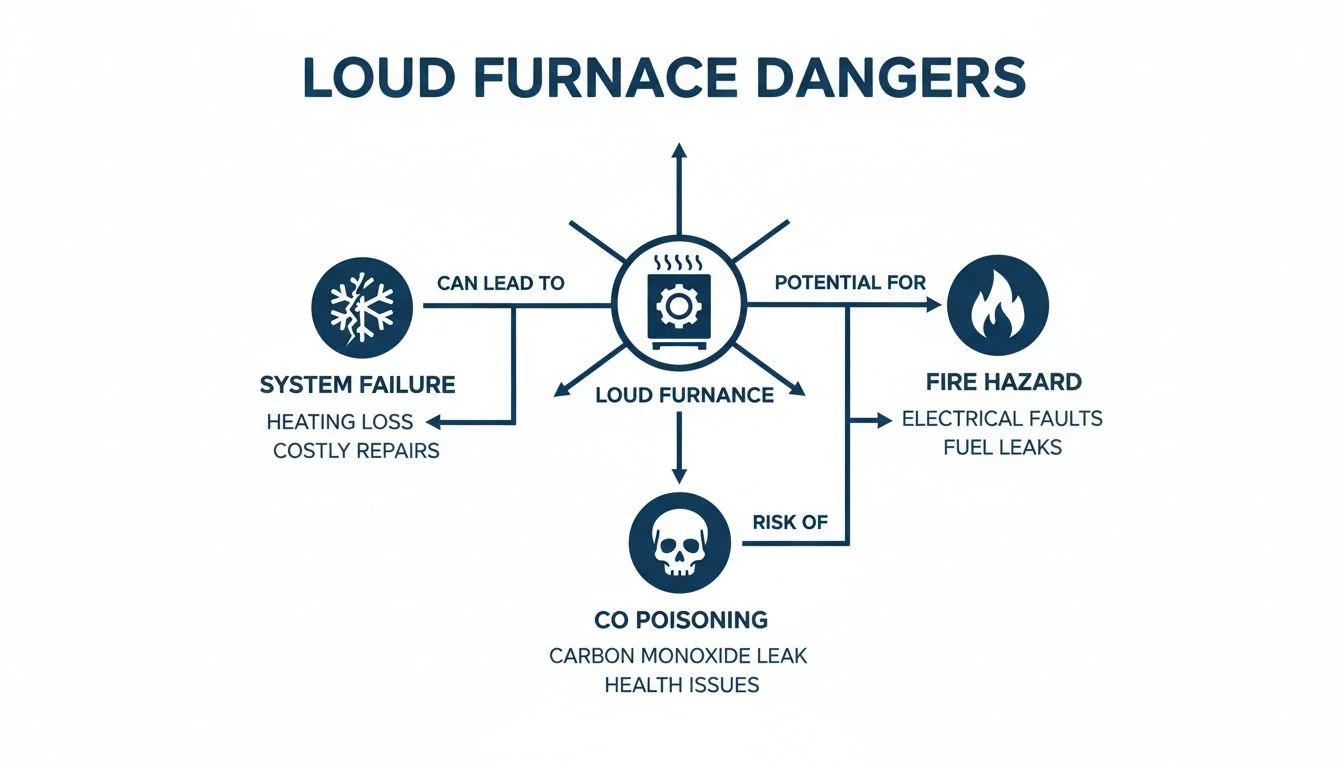
As you can see, a noisy furnace isn't just annoying. It can be a direct threat to your home and family, leading to system failure, fires, or even carbon monoxide poisoning.
Grinding, Rumbling, and Clicking Noises
A harsh grinding or scraping noise means serious mechanical trouble. This isn't subtle. It’s the sound of metal grinding on metal, which usually means a critical part like the blower wheel or motor mount has broken. Shut the furnace down immediately to prevent the damage from getting even worse.
Likewise, a low rumbling or roaring sound—the kind you can almost feel in the floor—is a huge red flag. It can be caused by dirty burners having a hard time igniting, but it’s also a classic symptom of a compromised heat exchanger. Because of the carbon monoxide risk, this is another one of those sounds that means you need to turn off the furnace and call for an emergency inspection.
Finally, a series of rapid clicking noises usually points to an ignition problem. It could be a dirty flame sensor that can't detect the flame, a failing gas valve, or an electrical issue with the ignitor. While it’s not as immediately dangerous as a rumble, it means your furnace is struggling to light and will eventually stop producing heat altogether.
We all know a noisy furnace is annoying. That constant banging, rattling, or high-pitched whining can drive you crazy. But what if I told you that noise is more than just an irritation? It could be a sign of a much deeper problem—one that quietly affects your family's health every single day.
Think about it. Living with a furnace that sounds like a jet engine warming up in your basement isn't just a minor inconvenience. It’s a form of constant, low-grade stress that your body has to deal with around the clock.
That background noise puts your body on a constant state of alert. It’s a primal reaction; our brains are wired to see persistent, loud noises as a threat. This can slowly elevate stress hormones like cortisol, which over time can impact your heart rate and blood pressure. Suddenly, that "annoying" furnace noise becomes a real household health concern.
Looking at it this way, getting a professional inspection isn't just about fixing a machine. It's about protecting your family's well-being.
The Proven Link Between Noise and Health Problems
This isn't just speculation; there’s solid research connecting chronic noise to health issues. And while a lot of studies focus on loud workplaces, the findings are just as relevant when the factory-level noise is coming from your own basement.
A major study in the Journal of the American Heart Association, for example, found that people exposed to loud, prolonged noise at work had an 8% higher risk of developing atrial fibrillation (AF), a serious heart rhythm disorder. You can read more about the study's findings on the connection between noise and heart health.
This is a big deal, especially here in Central Minnesota. Many of our older homes, built before 1980, have furnaces that can easily operate at 90+ decibels. That’s the same noise level that caused health problems in the study.
When the background hum in your home reaches a level known to cause cardiovascular strain in an industrial setting, it’s no longer just an annoyance. It’s a health risk that you can’t afford to ignore.
More Than Just Stress
The fallout from a loud furnace doesn't stop with your heart. That constant disruption chips away at your family's quality of life in a few key ways:
- Sleep Disturbances: Even when you're asleep, your brain is still processing sounds. A noisy furnace can pull you out of the deep, restorative stages of sleep, leaving everyone feeling tired, cranky, and unable to focus the next day.
- Impaired Cognitive Function: Research has shown that being around chronic noise can mess with memory, attention span, and problem-solving skills. This is especially true for kids, whose developing brains are much more sensitive to these disruptions.
- Increased Anxiety and Irritability: Let's be honest—living with a noise you can't escape just puts everyone on edge. It can shorten tempers and create a background hum of anxiety and stress that affects the entire household.
Ultimately, getting that loud furnace fixed is a direct investment in your family’s health. When you restore peace and quiet, you’re giving everyone in your home the chance to relax, focus, and get the quality sleep they need to feel their best.
The Silent Threat of Carbon Monoxide From Your Furnace
While just about any loud furnace noise is a sign that something’s wrong, one sound in particular points to a danger that is immediate and potentially fatal. Of all the hazards a faulty furnace can pose, nothing is more serious than carbon monoxide (CO) poisoning. This gas is odorless, colorless, and a true silent killer. A strange noise from your furnace might be the only warning you get.
If you hear a deep, low rumbling or roaring sound—almost like a distant engine—coming from your furnace, this is a major red flag. It could be the tell-tale sign of a cracked heat exchanger.
Think of the heat exchanger as the firewall between the combustion chamber—where the fire is—and the clean air you breathe. It's a metal chamber designed to contain all those nasty combustion gases while letting their heat transfer safely to the air that circulates through your house.
How a Crack Releases This Invisible Danger
When that critical component gets a crack, it’s game over. Those cracks, often caused by age, rust, or the stress of overheating, create a direct pathway for dangerous exhaust fumes, including CO, to leak out and mix with your home's air supply.
Here in Minnesota, we seal our homes up tight to survive the long, cold winters. While that’s great for keeping warm, it makes a CO leak even more dangerous. The deadly gas can build up to toxic levels fast, with nowhere to go.
Crucial Takeaway: A rumbling furnace is never something to ignore or put off. It's a potential indicator of a cracked heat exchanger, which puts everyone in your home at risk.
Recognizing the symptoms of CO poisoning is just as important. The scary part is that they often look just like the flu, making them incredibly easy to dismiss, especially during the winter. Be on high alert for these early signs:
- Dull headaches
- Dizziness or feeling lightheaded
- Nausea or vomiting
- Shortness of breath
- General confusion
If you or anyone in your family starts feeling this way, and the symptoms seem to get better when you leave the house, you need to treat it as a carbon monoxide emergency right away.
The single most important safety measure you can take is to install and regularly test carbon monoxide detectors on every level of your home, especially near bedrooms. And while you’re at it, making sure all your home's safety devices are working is a good rule of thumb. You can find a simple guide on how to check a smoke detector to get started.
For more detailed, local advice, check out our guide on carbon monoxide safety tips for Minnesota homeowners.
When to DIY and When to Call an HVAC Professional
When your furnace starts making a racket, it's tempting to play detective and figure out the problem yourself. A little hands-on troubleshooting can be a good thing, but it's crucial to know where to draw the line. Some noises are just minor annoyances; others are serious warnings that put your home and family at risk.
Think of it like your car. If you have a loose gas cap, you can tighten it. No big deal. But if the engine starts making a grinding sound, you’re not popping the hood—you’re calling a mechanic. The same logic applies to your furnace.
Simple DIY Checks You Can Safely Perform
Before you hit the panic button, there are a few simple checks you can do yourself. These are totally safe, require no special tools, and often solve the most common causes of humming or whistling noises.
For your safety, always start by shutting off the power to your furnace at the breaker box. Once the power is off, here's what to look for:
- Check the Air Filter: A dirty air filter is the number one reason furnaces act up. When it's clogged, it chokes off airflow, forcing the blower motor to work overtime. That strain can lead to all sorts of sounds, from humming and whistling to even banging. If the filter looks dirty, swap it out for a new one.
- Inspect Your Air Vents: Take a quick walk through your house. Are all the supply and return vents open? Make sure they aren’t blocked by furniture, rugs, or anything else. Blocked vents mess with the system's air pressure and can definitely cause some strange noises.
- Look for Loose Panels: Check the access panels on the outside of your furnace unit. Over time, vibrations can work them loose, leading to a rattling sound. Just make sure they're all screwed on tight.
If one of these simple steps quiets things down, great! But if the noise continues, it’s time to stop and recognize this is no longer a DIY job.
Red Flags That Demand a Professional HVAC Call
Some sounds are not suggestions—they're warnings. These are the noises that signal a problem too dangerous or complex for a homeowner to tackle. If you hear any of the following, shut your furnace off immediately and call a licensed HVAC technician for emergency service.
Crucial Safety Warning: Never try to fix anything related to your furnace's gas or electrical components yourself. The risk of fire, explosion, or electrocution is incredibly high. A licensed pro is trained to handle these systems safely for a reason.
Don't think twice about calling for help if you hear:
- Loud Banging or Booming: This isn't just a random noise. It's often the sound of delayed ignition, where gas builds up in the combustion chamber before it finally lights. It's a serious fire and explosion hazard.
- Metallic Screeching or Grinding: That's the unmistakable sound of metal grinding on metal. It means a motor bearing is shot or the blower wheel is broken and about to fail completely.
- Deep Rumbling: This is a classic symptom of a cracked heat exchanger. A crack in this component can leak deadly carbon monoxide gas directly into your home's air supply. This is a true emergency.
- Any Smell of Gas (Rotten Eggs): If you smell gas, don't hesitate. Get everyone out of the house immediately. From a safe distance, call your gas company first, then call for an HVAC emergency service.
Preventative Maintenance to Avoid Dangerous Furnace Noises
Let's be honest—dealing with a furnace breakdown in the middle of a Minnesota winter is a nightmare. It's stressful, cold, and almost always expensive. The best way to handle a loud, dangerous furnace is to make sure it never gets to that point in the first place.
Think of it this way: proactive, preventive maintenance is your best defense against those sudden, alarming sounds that signal big trouble. It’s like a regular check-up for the hardest-working appliance in your home during winter. This is an investment in safety and reliability that brings some much-needed peace of mind.
The Power of a Tune-Up
An annual tune-up isn't just a quick glance. A skilled technician dives deep, performing a detailed inspection and cleaning designed to catch small issues before they become catastrophic failures. This directly addresses the things that cause those loud, scary noises.
Here’s what a technician can tackle during a tune-up:
- Worn Motor Bearings: They can lubricate bearings to quiet down a screeching sound or recommend a replacement before the whole motor seizes up.
- Loose Belts: A technician can easily tighten or replace a frayed blower belt, getting rid of that high-pitched squeal and preventing it from snapping when you least expect it.
- Dirty Burners: By cleaning the burners, they ensure a clean, quiet ignition. This stops the small gas explosions that create those loud BANGING sounds.
- Combustion Analysis: They’ll check for incomplete combustion—the root cause of rumbling noises and a major risk factor for a cracked heat exchanger.
By catching these problems early, you aren't just making your furnace quieter. You're actively stopping the conditions that can make it dangerous. It’s the single best step to ensure your system is safe and ready for another cold season.
To keep things running smoothly, it's also helpful to understand how often you should schedule professional furnace maintenance. An annual check-in is the industry standard and for good reason—it’s crucial for your system’s long-term health.
For us Minnesota homeowners, this is more than just a good idea; it’s essential preparation. Our long, brutal winters put a massive strain on heating systems. Scheduling a tune-up every single fall is the most effective way to guarantee your furnace runs safely, efficiently, and quietly all winter long. You can learn more about what's included in a yearly maintenance plan for your furnace.
Frequently Asked Questions About Loud Furnaces
Even after you've played detective with all those furnace sounds, a few questions might still be bouncing around in your head. It’s completely normal. Your heating system is the heart of your home, especially during a Minnesota winter, so feeling a little uncertain is understandable. Let's tackle some of the most common concerns we hear from homeowners.
How Much Will It Cost to Fix My Loud Furnace?
This is the big one, and the honest answer is: it depends. A furnace repair can range from around $100 to over $1,500. If it’s something simple, like tightening a loose access panel or swapping out a dirty filter, you might just be looking at the cost of a service call.
But if the problem is a failing blower motor or a bad capacitor, the price will naturally go up. The most expensive fix, by far, is a cracked heat exchanger. Because of the serious safety risk and the amount of labor involved, this repair often costs so much that it makes more sense to just replace the whole furnace, especially if your unit is more than 15 years old.
When Should I Repair vs Replace My Furnace?
Deciding whether to patch up your old furnace or invest in a new one can be a tough call. Here's a simple way to think about it:
- Repair It If: Your furnace is under 15 years old, the repair bill is less than half the cost of a new system, and it’s been pretty reliable up until now.
- Replace It If: It's over 15 years old, you're constantly calling for expensive repairs, or you’re facing a major fix like a new heat exchanger. An old, inefficient furnace also inflates your energy bills, so a new system can be a smart investment that pays for itself over time.
Keep in mind that a loud furnace is often just a sign of old age. Parts get worn out and the whole system has to work harder to keep your house warm, which leads to more noise and less efficiency.
What Should I Do First If I Smell Gas?
If you smell that distinct "rotten egg" odor anywhere near your furnace, you need to act fast. That smell is added to natural gas specifically to warn you of a leak. Don't second-guess it.
- Do not touch anything that could create a spark. This means no light switches, no phones, and no appliances.
- Get everyone out of the house immediately.
- Once you're a safe distance away (like at a neighbor's house), call your gas company's emergency line first. They are equipped to handle the immediate danger.
- After the gas company gives the all-clear, then call an HVAC professional. We can find the source of the leak and get it fixed safely.
If you're dealing with a furnace that's too loud or just not reliable, don't wait for it to break down completely in the middle of a cold spell. The licensed professionals at Neighborhood Plumbing, HVAC, and Electrical are here to help 24/7. Schedule your service call today and get your home's safety and quiet back.