When your furnace clicks but won’t light, it’s usually because of a bad igniter, a dirty flame sensor, or a problem with the gas supply. You’ll hear that distinct click as it tries to start, but then… nothing. Before you jump to the worst-case scenario, always start with the simple stuff, like checking your thermostat settings and the circuit breaker.
What to Do When Your Furnace Clicks But Won't Light
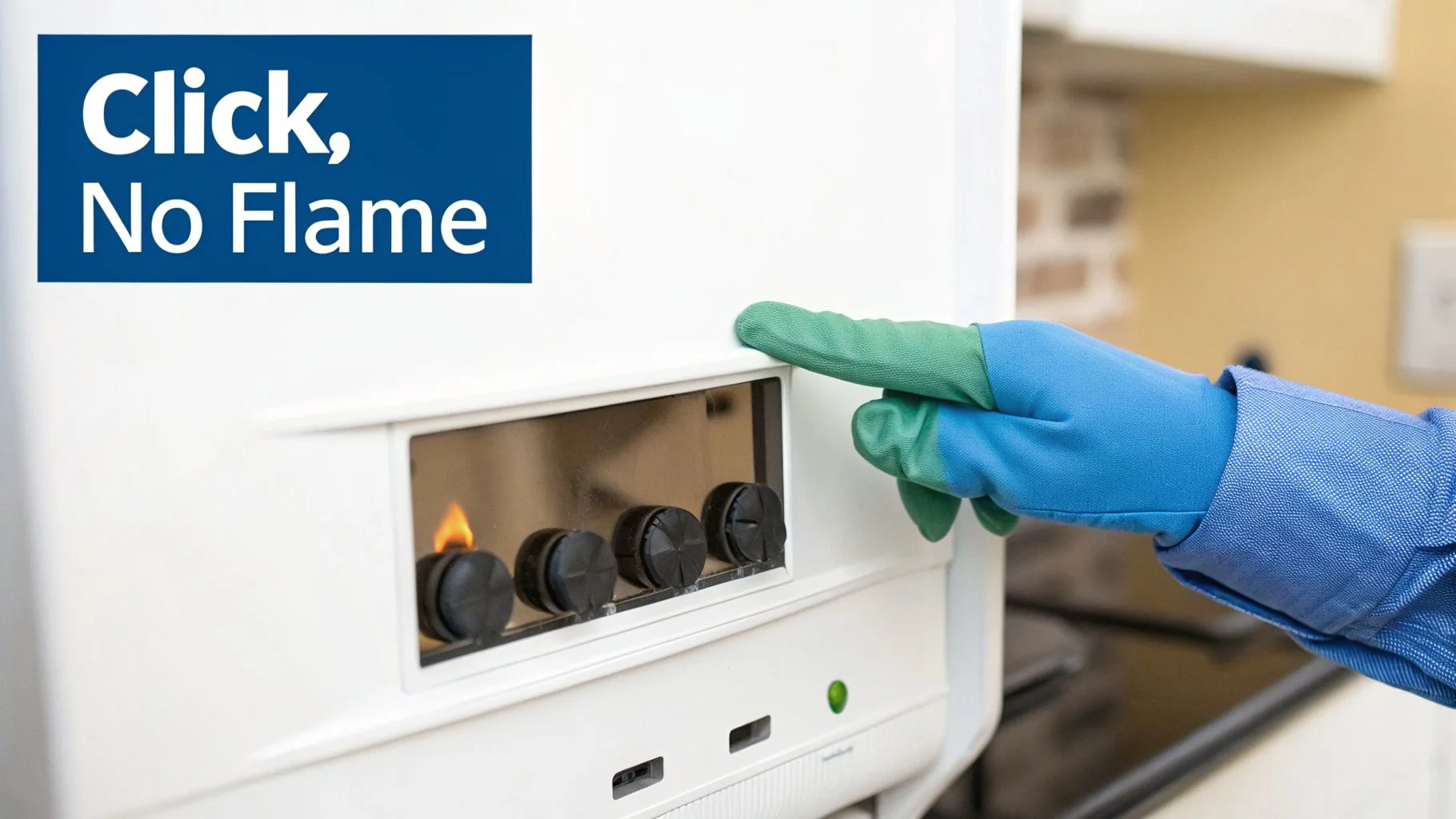
It’s one of the most frustrating sounds a homeowner can hear on a cold Central Minnesota night: the click of your furnace trying to start, followed by total silence. That sound means your furnace is calling for heat, but for some reason, the burners just aren't lighting.
Before you start picturing a huge repair bill, take a breath. This is an incredibly common furnace problem, and the fix is often simpler than you think. This section is your go-to guide for figuring out what's going on behind that metal panel.
Here's a quick checklist to get you started. This table covers the most likely culprits when your furnace won't light and tells you the very first thing to check for each.
Quick Diagnostic Checklist for an Unlit Furnace
| Potential Cause | Your First Check |
|---|---|
| Faulty Igniter | Look for a bright orange glow through the furnace's viewport a minute or so after it starts a heating cycle. No glow often means a dead igniter. |
| Dirty Flame Sensor | Does the furnace light for a few seconds and then shut off? This is a classic sign of a dirty flame sensor needing a gentle cleaning. |
| Gas Supply Issue | Check the gas valve near your furnace to make sure it's in the "ON" position. Also, confirm other gas appliances in your home are working. |
| Pilot Light Out (Older Furnaces) | If you have an older furnace, check to see if the pilot light is lit. It's a small, continuous blue flame. |
This checklist gives you a solid starting point. Now, let's dig a little deeper into how your furnace is supposed to work so you can pinpoint where things are going wrong.
Understanding the Ignition Sequence
Think of your furnace firing up as a quick, four-part relay race. If any one of these steps fails, the whole process grinds to a halt.
- The Call for Heat: First, your thermostat detects the room is too cold and sends a signal to the furnace's control board. This is the "go" signal that starts the race.
- The Igniter's Glow: The control board then tells the igniter to heat up. In most furnaces today, this is a hot surface igniter that glows a brilliant orange, getting hot enough to ignite gas. Older systems rely on a constant pilot light for this step.
- The Gas Valve Opens: As soon as the igniter is hot enough, the control board opens the gas valve. This releases a measured flow of natural gas or propane to the burners.
- The Flame Sensor's Proof: The moment the burners catch fire, a small metal rod called a flame sensor detects the heat. It sends a tiny electrical signal back to the control board, basically saying, "Yep, we have a stable flame!" If the board doesn't get this signal within a few seconds, it shuts the gas off immediately as a safety precaution.
A furnace that lights for a few seconds and then shuts off is a textbook symptom of a dirty or faulty flame sensor. This safety feature prevents unburned gas from filling your home.
So, when your furnace clicks but doesn't light, it's because there's a breakdown somewhere in that sequence. Does the igniter glow at all? If not, the igniter itself might be shot. Does it glow, but the burners never whoosh to life? That could point to a gas supply problem or a stuck gas valve.
This guide will help you figure out if you're dealing with a simple DIY fix, like cleaning a flame sensor, or something that needs a pro's touch. If you have an older system with a pilot light, you might want to see how to relight a pilot light if you suspect it's gone out. The next sections will walk you through some safe checks you can perform yourself.
Essential Safety Checks Every Homeowner Should Perform First
Before you even think about grabbing a screwdriver or opening up a furnace panel, we need to talk about safety. These are the non-negotiable first steps anytime your gas furnace decides not to fire up. Honestly, a lot of the time, one of these simple checks solves the whole problem without you ever having to touch the furnace itself.
First up, the "sniff test." It's exactly what it sounds like. Walk over to your furnace and take a good smell. A faint whiff of gas can be normal right after a failed ignition, but a strong, lasting rotten-egg smell is a serious red flag.
If you smell gas, don't touch anything. No light switches, no thermostat, nothing. Get everyone out of the house immediately. From a safe distance, like a neighbor's home, call your gas company's emergency number. This is not something to mess with.
If the air is clear, you can move on to a few other checks that are perfectly safe for any homeowner.
Confirm Your Furnace Has Power
It’s almost a running joke in the HVAC world how often a "broken" furnace is just a furnace that lost power. Your furnace needs electricity for its brain (the control board), its fans, and the igniter. No power, no heat.
Here are the two spots to check right away:
- The Circuit Breaker: Head to your home's main electrical panel and find the breaker labeled “Furnace” or “HVAC.” If it's tripped (usually in the middle position), flip it all the way to “OFF” and then firmly back to “ON.”
- The Furnace Kill Switch: Look for a regular light switch on or near the furnace unit. This is an emergency shutoff, and people accidentally flip it off all the time thinking it's a light. Just make sure it’s in the “ON” position.
Once you’ve confirmed both, check your thermostat. If the screen is on, you’ve got power.
Check Your Thermostat Settings
The thermostat is the command center for your heating system, and a simple mix-up here is a classic reason for a no-heat call. Before you assume the worst, take a second to make sure it's telling the furnace what to do.
Make sure the system is set to ‘Heat’, not ‘Cool’ or just ‘Fan.’ Then, turn the temperature setting up at least 5 degrees higher than what the room temperature currently is. This is what sends the "call for heat" to the furnace.
And don't forget the batteries! If your thermostat has them, put in a fresh set. Weak batteries are notorious for causing all sorts of strange furnace glitches, including a complete failure to start.
While you're thinking about safety, it's also a great time to double-check that you have adequate home fire safety equipment, like working smoke and carbon monoxide detectors. A malfunctioning furnace can create serious risks, and these devices are your first line of defense.
How to Diagnose Common Furnace Ignition Problems
Alright, you’ve done the basic safety checks. Now it’s time to play detective with your furnace. To figure out why your gas furnace won't ignite, you need to understand the normal startup sequence. The good news is you don’t have to be an HVAC pro to watch this process and gather some solid clues.
Most modern furnaces have a small viewport or peep-hole on the main access panel. This lets you watch the magic happen without taking anything apart. Just turn up your thermostat to call for heat, then get down there and watch and listen. The whole show is over in a minute or two, but what you see—or don't see—will tell you almost everything you need to know.
This visual guide is a great, safe place to start your troubleshooting.
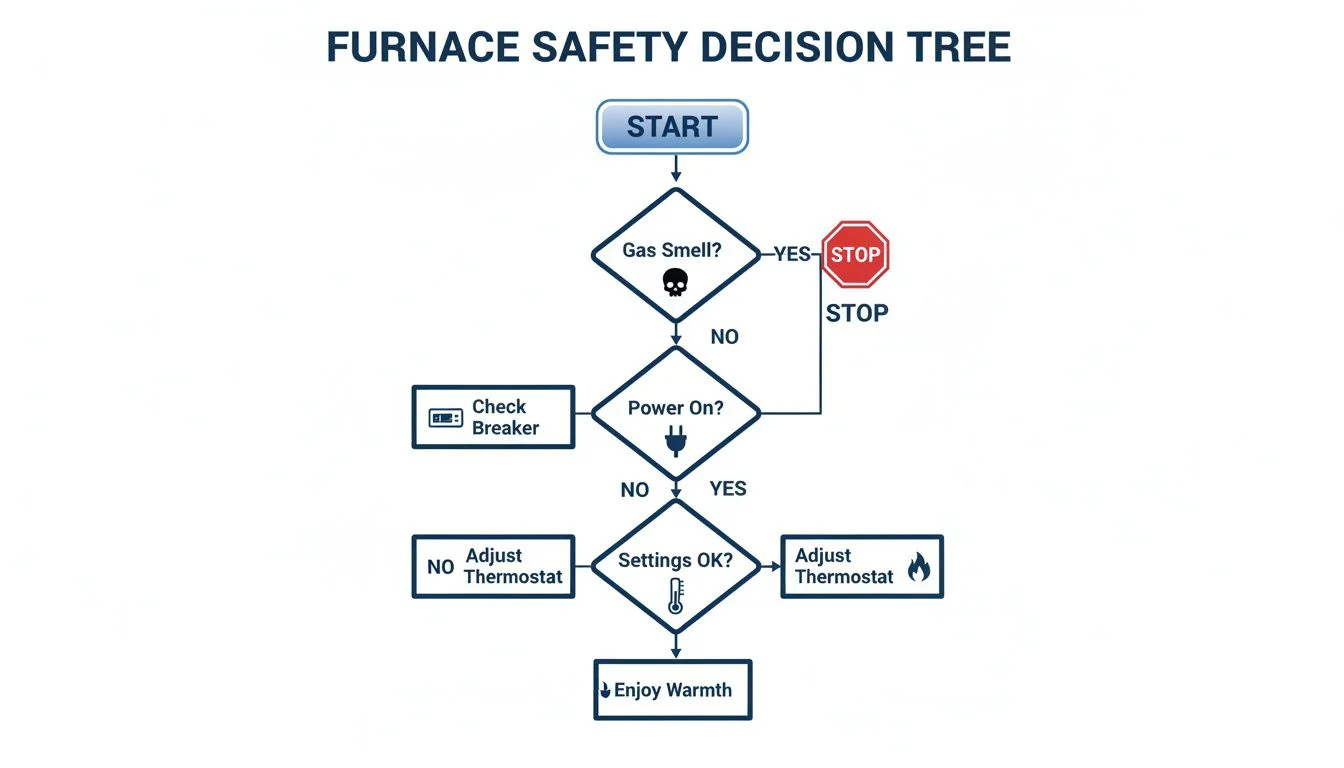
As the flowchart shows, always start with safety and the simple stuff before you even think about looking at the furnace’s internal parts.
Reading the Ignition Sequence
By watching through that little window, you can pinpoint exactly where things are going wrong. For most homeowners, it boils down to two very common scenarios: the igniter never glows, or the flame lights but dies out right away.
- The Igniter Stays Dark: After you hear the first click and the draft inducer fan kicks on, you should see the hot surface igniter start glowing a bright, fiery orange. If you wait a minute and get nothing—no glow at all—the igniter has probably given up the ghost. It’s failed and can’t get hot enough to light the gas anymore.
- A Glowing Igniter But No Flame: In this situation, the igniter glows beautifully, but the burners never light up. This almost always points to a problem with the gas supply. It could be as simple as a closed gas valve, or it might be a faulty gas valve that isn't opening when the control board tells it to.
But far and away, the most common symptom we hear about is a furnace that fires up for just a few seconds before shutting itself down. This is the textbook sign of a dirty flame sensor.
The Dirty Flame Sensor Problem
The flame sensor is a simple but critical safety part. It’s just a thin metal rod that sits right in the path of the burner flame. Its only job is to confirm that a fire is actually present when the gas is flowing. If it can't "see" that flame, it tells the furnace to cut the gas supply immediately. This prevents unburned gas from flooding your home.
A flame sensor gets covered in a nearly invisible layer of carbon. This buildup prevents it from conducting the tiny electrical current needed to signal that the flame is lit. As a safety measure, the furnace shuts down, even though it ignited perfectly.
For a lot of homeowners, cleaning this sensor is a totally manageable DIY job that can save you a service call. It just involves turning off the power and gas, removing the sensor (it's usually held by a single screw), and gently polishing the metal rod. If you want a full walkthrough, you can learn more about where to find the flame sensor on a furnace and how to clean it right.
Don't Forget the Air Filter
It sounds completely unrelated, but a seriously clogged air filter is another top reason a gas furnace fails to ignite. Think of the filter as the lungs of your HVAC system. When it’s choked with dust, it can’t breathe.
This lack of airflow causes the furnace to overheat in a hurry, which then trips a high-limit safety switch. When that switch is tripped, it kills power to the entire ignition system to prevent damage. The furnace won't even try to light until it cools down and the switch resets, leading to a frustrating cycle of no heat. Swapping out your filter is a simple five-minute fix that solves a surprising number of furnace headaches.
Knowing When to Call an HVAC Professional
While a little DIY spirit is great, a smart homeowner knows when to draw the line. Messing with a gas furnace beyond your comfort zone can be dangerous, potentially void your warranty, or turn a simple fix into a much bigger headache.
Certain symptoms are your furnace’s way of waving a big red flag. These are the clear signs it’s time to put down the tools, step away, and call in a certified technician.
Signs That Demand a Professional's Attention
Some furnace problems go way beyond a dirty filter or a finicky flame sensor. These issues point to complex or hazardous failures that need specialized tools, training, and a whole lot of experience.
- Flashing Error Codes: Think of your furnace's control board as its brain. When it finds a serious problem, it flashes a light in a specific pattern. That code isn't just a random blink—it’s a direct message pointing to a failed pressure switch, a faulty gas valve, or another internal issue that a pro needs to diagnose.
- Loud, Unsettling Noises: Rattling, grinding, or a high-pitched squeal are never good sounds. This is your furnace screaming for help. It could be a failing blower motor, a loose part that's about to break off, or another major mechanical failure that needs immediate attention.
- Evidence of Soot: If you spot black soot collecting on or around your furnace burners, shut the whole system down right away. Soot means your furnace isn't burning its fuel completely, which is a major sign that it could be producing dangerous levels of carbon monoxide.
A cracked heat exchanger is one of the most dangerous furnace failures out there. It can leak colorless, odorless carbon monoxide gas straight into your home. Telltale signs like soot, strange smells, or water pooling around the furnace are non-negotiable warnings that demand an expert inspection.
For any of these signs, don't hesitate. For your family’s safety, turn the furnace off at the power switch and call for professional service.
Understanding the Service Call Process
Calling a pro for help shouldn't feel intimidating. For homeowners in our Central Minnesota communities like St. Cloud, Blaine, or Mora, the whole process is designed to get your heat back on safely and efficiently.
When you call, we'll send a technician out to perform a diagnostic service. This isn't just a quick peek—it's a thorough inspection to find the exact reason your furnace won't light. They’ll test electrical parts, check gas pressure, and inspect all the safety controls to get to the root of the problem.
Once they know what’s wrong, the technician will walk you through the issue and give you a clear, up-front price for the repair. You’ll know the full cost before any work starts. A professional repair also comes with a warranty on both parts and labor, so you can have peace of mind. If you’re curious about specific costs, our guide on the cost to replace a furnace ignitor breaks down what you can expect for that common job.
Still not sure whether to DIY or call for backup? This table should help you decide.
DIY Fix vs Call a Pro for Ignition Issues
Use this guide to determine whether an ignition problem is something you can safely investigate or if it's time to call a certified technician.
| Symptom | Potential DIY Action | When to Call a Professional |
|---|---|---|
| Furnace lights, then turns off | Gently clean the flame sensor. | If cleaning doesn't work or the problem returns quickly. |
| No power to thermostat | Replace thermostat batteries. | If fresh batteries don't restore power. |
| Loud banging or grinding | No safe DIY action. Turn the system off. | Immediately. These sounds signal a serious mechanical failure. |
| Smell of gas | No DIY action. Evacuate immediately. | Immediately. Call your gas utility from a safe location. |
When in doubt, playing it safe is always the right move. An expert can diagnose the issue correctly the first time and ensure the repair is done to code, keeping your home safe and warm.
Proactive Maintenance to Prevent Future Ignition Failures
The old saying "an ounce of prevention is worth a pound of cure" has never been truer than with your furnace. The best way to fix an ignition failure is to make sure it never happens in the first place. A little proactive care not only saves you from a frigid night but also makes your furnace run more efficiently and last longer—something every Central Minnesota homeowner can appreciate.
Believe it or not, most of the crucial preventative tasks are simple enough for any homeowner. You don't need a toolbox full of special equipment, just a bit of consistency. These small habits can single-handedly prevent the most common reasons a gas furnace fails to ignite.
Essential Homeowner Maintenance Tasks
Think of these as your furnace's basic wellness checks. Doing them regularly keeps your system healthy and ready to fire up the moment you need it.
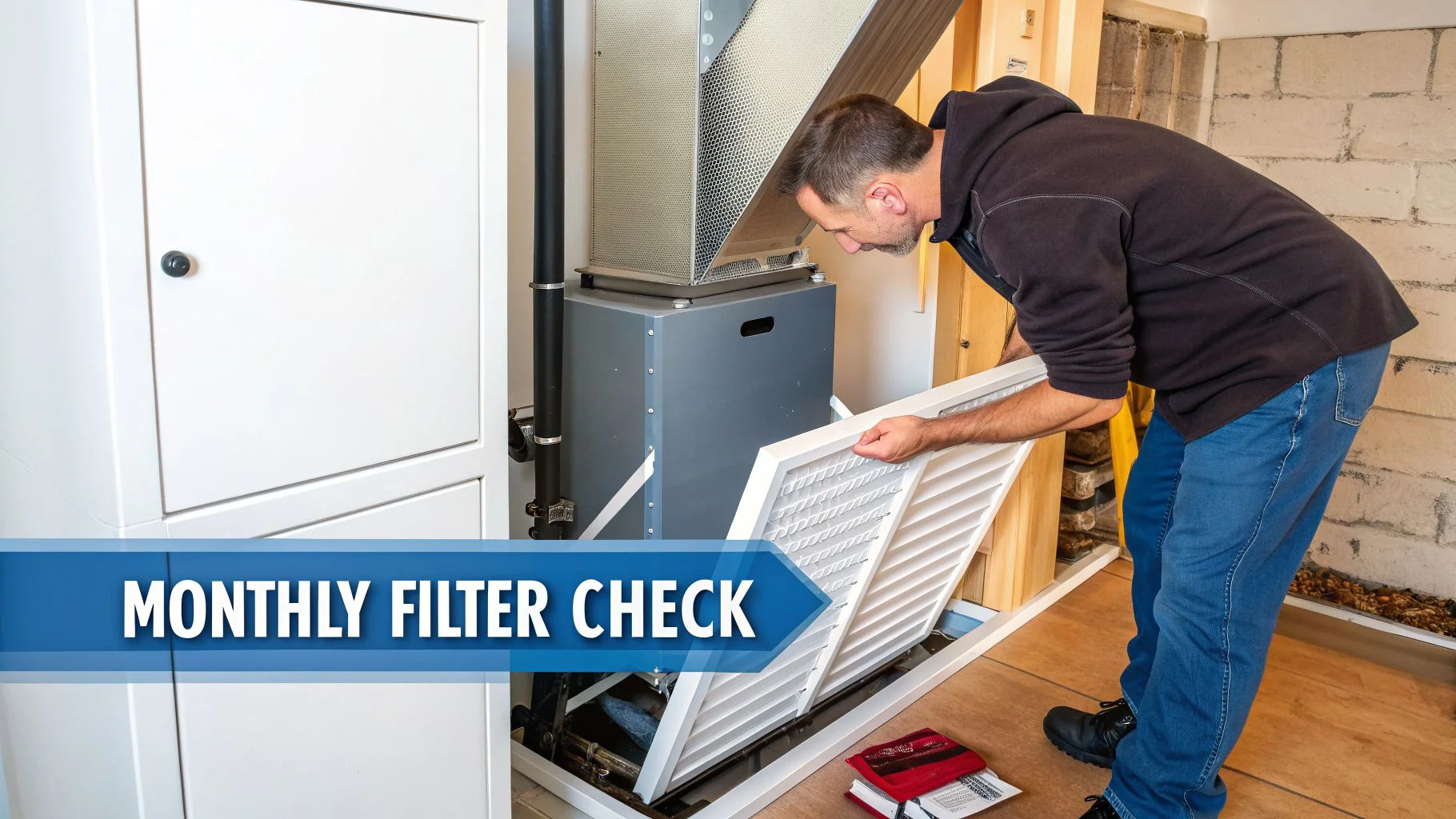
- Check Your Air Filter Monthly: This one is non-negotiable. A dirty, clogged filter is one of the top reasons furnaces fail. It chokes the airflow, forcing your furnace to work harder and eventually overheat. That trips the safety switches and shuts the whole thing down. Set a monthly reminder on your phone—it’s that important.
- Keep the Furnace Area Clear: Your furnace needs room to breathe. That means no storing boxes, laundry baskets, or anything flammable within about three feet of the unit. Good clearance ensures proper airflow for combustion and, more importantly, prevents a serious fire hazard.
- Inspect Outdoor Vents: Every furnace has intake and exhaust pipes that run to the outside of your house. After a big snowstorm or on a windy day, take a walk outside and make sure these vents are totally clear of snow drifts, leaves, or even animal nests. A blockage here can shut your system down fast.
Pay special attention to those vents. A blocked exhaust can cause your furnace to shut down as a safety measure. In a worst-case scenario, it could lead to dangerous carbon monoxide building up inside your home.
The Value of an Annual Professional Tune-Up
While those DIY tasks are vital, they don't replace the trained eye of a professional. An annual tune-up is the single most effective thing you can do to prevent surprise breakdowns. This is where a technician goes way beyond just swapping a filter. To see what a comprehensive check-up involves, this definitive HVAC maintenance plan offers a great look, even from a contractor's point of view.
During a professional tune-up, a certified technician will:
- Clean and inspect the burners, looking for the right flame color and strength.
- Test and thoroughly clean the flame sensor and igniter.
- Check the gas pressure and adjust it for optimal performance.
- Inspect the heat exchanger for cracks or signs of wear and tear.
- Test all safety controls and electrical connections.
- Lubricate moving parts to cut down on friction and wear.
This is how small problems—like a weakening igniter or a dirty component—get caught before they leave you in the cold. It’s a small investment that delivers big returns in reliability, lower energy bills, and total peace of mind all winter long.
Frequently Asked Questions About Furnace Ignition
We've walked through the common culprits that stop a gas furnace from firing up, from the simple fixes to the jobs best left for a pro. But we still get a lot of the same questions from homeowners around Central Minnesota. Here are the quick-and-dirty answers to the ones we hear most often, so you can feel a little more confident when your heat goes out.
How Can I Tell if My Furnace Igniter Is Bad
The dead giveaway of a bad igniter is when you hear your furnace click on, but the burners never actually light. You hear the fans and motors start their sequence, but that familiar "whoosh" of the flame catching never happens.
Most modern furnaces use a hot surface igniter, and you can usually see it working through a small viewport on the front panel. When the thermostat calls for heat, this little part is supposed to glow a vibrant, hot orange. If you watch the startup and that igniter never glows, it's almost certainly burned out and needs to be replaced. But if it does glow brightly and there's still no flame, your problem is somewhere else—likely the gas valve isn't opening.
Can a Thermostat Problem Stop My Furnace from Igniting
Oh, absolutely. A wonky thermostat is one of the first things we check, and it’s a surprisingly common reason a gas furnace fails to ignite. Sometimes the fix is as simple as swapping out dead batteries. If the thermostat has no power, it can't send the "call for heat" signal to the furnace in the first place.
Before you do anything else, make sure your thermostat is set to ‘Heat’ and the target temperature is a few degrees higher than the current room temperature. It sounds obvious, but you’d be surprised how often this simple check saves a homeowner the cost of a service call.
A furnace that lights for just a few seconds and then shuts right back off is a classic sign of a dirty flame sensor, not a bad thermostat. The thermostat kicks off the process, but it's the flame sensor's job to confirm ignition and keep things running safely.
What Is the Average Cost to Replace a Furnace Igniter
Here in areas like St. Cloud or Foley, having a professional replace a furnace igniter will typically run you between $175 and $450. The final price tag really depends on your furnace model and how much of a pain the part is to access.
That cost covers the technician's time to diagnose the problem, the brand-new part, and the labor to install it correctly and safely. It's a job worth paying for, just for the peace of mind that it's done right.
My Furnace Lights for a Second Then Shuts Off. Why?
This is one of the most frustrating furnace problems, and it almost always points to one thing: a dirty or failing flame sensor. The flame sensor has a simple but critical job—to confirm that a flame is actually present after the gas valve opens.
When that little metal rod gets coated with carbon and gunk, it can't "see" the flame anymore. As a safety measure, it tells the control board to immediately shut off the gas supply to prevent raw gas from flooding your home. Cleaning the sensor is a job some handy homeowners can tackle, but if a good cleaning doesn't fix the short-cycling, the sensor itself is probably shot and needs replacing.
Don't let a finicky furnace leave you shivering. If these tips don't get your heat back on, or if you're just not comfortable poking around inside your unit, the licensed experts at Neighborhood Plumbing, HVAC, and Electrical are always ready to help. We’re here with 24/7 emergency service for homeowners all over Central Minnesota.
Schedule your furnace repair or tune-up today by visiting 4neighborhood.com or giving us a call.