When your furnace won't stay lit, the culprit is often a surprisingly small part: a dirty or failing flame sensor. This little guy can't see the burner's flame, so it shuts off the gas as a safety measure. It's a smart feature designed to stop unburned gas from filling your home, and it’s behind roughly 40% of our service calls here in Central Minnesota.
Decoding Furnace Shutdowns
We've all been there. It's the middle of a cold Central Minnesota night, and you hear the familiar click of the furnace starting up… only for it to go silent a few seconds later. It's frustrating, but it's not just a random glitch. This is your furnace's safety system doing exactly what it's supposed to do, preventing it from running when something's not quite right. This on-again, off-again behavior is what we in the biz call "short cycling," and it’s your furnace’s way of waving a red flag.
Most of the time, this isn't a sign of a massive, catastrophic failure. Instead, it’s usually a single, specific part that’s causing the hiccup. Think of your furnace like an assembly line—every station has to do its job perfectly. If one station fails, whether it's the ignition, the flame detection, or even the airflow, the whole line shuts down.
Understanding the Safety Lockout
Modern furnaces are packed with safety interlocks. When a sensor spots a problem—like a flame that isn't proving itself—it tells the main control board to hit the brakes and go into "lockout" mode. That's why you might hear the ignitor click on and the burners roar to life, only for it all to shut down just a few moments later. The system is protecting you and your home from a bigger problem.
Before you start digging into furnace components, it's always smart to check for simple electrical issues first. Knowing how to go about resetting circuit breakers safely is a great first skill to have if the furnace seems completely dead.
A furnace that shuts off right after lighting isn't necessarily "broken." More often than not, a safety device is just doing its job perfectly by reacting to a fault in the system.
To give you a head start, the table below connects the most common furnace behaviors to their likely causes. Use it as a quick guide to figure out what your furnace might be trying to tell you before you dive deeper.
Diagnosing Your Furnace's Shutdown Symptoms
Use this table to quickly identify the potential cause based on what you're seeing and hearing from your furnace.
| Symptom | Most Likely Cause | What It Means |
|---|---|---|
| Burners light for 3-5 seconds, then shut off. | Dirty or faulty flame sensor | The sensor can't "see" the flame and shuts off the gas as a safety precaution. |
| Pilot light won't stay lit on an older furnace. | Faulty thermocouple or pilot issue | The thermocouple isn't generating enough voltage to keep the gas valve open, or the pilot flame is too weak. |
| Furnace runs for 5-10 minutes, then shuts down. | Overheating due to poor airflow | A clogged air filter is causing the high-limit switch to trip, shutting down the burners to prevent damage. |
| You hear clicking, but the furnace never ignites. | Faulty ignitor or gas supply issue | The ignitor isn't getting hot enough to light the gas, or the gas valve isn't opening to supply fuel. |
This chart is a great starting point, but remember that these are just the most common culprits. If your furnace's symptoms don't match or you're not comfortable troubleshooting, it's always best to call a pro.
The Most Common Culprit: A Dirty Flame Sensor
If your furnace kicks on, roars to life for just a few seconds, and then abruptly shuts down, you’ve probably run into the most common reason a furnace won’t stay lit: a dirty flame sensor.
This small, often L-shaped metal rod is a simple but critical safety device. Its one and only job is to tell the furnace’s control board, "Yep, we have fire!" after the gas valve opens. If it can't "see" the flame because of a thin layer of grime, it immediately signals the system to shut off the gas. It’s a fantastic safety feature that prevents unburned gas from filling your home, but man, is it frustrating on a cold Minnesota day.
Why Flame Sensors Get So Dirty Here
Picture a typical St. Cloud home in January, with temperatures dropping to -20°F. Your furnace isn't just running; it's working overtime, cycling on and off constantly to keep your house from turning into an icebox. All that action speeds up the buildup of carbon and other gunk on the sensor's surface.
This exact issue—the furnace refusing to stay lit—accounts for about 40% of our service calls here at Neighborhood during the peak heating season. While industry data shows dirty flame sensors are a top problem nationwide, that number climbs closer to 50% in cold climates like ours. The extreme temperatures and heavy workload just take their toll.
This flow chart shows exactly how a dirty sensor interrupts your furnace's normal routine and triggers that safety shutdown.
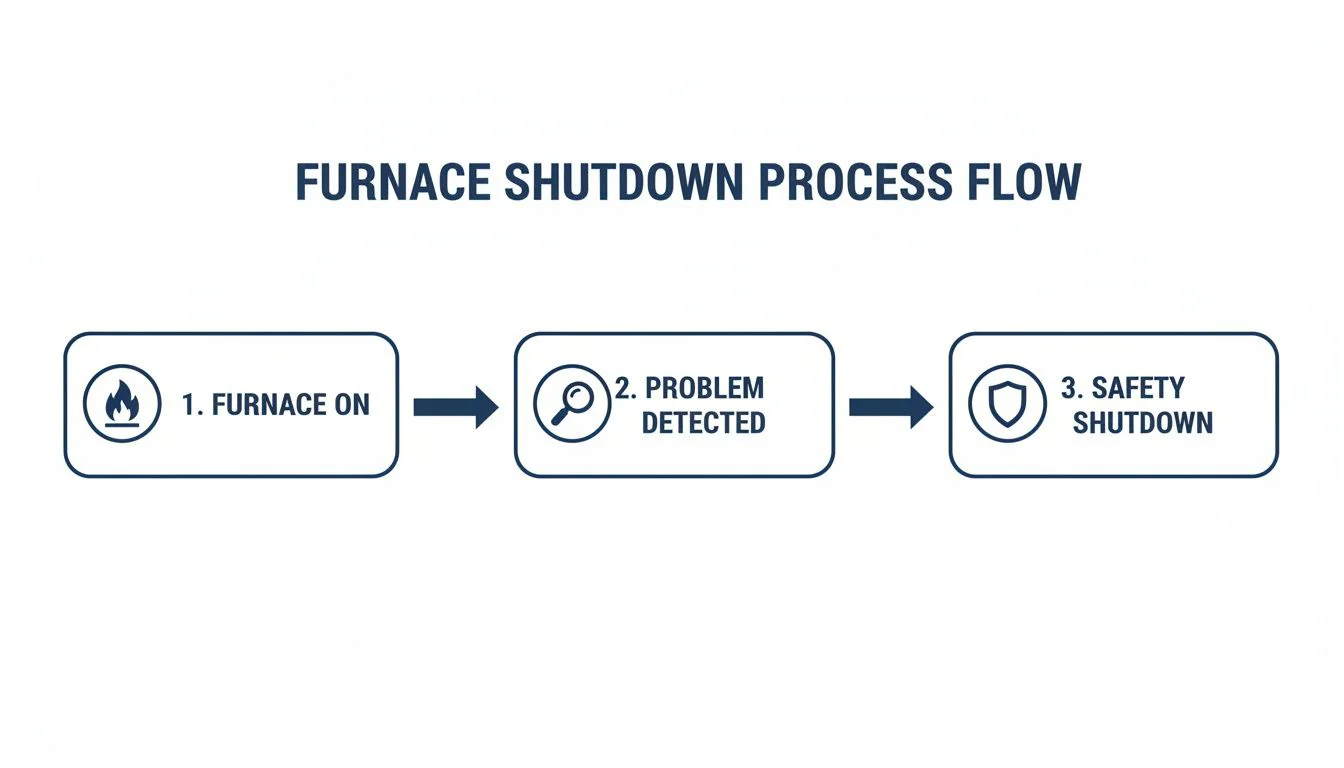
As you can see, the control board is waiting for that "all clear" signal from the flame sensor within seconds. If it doesn't get it, the system chooses safety over heat every single time.
How to Safely Clean Your Flame Sensor
For a handy homeowner, cleaning a flame sensor is a totally manageable task that can save you a service call fee. But before you even think about touching it, you have to put safety first. No exceptions.
Always Start With Safety
- Kill the Power: Head to your electrical panel and flip the breaker for your furnace. You can also use the furnace service switch, which usually looks like a regular light switch on or near the unit itself.
- Shut Off the Gas: Find the gas valve connected to your furnace. It typically has a handle that runs parallel with the pipe. Give it a quarter-turn so it’s perpendicular to the pipe. This shuts off the gas flow.
Once you’re 100% sure the power and gas are off, you can find the sensor. It’s a thin, metallic rod with a slight bend, and it’s always positioned right in the path of the last burner. It's usually held in place by a single screw. For more help, you can check out our guide on how to locate the flame sensor in your furnace for detailed pictures.
Pro Tip: Whatever you do, do NOT use sandpaper or an abrasive file to clean the sensor. This will scratch the metal, creating tiny grooves where carbon can build up even faster next time. You’ll just make the problem worse in the long run.
To clean it, all you need is a piece of fine steel wool or even a clean, crisp dollar bill. Gently scrub the metal rod to polish off the white or black residue until it’s shiny again. Pop the sensor back in, turn the gas and power back on, and try starting the furnace.
If it stays lit, you're all set! If the problem continues or you can't comfortably reach the sensor, it’s time to call a Neighborhood pro to take a look.
Solving Pilot Light and Thermocouple Issues in Older Furnaces
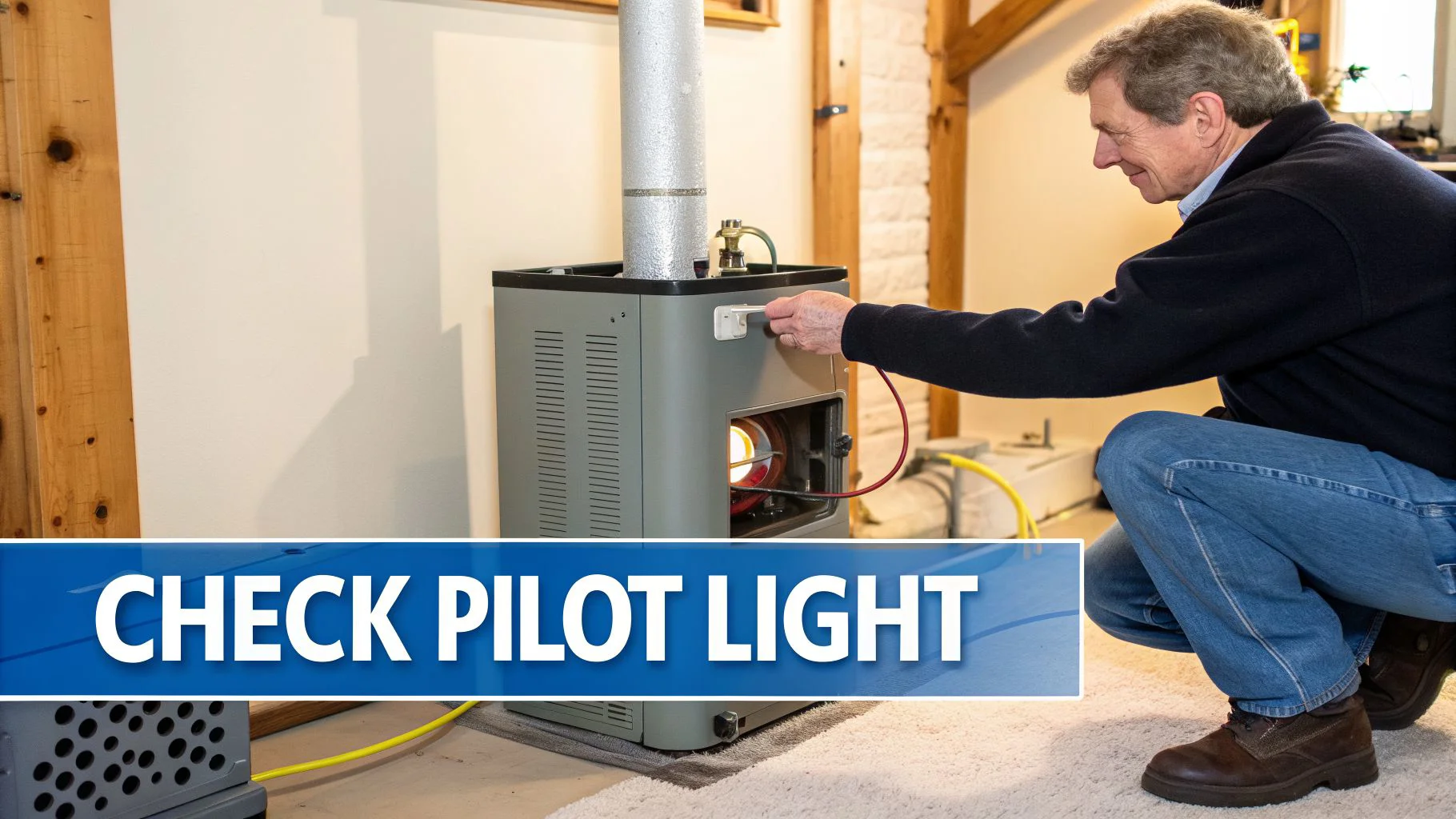
While most new furnaces have electronic ignitors, plenty of homes in communities like Foley and Sauk Rapids are still heated by older, workhorse units with a standing pilot light. If your furnace won't stay lit and you have one of these models, the problem is almost always tied to the pilot assembly—a tiny, constant flame that lights the main burners when your thermostat calls for heat.
Think of the pilot light and the thermocouple as a safety team. The thermocouple is a small metal rod that sits right in the pilot flame. As long as it stays hot, it generates a tiny bit of electricity, telling the gas valve it's safe to stay open. If the pilot flame ever goes out, the thermocouple cools down, the electrical current stops, and the gas valve snaps shut.
It’s a fantastic safety feature that prevents gas from leaking into your home. The trouble starts when the thermocouple itself fails or the pilot flame gets too weak to keep it hot enough. That’s when your furnace will refuse to stay lit, even moments after you’ve relit it.
Why Your Pilot Light Won't Stay Lit
So, you went through the trouble of relighting the pilot, held the button down, and the moment you let go… poof, it goes out again. This frustrating little problem usually points to one of two things: either the thermocouple has gone bad, or the pilot flame itself is just too weak and sputtering.
Here in Central Minnesota, a clogged pilot orifice is the culprit behind 28% of "furnace won't stay lit" calls, especially in pre-2000 homes from Foley to Forest Lake, where 55% of heating systems still have standing pilots. Over time, dust and debris can restrict gas flow by up to 60%. This starves the flame, causing it to turn from a strong blue into a lazy, flickering yellow, which isn't hot enough to keep the thermocouple engaged for more than 10-30 seconds.
Inspecting The Pilot Flame And Thermocouple
Take a good, close look at the pilot flame right after you light it. A healthy flame is a strong, steady blue color and it should completely wrap around the tip of the thermocouple. If your flame looks perfect but the furnace still won't stay running, the thermocouple has likely failed and needs to be replaced.
On the other hand, a weak, flickering, or mostly yellow flame is a major red flag. This signals incomplete combustion, which isn't hot enough for the thermocouple and can even produce dangerous carbon monoxide. This is almost always caused by a dirty pilot orifice.
Safety First: A weak or yellow pilot flame isn't just an annoyance; it's a potential safety hazard. Incomplete combustion is no joke. If you see this, your system needs a professional tune-up, period.
While some people try cleaning the pilot orifice themselves, it’s a very delicate job. If you aren't completely comfortable working on furnace components, your safest bet is to call a licensed HVAC tech. They have the specialized tools and experience to clean the assembly without causing damage, or they can quickly swap out a bad thermocouple. For a closer look at the whole process, you can check out our guide on finding and relighting your pilot light.
Checking for Overheating and Airflow Problems
If your furnace fires up, runs for a few minutes, and then just gives up, you might assume the flame is the problem. But a lot of the time, the issue has nothing to do with the burners at all. It's actually about airflow.
Think of it this way: your furnace generates a massive amount of heat, and it needs to push that heat out into your home. If it can’t "breathe" properly, that heat gets trapped inside the unit. When temperatures get dangerously high, a built-in safety sensor called the high-limit switch does its job and shuts the whole system down to prevent a fire or serious damage.
Your Air Filter Is the First Line of Defense
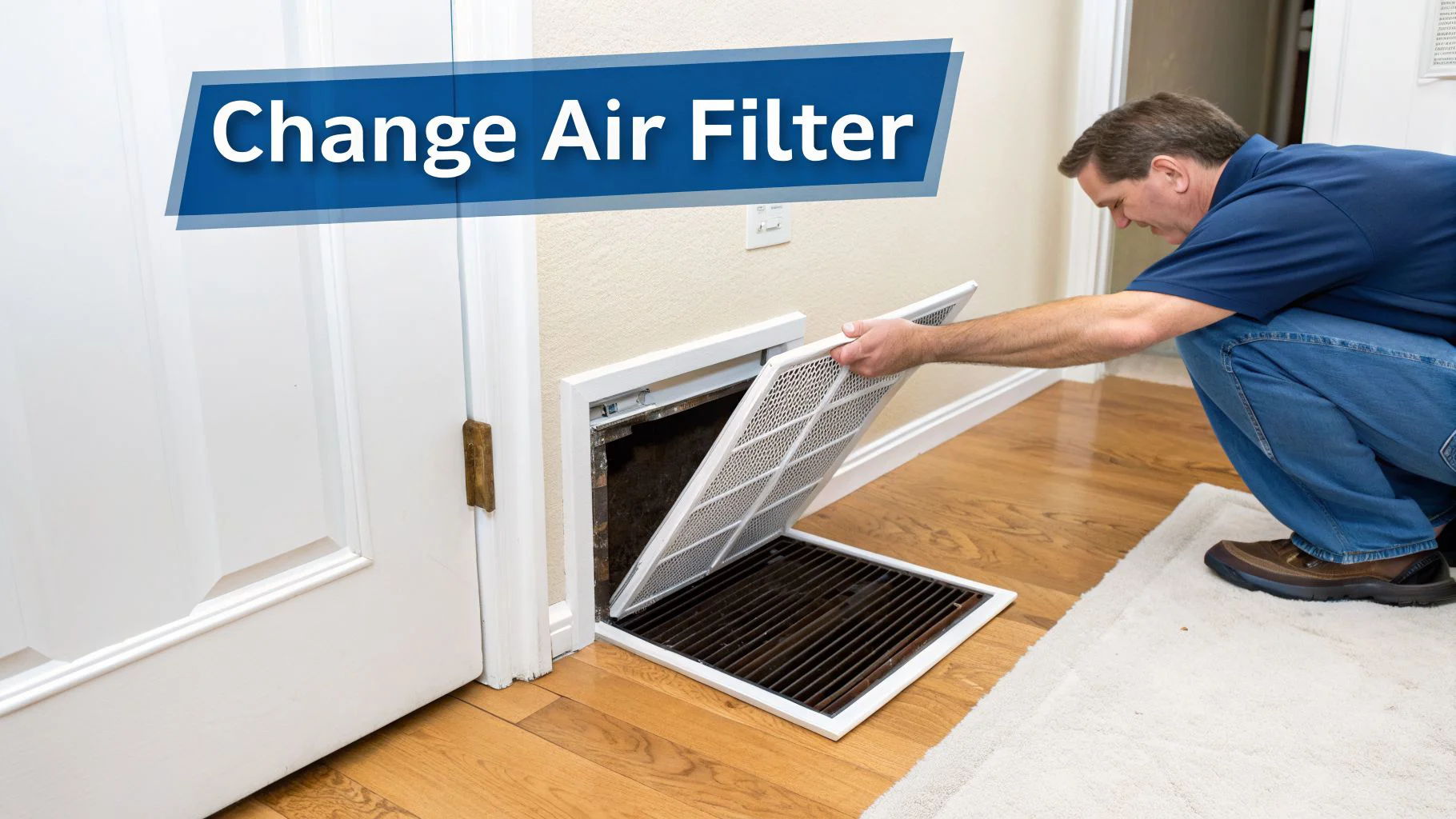
So what’s blocking the airflow? Nine times out of ten, it’s a dirty, clogged air filter. It’s such a simple part, but it has a huge effect on your furnace’s health. When that filter is caked with dust and debris, air struggles to get through.
During a mild fall, you might get away with changing your filter every 90 days. But a Central Minnesota winter is a whole different ballgame. Your furnace is running almost nonstop, which means it’s pulling way more air—and dust—through the system. From about November to March, you really need to be checking that filter every 30 days.
A quick visual check is all you need. Pull the filter out and hold it up to a light. If you can't see the light through it, it’s long overdue for a change.
Look for Other Airflow Blockages
While a dirty filter is the usual suspect, it’s not the only thing that can choke your furnace. Once you’ve swapped in a clean filter, do a quick walkthrough of your house and keep an eye out for these other common culprits:
- Blocked Vents and Registers: Make sure your furniture, rugs, or drapes aren't sitting on top of any supply or return air vents. Every single vent is important for keeping the air moving correctly.
- Closed Dampers: Some homes have little levers on the ductwork called dampers, which are used to adjust airflow to different zones. Check to make sure one wasn't accidentally knocked closed.
Fixing these simple things often gets the air moving again and solves the overheating problem right away.
But if you've put in a clean filter and all your vents are clear, and the furnace still shuts down after a few minutes, the high-limit switch itself might be faulty. If you suspect that's the case, it’s time to stop and call a professional. For a closer look at this specific issue, you can learn more about what to do when your furnace is overheating and shutting down in our other guide.
Knowing When It's Time to Call an HVAC Professional
So, you’ve cleaned the flame sensor and even swapped out the air filter, but your furnace is still giving you the cold shoulder. While a little DIY can sometimes get your heat running again, there’s a point where you need to put the tools down. Knowing when to stop is just as important as knowing what to try in the first place, especially for your family's safety.
If your furnace won't stay lit after you’ve gone through the simple fixes, that’s a pretty clear sign something deeper is wrong. A furnace that keeps acting up after you’ve cleaned it isn't just dirty—it's likely telling you a part is failing and needs an expert’s touch.
Signs You Need an Expert Immediately
Some furnace problems are more than just an inconvenience; they're genuine emergencies. If you see, smell, or hear any of the following, your one and only next step should be calling a licensed HVAC technician. Don't try to fix these yourself.
- The Smell of Gas: This is the big one. If you smell something like rotten eggs near your furnace or anywhere in your house, you could have a gas leak. Don't touch any light switches or electronics. Get everyone out of the house right away, and from a safe distance, call your gas company. After that, call a professional like Neighborhood.
- A Cracked Heat Exchanger: Have you noticed black soot marks on the outside of your furnace? Or maybe a small puddle of water at the base? If your carbon monoxide detector goes off, that's the most urgent signal of all. These are classic signs of a cracked heat exchanger, a serious hazard that can leak deadly carbon monoxide gas into your home.
- Recurring Problems: This is when the furnace seems to be playing games with you. You clean the flame sensor, and it works… for a day. You reset it, and it kicks on for an hour before quitting again. These on-again, off-again issues mean there's a more complex problem that basic maintenance just won't solve.
When you're facing a problem that goes beyond a simple cleaning, calling a pro is the smartest and safest decision. A technician's specialized diagnostic tools can pinpoint hidden issues—like a failing draft inducer motor or a faulty gas valve—that a visual inspection would miss, saving you time and preventing a more expensive failure down the line.
Why Professional Diagnostics Matter
An HVAC technician’s real job is to see what you can’t. They don’t just look; they test. Using tools like multimeters for electrical parts and combustion analyzers for fuel burn, they can get to the root of the problem safely.
That flickering flame that keeps dying out might not be a dirty pilot light. It could be a sign of low gas pressure, an issue that’s impossible—and dangerous—for a homeowner to diagnose without the right equipment.
For a broader look at common HVAC repair problems and when to call a technician for issues across different systems, resources like this can be helpful. But when your heat is on the line, trusting a trained professional from Neighborhood ensures the job is done right, keeping your Central Minnesota home safe and warm all winter long.
Common Questions About Furnace Ignition Problems
Even after walking through the troubleshooting steps, it's normal to still have questions. When your furnace decides to quit in the middle of a Central Minnesota winter, things can get stressful fast. We hear these questions from homeowners all the time, so we’ve put together some straight-to-the-point answers to help you figure out what's going on.
Think of this as your quick guide to understanding just how serious the problem might be and whether it’s something you can handle or if it's time to call in the pros.
How Much Does It Cost to Fix This Problem?
This is the big one, and the honest answer is: it depends. The cost to fix a furnace that won’t stay lit can range from a few bucks to a few hundred, depending entirely on what’s broken.
A simple DIY fix, like gently cleaning a flame sensor with steel wool, might not cost you anything more than a few minutes of your time. But if you call us to do that same cleaning, you’re looking at a standard service call fee, which is typically between $100 to $250.
If a part actually needs to be replaced, the costs start to climb.
- Thermocouple Replacement: This is a super common fix for older furnaces. You can generally expect this to cost somewhere between $150 and $300.
- Flame Sensor Replacement: If cleaning the old one doesn’t do the trick, a full replacement will usually run in the $200 to $400 range.
- Bigger Issues: Now, if we’re talking about a more serious failure like a bad control board or a failing draft inducer motor, the repair costs can easily jump to $600 or more, based on the part and the labor involved.
Can a Bad Thermostat Make My Furnace Shut Off?
Yes, a faulty thermostat can definitely cause furnace headaches, but the symptoms are usually a bit different from what you're seeing. A bad thermostat is notorious for causing "short cycling"—that’s when the whole system, both burners and blower fan, turns on and off every few minutes. Or, it might just fail to tell the furnace to turn on at all.
If your burners fire up and then shut off after just a handful of seconds, but the main blower fan keeps running for a while, the problem is almost always inside the furnace. That points toward a safety device doing its job, like a dirty flame sensor or a tripped limit switch, not your thermostat.
Why Does My Furnace Only Stay Lit for a Few Minutes?
This is a classic symptom, and it almost always points to one specific problem: overheating caused by poor airflow. It's a safety feature in action.
Here’s what happens: Your furnace lights up and runs just long enough to get the heat exchanger nice and hot. But if a clogged air filter is blocking the airflow, all that intense heat gets trapped. Your furnace’s high-limit switch senses this dangerous temperature spike and immediately shuts down the burners to prevent a fire or damage to the unit. The blower fan will usually keep running to try and dissipate the excess heat.
If your furnace runs for about 3-10 minutes and then quits, the very first thing you should do is go check your air filter. A fresh filter often solves this problem instantly.
If these answers don't quite solve your issue or you think you’re dealing with a bigger problem, don't wait. The licensed technicians at Neighborhood Plumbing, HVAC, and Electrical are on call 24/7 to safely get to the bottom of it and get your heat back on. We're here to keep your Central Minnesota home warm and safe. Schedule your service online or call us today!