If your furnace stopped working overnight, it’s easy to jump to the worst-case scenario. But more often than not, the culprit is a simple issue you can fix yourself. Common problems include a tripped circuit breaker, a clogged air filter, or even just the wrong thermostat settings. Before you make a costly emergency call, spending a few minutes on some basic troubleshooting can often get your heat back on.
That Frigid Moment Your Furnace Stops Working Overnight
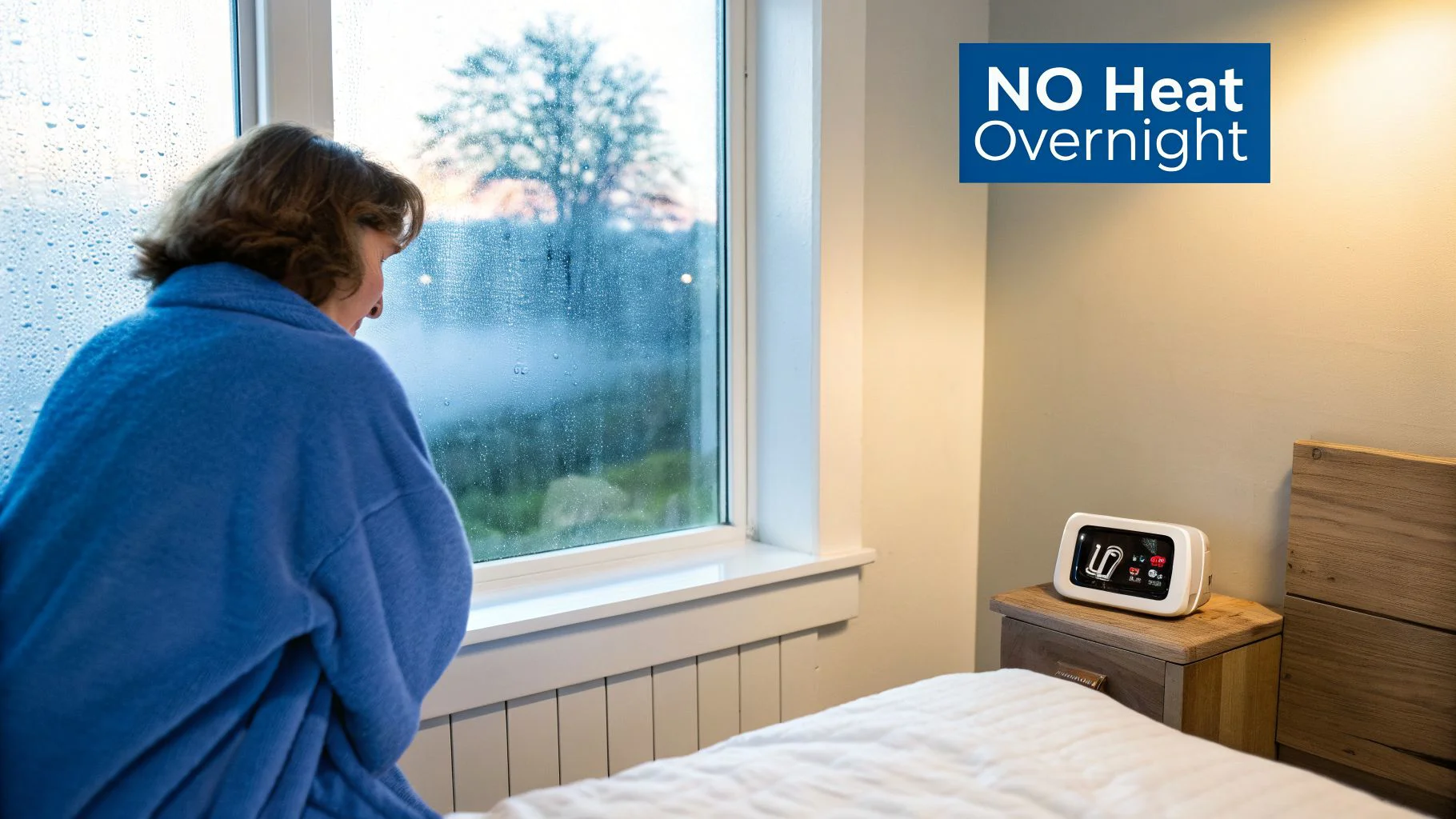
It’s a feeling every Minnesotan dreads—waking up in your St. Cloud or Forest Lake home to a silent, freezing house. That sudden, deep cold is more than just uncomfortable; it’s a real worry, especially when temperatures outside are dropping fast.
This guide is your first line of defense. We'll walk you through the essential checks you can perform safely on your own before you even think about calling a professional.
Understanding the Urgency and Risks
When your furnace quits in the middle of a Minnesota winter, the dropping temperature inside your home is the most obvious problem. But a malfunctioning heating system can hide other dangers, especially during the coldest months when furnaces are pushed to their limits.
According to the U.S. Fire Administration, an average of 34,200 residential heating fires occurred each year between 2017 and 2019. These incidents spike dramatically in January, which accounts for 20% of the annual total—the exact time when places like Sauk Rapids face their most brutal cold snaps. You can review the full report on the USFA's official site.
A furnace that stops working overnight isn't just about comfort; it's a critical safety issue. Whether it's the risk of frozen pipes or a malfunction signaling a fire hazard, addressing it promptly is essential.
Our goal here is to give you actionable knowledge. We'll help you quickly figure out if you're dealing with a simple fix or something that needs immediate expert attention. This way, you can keep your family safe and comfortable by either solving the problem yourself or getting professional help on the way fast. With some real-world advice from our technicians, you can navigate this stressful situation with confidence.
Simple DIY Checks Before You Make the Call
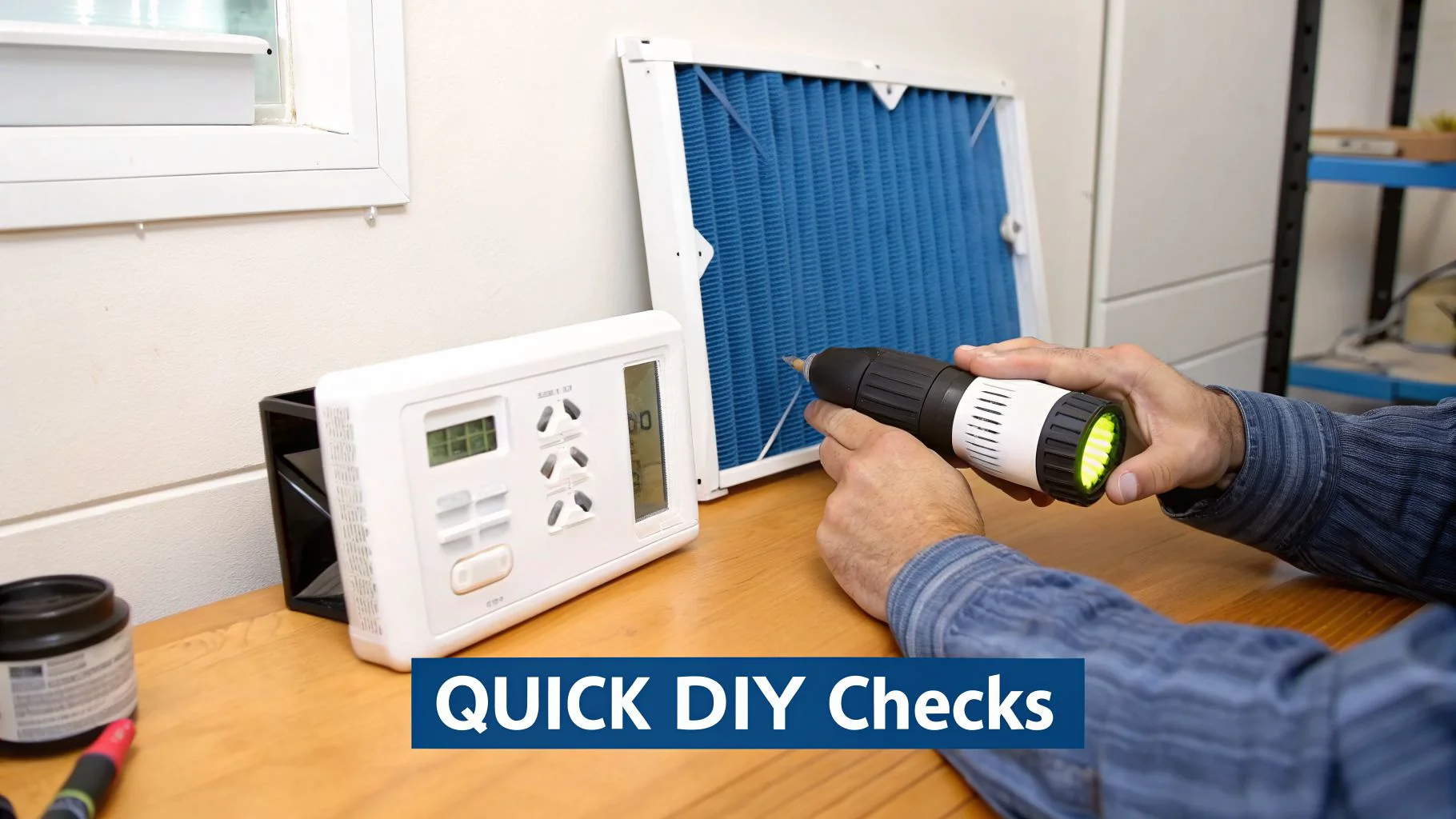
Waking up to a cold house is one of those moments that sends a little jolt of panic through you. Before you grab the phone and brace for an emergency service fee, take a deep breath. A surprising number of "broken" furnaces aren't actually broken at all.
Oftentimes, the fix is something you can find and handle yourself in just a few minutes, without any special tools. Let’s run through the same simple checks our own technicians start with on a service call. You might just save yourself some time and money.
Before we dive in, here's a quick reference table. Run through these common culprits first.
Furnace Troubleshooting Quick Checklist
| Check Area | What to Look For | Easy Fix Action |
|---|---|---|
| Thermostat | Blank screen, wrong setting (Cool/Off) | Replace batteries, switch to "HEAT," raise temp 5°+ |
| Power Switch | Switch is in the "OFF" position | Flip the switch back to "ON" |
| Breaker Box | The furnace breaker is tripped or off | Flip the breaker back to "ON" (once only) |
| Air Filter | Clogged with dust and debris | Replace with a new, clean filter |
| Furnace Door | Panel is loose or not fully closed | Re-secure the furnace cover panel |
These five things account for a huge percentage of no-heat calls, especially after a long night. Now, let’s get into the details for each one.
First Look at Your Thermostat
The thermostat is your furnace's command center. If it isn't telling the furnace to turn on, your system will just sit there, no matter how cold the house gets. It’s always the first place to check.
You’d be shocked how many service calls come down to a simple thermostat mix-up. Did a family member accidentally switch it from "Heat" to "Cool" or just turn it "Off"? It happens more than you'd think.
Here's what to check on your thermostat:
- Is it set to "HEAT" mode? This sounds obvious, but it’s the most common oversight we see.
- Turn up the temperature. Make sure the target temperature is at least 5 degrees higher than the current room temperature. This guarantees it's actually calling for heat.
- What do the batteries look like? If you have a thermostat with a dim or blank screen, dead batteries are almost always the problem. Just pop in a fresh set.
If you have a smart thermostat, make sure it's still online. A lost Wi-Fi connection can sometimes stop it from working correctly.
Inspect Your Power and Breaker Box
Just like any other big appliance, your furnace needs electricity. A power interruption is another top reason for a furnace to suddenly stop working overnight.
First, look for the furnace power switch. It usually looks like a normal light switch and is located on or near the furnace itself. Sometimes it's at the top of the basement stairs. These get flipped off by mistake all the time. Make sure it's in the "ON" position.
Next, find your home's main electrical panel. Look for the circuit breaker labeled "Furnace," "HVAC," or something similar. If the switch is flipped to the "OFF" position or stuck in the middle, it's tripped.
Important: If you reset a breaker and it trips again right away, do not keep flipping it back on. This is a clear sign of an electrical fault that needs a professional. Forcing it could cause serious damage or create a fire hazard.
The Most Common Culprit: The Clogged Air Filter
If I had to bet on one thing, it would be this. A severely dirty air filter is the number one reason we see for furnace shutdowns. When the filter gets clogged with dust, pet hair, and other gunk, it chokes off the airflow.
Your furnace needs to breathe. When it can't, it works way too hard and starts to overheat. A safety device called a high-limit switch will then do its job and shut the whole system down to prevent a fire.
Luckily, this is an easy fix:
- Turn off the power switch to your furnace for safety.
- Find the filter slot—it’s usually a wide, thin door between the main unit and the big return air duct.
- Slide the old filter out. You'll know if it's dirty. If you can't see light through it, it's long overdue for a change.
- Slide in a new filter. Make sure the arrows on the side of the filter frame are pointing toward the furnace.
For a more detailed walkthrough, check out our guide on how to troubleshoot a furnace that won’t start. Keeping that filter clean is the best thing you can do to prevent surprise shutdowns and keep your system running efficiently.
Why Your Furnace Really Stopped Working
So, you’ve tried the easy stuff and you're still freezing. When a furnace gives up overnight after you've checked the basics, the culprit is usually a deeper mechanical or electrical problem. These are the issues our technicians see all the time in homes from Blaine to Chisago City when a simple flip of a switch won't do the trick.
Knowing what might be wrong helps you have a more productive conversation with a pro, which means getting your heat back on faster.
One of the most common points of failure is the ignition system. Most modern furnaces don't have an old-school pilot light that’s always on. Instead, they rely on an electronic ignitor or a hot surface ignitor to get the fire started. These parts are surprisingly fragile and get blasted with intense heat every time your furnace kicks on, so they eventually just wear out. When an ignitor dies, the furnace can't light the gas, and you get nothing but cold air.
The Brain and Senses of Your Furnace
Think of your furnace like it has a brain (the control board) and senses (various sensors). One of the most common troublemakers is a dirty flame sensor. This little metal rod has one job: to prove to the furnace's brain that there's an actual flame after the gas valve opens.
Over time, this sensor gets covered in a thin layer of carbon buildup. This gunk acts like a blindfold, and the sensor can no longer "see" the flame. Even though your furnace might be lighting perfectly, the control board gets a signal that there's no fire. It assumes dangerous, unburnt gas is filling up the chamber and—as a safety precaution—shuts the whole operation down. It’s a tiny part that can cause a massive headache.
Beyond the furnace itself, the thermostat can be the weak link. Sure, dead batteries are a simple fix, but the thermostat's internal parts can also just fail with age. It might start misreading the room temperature or, worse, stop sending the "call for heat" signal to your furnace in the first place.
This is a crucial distinction: your furnace might be in perfect working order, but if its command center—the thermostat—is on the fritz, it will never get the message to turn on.
Motor failure is another big one. Your furnace depends on at least two key motors to do its job:
- The Blower Motor: This is the workhorse fan that pushes warm air through the ductwork into your rooms. If the blower motor fails, the heat gets generated but has nowhere to go.
- The Inducer Motor: This is a smaller but critical motor that starts up before ignition. It clears out any old gases from the combustion chamber to make sure venting is clear. A dead inducer motor will prevent the furnace from even trying to light.
The Overlooked Safety Shutdowns
Sometimes, a furnace that stops working isn't broken at all—it’s just doing its job. Its built-in safety features might have detected a dangerous situation and shut everything down to protect your home and family. A severely clogged air filter, for example, does more than just hurt your air quality. It can cause the heat exchanger to overheat, triggering a high-limit switch that cuts the power to prevent a fire hazard.
The statistics on this are pretty sobering. According to research, operational problems like uncleaned units are a factor in 27% of residential heating fires, and mechanical failures contribute to another 21%. What’s more, an estimated 65% of residential HVAC systems suffer from poor installation, leading to chronic airflow issues that cause these kinds of unexpected shutdowns. You can dig into the numbers yourself in the full CPSC report.
Red Flags That Demand an Immediate Professional Call
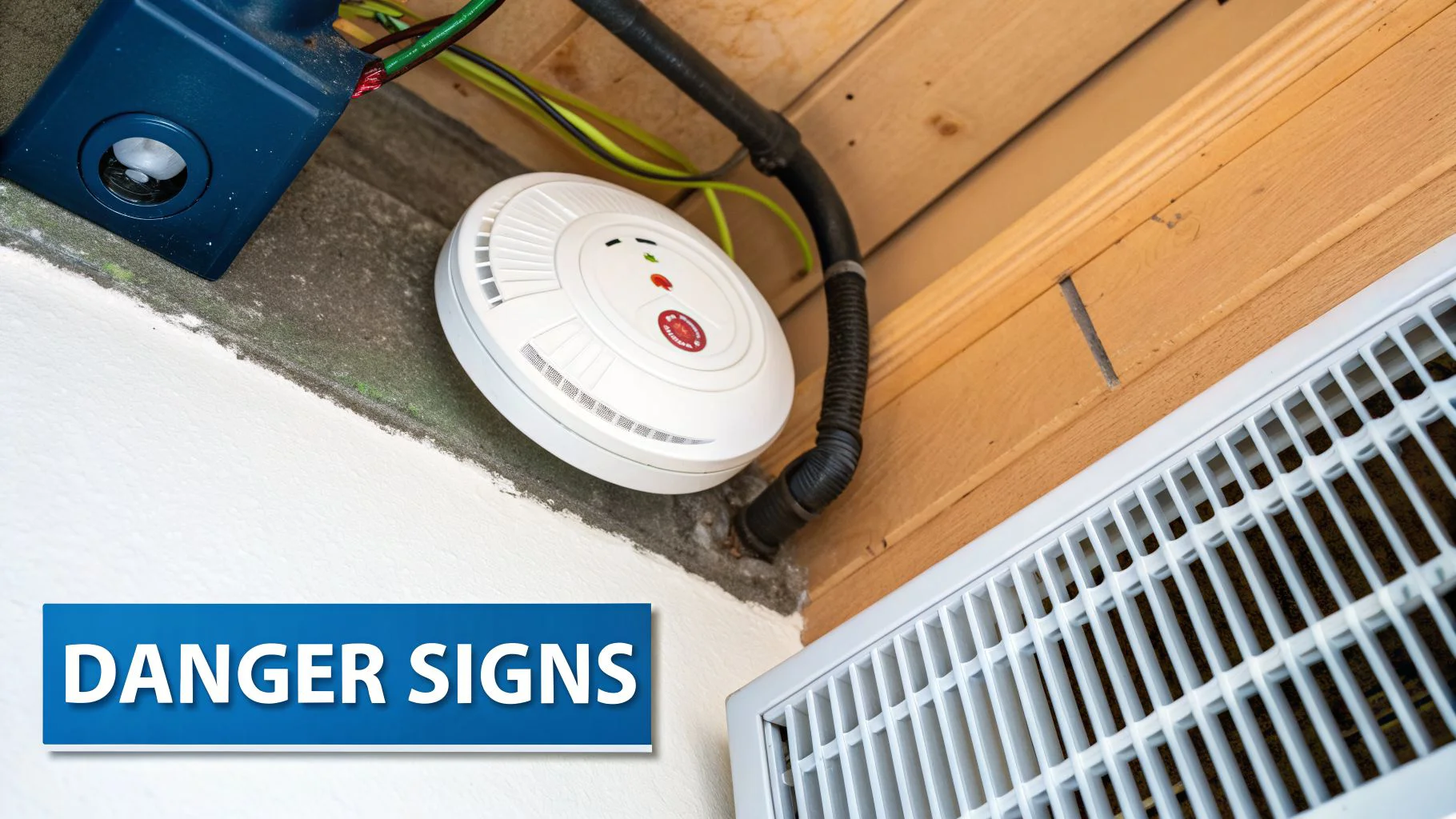
While a lot of furnace hiccups are simple fixes you can handle yourself, some problems are downright dangerous. These are the moments when you stop troubleshooting and pick up the phone. For the safety of your home and family, these red flags are non-negotiable—it's time to call a pro, immediately.
The Smell of Gas or Fuel Oil
This is the big one. If you catch a whiff of natural gas—that distinct rotten egg smell—or the sharp, oily scent of heating fuel, you have a potential leak on your hands. Don't flick any light switches, don't try to find the source, and don't hesitate.
Here’s exactly what you need to do:
- Get everyone out. Grab your family and pets and leave the house right away.
- Call from a safe distance. Once you're a good ways away from your home, call your utility company’s emergency line or 911.
- Stay out. Do not go back inside until emergency services have given the all-clear.
We have a whole guide that walks you through what to do if your furnace smells like gas if you need more details on this specific emergency.
Loud, Alarming Noises
Your furnace should be pretty quiet, aside from the gentle hum of the blower and the rush of air. If you suddenly start hearing loud, strange noises, it’s a clear sign of a serious mechanical issue that can get worse fast.
- Loud Banging or Booming: This is often a sign of delayed ignition. Gas is building up inside the furnace before it finally ignites, causing a mini-explosion. It’s as bad as it sounds.
- Scraping or Screeching Metal: These high-pitched, grinding sounds almost always point to a problem with the blower motor or a loose part that's about to cause some major damage.
A furnace making these kinds of noises is a system in distress. The best thing you can do is shut the whole system down and call for service. You could be preventing a complete breakdown and a much more expensive replacement.
Carbon Monoxide Detector Alarms
Never, ever ignore a carbon monoxide (CO) detector that's going off. Carbon monoxide is a colorless, odorless gas that can be produced when your furnace isn't burning fuel correctly, and it is absolutely lethal.
If that alarm sounds, treat it as a real emergency. Open up some windows to get fresh air circulating, get everyone out of the house immediately, and call 911 from outside. Don't just assume it's a faulty detector. CO exposure can lead to serious illness or death within minutes. A furnace that has triggered a CO alarm should never be used again until a licensed technician has inspected it and declared it safe—a cracked heat exchanger is a common culprit and a huge safety risk.
What to Expect During Your Emergency HVAC Visit
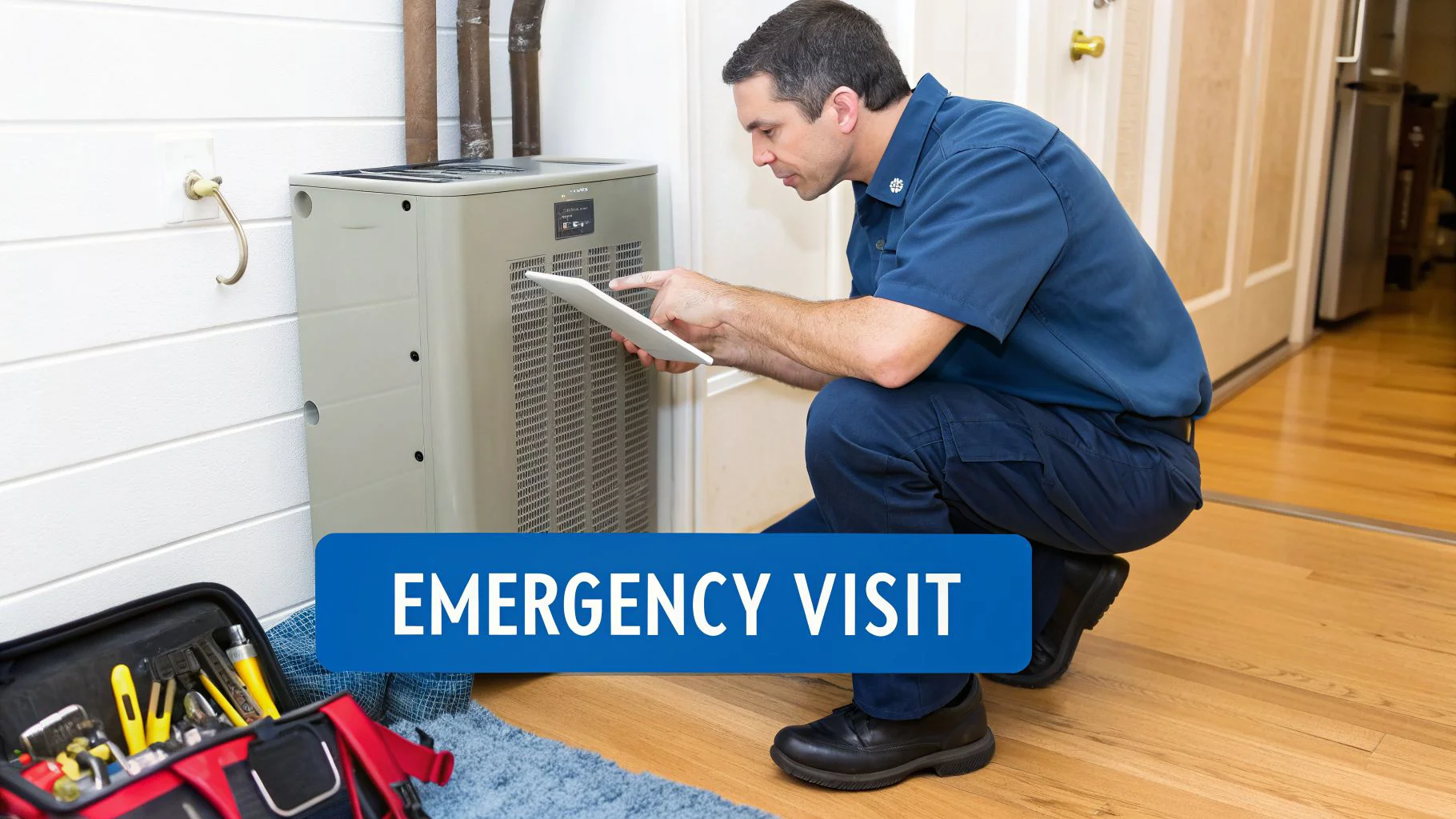
Knowing a stranger is about to show up at your door—especially when your furnace stopped working overnight—can add another layer of stress to an already cold situation. We get it. That’s why we’ve built our entire process around being as transparent and efficient as possible, so you know exactly what’s happening every step of the way.
The moment our licensed technician arrives, their first priority is a full diagnostic check. This isn't just a quick peek. They’ll use specialized tools to test components, check electrical readings, and figure out what’s really going on with your system. Our goal is to find the root cause of the failure, not just put a bandage on a symptom.
Clear Communication and Upfront Pricing
Once we know what’s wrong, our job is to explain it in plain English. No confusing technical jargon, just a straightforward breakdown of what failed—whether it's a burnt-out ignitor, a seized blower motor, or a fried control board—and why.
From there, we’ll walk you through all your available repair options. This is where you’re in the driver’s seat.
We operate on a job-based pricing model. That means you’ll get a detailed, all-in quote for the repair before any work begins. There are no hidden fees or surprise charges, period.
You approve the price and the plan before we even pick up a tool. This no-pressure approach ensures you’re making the best decision for your home and your budget.
Helping Us Help You Faster
Want to make the service visit go even smoother? Having a little bit of information ready for our technician can be a huge help. It gives them a head start and allows them to zero in on the problem that much faster. When you're dealing with critical furnace failures, knowing how to access reliable emergency services is the key to a quick fix.
Here’s what you can have on hand that gives us valuable clues:
- The furnace's approximate age: Is it a newer unit or an old workhorse that’s seen its share of Minnesota winters?
- The symptoms you noticed: Did you hear any strange banging or grinding noises before it quit? Was it cycling on and off weirdly?
- Any DIY steps you took: Let us know if you already tried resetting the breaker or swapping out the filter.
This kind of background info helps our team connect the dots, which means a faster diagnosis and a quicker return to a warm, safe home for you.
How Proactive Maintenance Prevents Future Breakdowns
The absolute best way to handle a furnace that conks out overnight is to stop it from happening in the first place. This is where proactive maintenance goes from a "nice-to-have" to a flat-out necessity, especially when you're staring down another brutal Minnesota winter. An annual professional tune-up isn't just about dodging a breakdown; it's a critical investment in your home's safety, efficiency, and your own peace of mind.
Regular maintenance pays you back with lower energy bills and a furnace that actually lasts longer. When one of our technicians performs a tune-up, it's a lot more than just swapping out a filter. We get in there and meticulously clean the burners for efficient fuel combustion, test every electrical component for wear and tear, and inspect the heat exchanger for dangerous cracks that could leak carbon monoxide into your home.
The Real Cost of Neglect
Skipping your annual service might feel like you're saving a few bucks now, but it almost always leads to catastrophic failures at the worst possible moments. Just like a car needs a regular tune-up, an annual gas heater service is crucial for keeping your heating system safe and reliable. It’s a small investment that protects you from much bigger, more expensive problems down the road.
The numbers don't lie. Failure to properly clean heating equipment is a contributing factor in 27% of home heating fires and a staggering 73% of operational issues. Data from the National Fire Protection Association shows there were an average of 40,100 home heating fires each year from 2017 to 2019, which should tell every homeowner in Central Minnesota how seriously to take this. You can review the complete findings and learn more about heating equipment fire statistics.
Investing in preventative care is the most reliable strategy for homeowners in Sauk Rapids and Mora to ensure they have dependable heat when it’s needed most. It turns a potential emergency into a predictable, well-managed system.
A clean, professionally tuned furnace is a furnace that runs at its best. Not only does this save you real money on your monthly utility bills, but it also reduces the everyday strain on every single part, from the blower motor to the ignitor. You can explore all the benefits and see what's included in our guide to yearly furnace maintenance.
Ultimately, that one annual visit is your best defense against waking up to a freezing cold house.
Frequently Asked Questions About Overnight Furnace Failures
When your furnace quits in the middle of a Minnesota night, your mind starts racing with questions. It's completely normal. We get these calls all the time from families in Central Minnesota, and a few key concerns always come up first.
How Much Does an Emergency Furnace Repair Cost in Minnesota?
This is usually the first question, and the honest answer is: it depends entirely on what’s broken. The initial service call to diagnose the problem typically runs between $75 to $150.
After that, a simple fix like a bad flame sensor might put your total in the $150 to $250 range. But if a major part has failed, like a blower motor, you could be looking at anywhere from $400 to over $1,500. We’ll always tell you the full, flat-rate price upfront before we start any work, so you’re the one in control.
Our Promise: You will never be surprised by a bill. You get the full price and approve it before we touch anything, giving you complete control.
Is It Safe to Keep Resetting My Furnace?
No, you should never repeatedly reset your furnace. Think of it like this: your furnace is trying to tell you something is seriously wrong.
A system that keeps tripping a breaker or needs more than one reset is signaling an issue like overheating or an electrical fault. Forcing it to run over and over again is a good way to cause even more damage or, worse, create a serious fire hazard. One reset is a troubleshooting step; more than that is a clear signal to call a professional.
Should I Repair or Replace My Old Furnace?
This is the big question, and the decision usually comes down to three things:
- Age: How old is the unit? Anything over 15 years is considered past its prime.
- Repair Cost: Is the repair bill getting close to 30-50% of what a new, efficient furnace would cost?
- Efficiency: How much energy (and money) is your old furnace wasting every month just to keep up?
As a general rule, sinking a lot of money into a furnace that's over 15 years old is usually not the best long-term investment. Our technicians can give you an honest, no-pressure assessment of your specific situation to help you make the smartest financial choice for your home.
If you're still cold and need help now, don't wait. The licensed technicians at Neighborhood Plumbing, HVAC, and Electrical are available 24/7 for emergency service. Contact us today to get your heat back on fast.