When your furnace suddenly goes cold, one of the most common culprits is a bad ignitor. Getting it fixed is usually a quick job, but what’s it going to cost? You can typically expect a furnace ignitor replacement to cost between $100 and $250, which includes the part and professional installation.
That price covers everything from the technician’s trip to your home, diagnosing the problem, and safely getting your heat running again.
What Is the Real Cost to Replace a Furnace Ignitor?
Think of your furnace ignitor as the spark plug for your heating system. It’s a small, surprisingly fragile component with one critical job: creating the intense heat needed to ignite the gas and kickstart the heating cycle. Without a working ignitor, your furnace is just a big metal box blowing cold air—a situation no one wants during a Central Minnesota winter.
While the part itself is pretty inexpensive, the total replacement cost reflects the expertise needed to diagnose the problem correctly and handle the repair safely. Based on 2026 data, the national average for this job hovers around $175, though prices can swing from $90 to $400 depending on a few factors. If you're curious about national trends, HomeGuide.com offers some detailed cost breakdowns.
Quick Look Furnace Ignitor Replacement Cost Breakdown (2026 Averages)
To give you a clearer picture, the final bill really comes down to two things: the cost of the ignitor itself and the cost of the professional labor to install it. Here’s how that usually breaks down.
| Cost Component | Typical Price Range |
|---|---|
| Ignitor Part | $15 – $100 |
| Professional Labor | $80 – $200 |
As you can see, the labor makes up a significant chunk of the cost. Let's dig into why.
Cost Breakdown Summary
The final bill you see separates neatly into two main categories: the part and the labor.
The Ignitor Part: A universal hot-surface ignitor, which works with many different furnace models, typically costs only $15 to $35. However, if your furnace requires an Original Equipment Manufacturer (OEM) part from a specific brand like Trane or Carrier, that price can jump to anywhere from $20 to $100.
Professional Labor: A technician’s service call, which covers the trip, diagnostics, and the actual installation, generally adds $80 to $200 to the total. For an experienced pro, the entire process usually takes less than an hour from start to finish.
The real value in a professional replacement isn’t just the new part; it’s the peace of mind knowing the diagnosis is correct. Misdiagnosing the problem can lead to buying parts you don’t need or, worse, leaving you with a furnace that still won’t turn on.
Sometimes, what seems like a simple ignitor issue can uncover other problems. If your repair ends up being more complicated, it helps to know what to expect. Check out our guide on emergency furnace repair costs in MN to learn more about a wider range of potential expenses.
Understanding the Factors That Influence Your Final Bill
That average furnace ignitor replacement cost is a good starting point, but your final bill can definitely look a little different. Several key factors can swing the price up or down, much like how a car repair estimate depends on more than just one part.
Let's break down what really shapes your final quote.
Think of it like buying car parts. You’ve got two main choices: a universal ignitor, which is the generic version made to fit a bunch of different models, or an Original Equipment Manufacturer (OEM) part, which is the brand-name equivalent built specifically for your furnace. Universal parts are easier on the wallet, while OEM parts guarantee a perfect fit but usually cost a bit more.
This graphic breaks down where your money typically goes during a professional ignitor replacement.
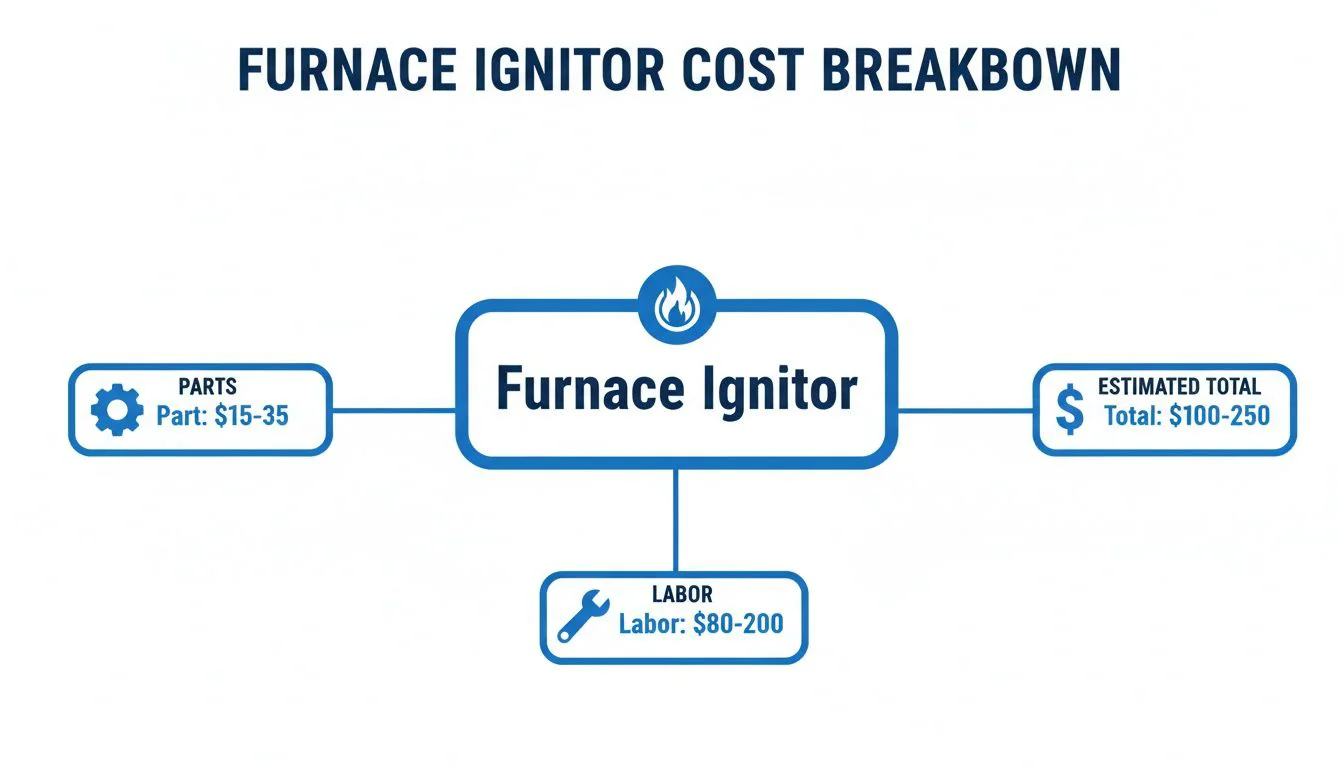
As you can see, labor makes up a big chunk of the total. It’s a great reminder that you're paying for a pro’s time to diagnose the problem correctly and get the installation done right.
Part Material and Furnace Brand
The ignitor’s material also plays a role in its price and how long it'll last. Older furnaces often use silicon carbide ignitors, which are more fragile and have a shorter lifespan. In contrast, modern furnaces use silicon nitride ignitors. They're far more durable and last much longer, giving you better long-term value even if they cost a little more upfront.
Your furnace's brand has a huge impact on the final price, too. For instance, brands like Goodman are known for being more economical, with replacements often falling in the $150-$350 range. On the other hand, Carrier and Bryant can run from $180-$450, and certain Lennox models with their own proprietary parts can push the cost all the way up to $550.
Here in Central Minnesota's harsh climate, where furnaces can easily run for over 2,000 hours a year, this choice matters. Upgrading from an old silicon carbide model to a tough silicon nitride one can extend the part's life from 3-5 years to 7-10 years, potentially cutting your long-term repair costs by 30%. You can learn more about how part choice and local climate affect furnace repair costs on callgunnys.com.
Labor Rates and Job Complexity
The other major variable is labor. An HVAC technician’s hourly rate changes depending on their location and experience level.
The timing of your service call is another critical factor. A scheduled appointment during regular business hours will always be more affordable than an emergency call on a holiday or late at night.
On top of that, if your furnace is tucked away in a cramped attic or a hard-to-reach crawl space, the technician will naturally need more time to get to it and work on it. That extra time adds to the labor charge.
These same principles apply to a lot of home services. If you want a broader perspective on how professionals charge for their time, you might be interested in this overview of average plumber pricing, as many of the underlying cost factors are quite similar.
DIY vs. Professional Replacement: Risks and Rewards
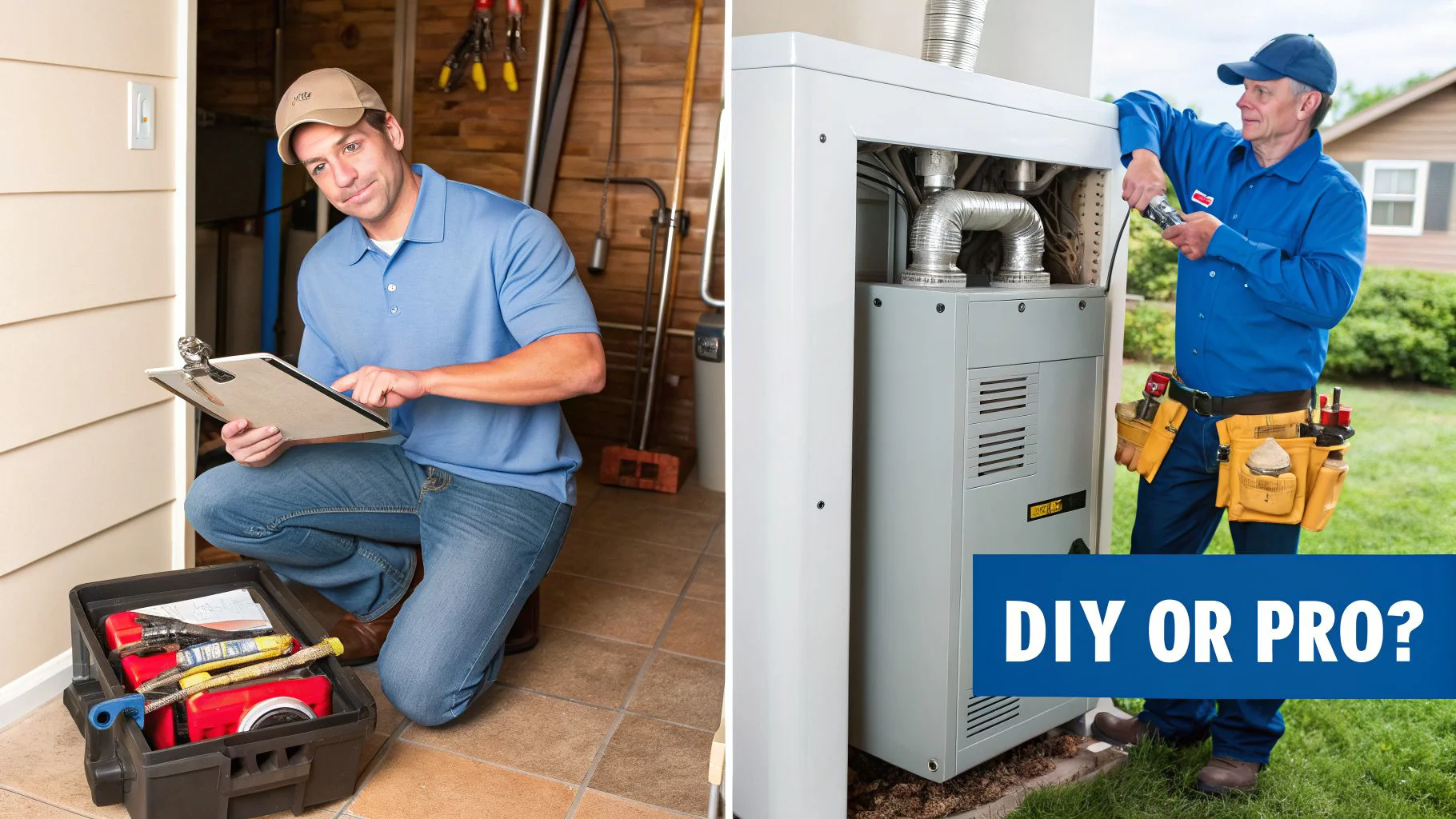
So, your furnace quits, you do a little digging online, and you find a replacement ignitor for just $25. It’s incredibly tempting to think you can knock this out yourself and save over $100 on labor. On the surface, it feels like an easy win. But is tackling this job yourself really the smartest move?
Choosing between a DIY fix and calling a professional is a classic homeowner dilemma. It’s a trade-off, pitting the immediate satisfaction of saving money against the long-term security and peace of mind that comes with hiring an expert. Let's break down the real risks and rewards.
The Allure of DIY Savings
The main reason anyone considers a DIY furnace ignitor replacement is, of course, the cost. You get to skip the $80 to $200 labor fee, and your only real expense is the part itself. If you're handy with appliances and already have the right tools, it can feel like a super satisfying and budget-friendly fix.
But that path is littered with potential pitfalls that can quickly turn those savings into a much bigger expense. The single biggest risk is misdiagnosis. What if the ignitor isn't even the problem? You could be dealing with a dirty flame sensor, a faulty control board, or something else entirely. If you're struggling to figure out why your furnace won't ignite, a professional diagnosis can keep you from buying parts you don't even need.
Other common DIY headaches include:
- Buying the wrong part: "Universal" ignitors don't always live up to their name, and getting the wrong one means wasted time, money, and another trip to the store.
- Damaging the new ignitor: Hot surface ignitors are incredibly fragile. Just touching the dark gray element with your bare hands can leave behind skin oils that create hot spots and cause it to burn out prematurely.
- Causing bigger problems: A simple wiring mistake can easily fry your furnace’s main control board—a mistake that turns a small repair into a $300 to $800 nightmare.
The Security of Professional Service
Hiring a licensed HVAC technician brings a crucial layer of security to the table. You aren’t just paying for someone to swap a part. You’re paying for a correct diagnosis, a safe installation, and work that’s actually guaranteed.
A professional technician does more than just replace the ignitor. They perform a full system check to ensure the underlying cause is addressed and that your furnace is operating safely, preventing issues like gas leaks or electrical hazards.
A pro shows up with the right tools, the correct OEM or high-quality universal part, and the experience to get the job done in under an hour. Most importantly, reputable companies stand by their work with a warranty on both their labor and the parts they install. If something goes wrong with the repair, they come back and fix it. That's a guarantee you just don't get when you do it yourself.
A Head-to-Head Comparison
To help you weigh your options, let’s put DIY and professional replacement side-by-side to see how they really stack up.
DIY vs. Professional Furnace Ignitor Replacement: A Comparison
The table below gives a quick overview of what you can expect, from total cost to the time it takes to get your heat back on.
| Factor | DIY Replacement | Professional Replacement |
|---|---|---|
| Total Cost | $20 – $100 (part only) | $100 – $250 (parts & labor) |
| Safety Risk | High (risk of electrical shock, gas leaks) | Low (handled by a trained, insured expert) |
| Warranty | No labor warranty; part warranty only | Yes, on both parts and labor |
| Time to Fix | 1-3 hours (plus research & parts run) | Typically under 1 hour |
| Risk of Misdiagnosis | High (could be a different component) | Low (technician performs full diagnostics) |
While the upfront savings of a DIY fix look tempting on paper, the cost to replace a furnace ignitor professionally buys you something more valuable: accuracy, safety, and a guarantee that the job is done right the first time.
How to Spot the Warning Signs of a Failing Ignitor
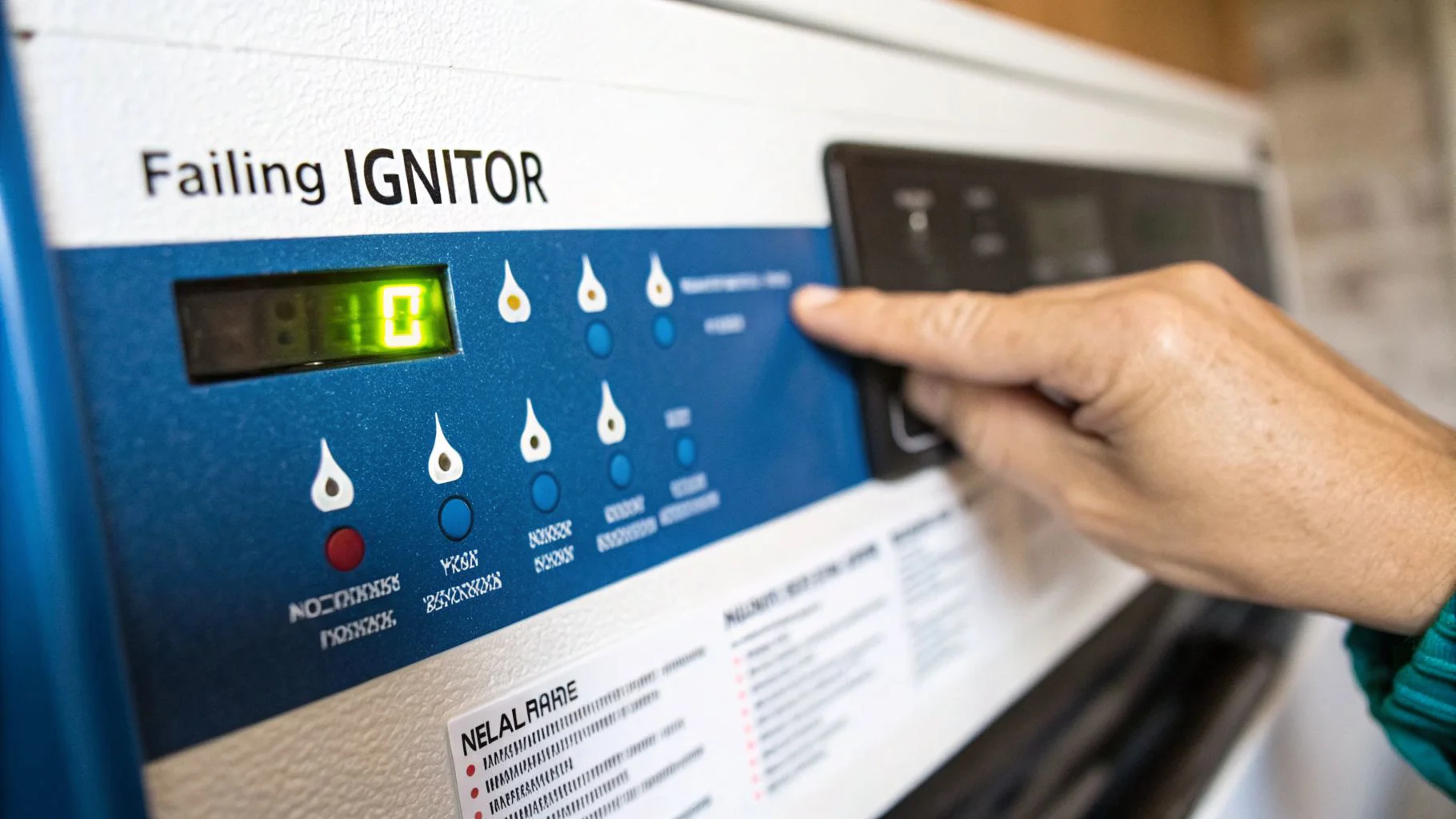
Before your furnace calls it quits for good, it usually gives you a few hints that something’s wrong. A failing ignitor is a lot like a flickering lightbulb—it rarely just goes dark without a bit of a warning first. Learning to catch these signals early can help you get a repair on the books before you’re stuck in the cold.
The most common sign is a furnace that sounds like it’s starting up but never actually delivers heat. You’ll probably hear a clicking sound for about 30 to 60 seconds. That’s the gas valve opening and the system trying to light the burners. But when the ignitor can't get hot enough, that satisfying "whoosh" of ignition never comes, and the furnace shuts down the attempt as a safety precaution.
Another classic symptom is when your furnace blower runs nonstop, but all you feel coming from the vents is cold or room-temperature air. This is a dead giveaway that the heating cycle is breaking down right at the ignition stage.
Understanding the Symptoms
These symptoms are your furnace’s way of communicating a very specific problem. Once you connect the dots between the sign and the cause, you’ll have a much better idea of what’s happening inside your unit.
- Repeated Clicking, But No Fire: This is the tell-tale sign of a dead or dying ignitor. The furnace's control board is sending the "get hot" signal, but the ignitor just can't reach the 1800°F to 2500°F temperature required to light the natural gas.
- Furnace Starts and Stops Repeatedly: This is what pros call short cycling. A weak or cracked ignitor might work sometimes but not others, causing the furnace to fire up, run for just a few minutes, and then shut off when the flame sensor loses sight of the unstable flame. A dirty flame sensor can also cause this, so it's a symptom that needs a closer look. If your furnace flame starts and stops, it’s smart to have a technician pinpoint the real issue.
- Diagnostic Error Codes: Most modern furnaces have a small LED light on the control board that blinks in a specific pattern to tell you what's wrong. Your furnace manual will have a key to decipher these codes, and an ignition failure error is a very common one.
A failing ignitor doesn’t just mean a cold house; it can also lead to higher energy bills. When your furnace makes multiple failed attempts to start, it's consuming electricity without producing any heat, wasting energy and putting extra strain on other components.
Catching these warning signs early gives you the upper hand. It’s the difference between a planned, affordable repair and a panicked, much more expensive emergency call on a freezing Minnesota night. If you notice any of these signs, it's time to look into the potential cost to replace a furnace ignitor and call a professional.
What to Expect During a Professional Repair Visit
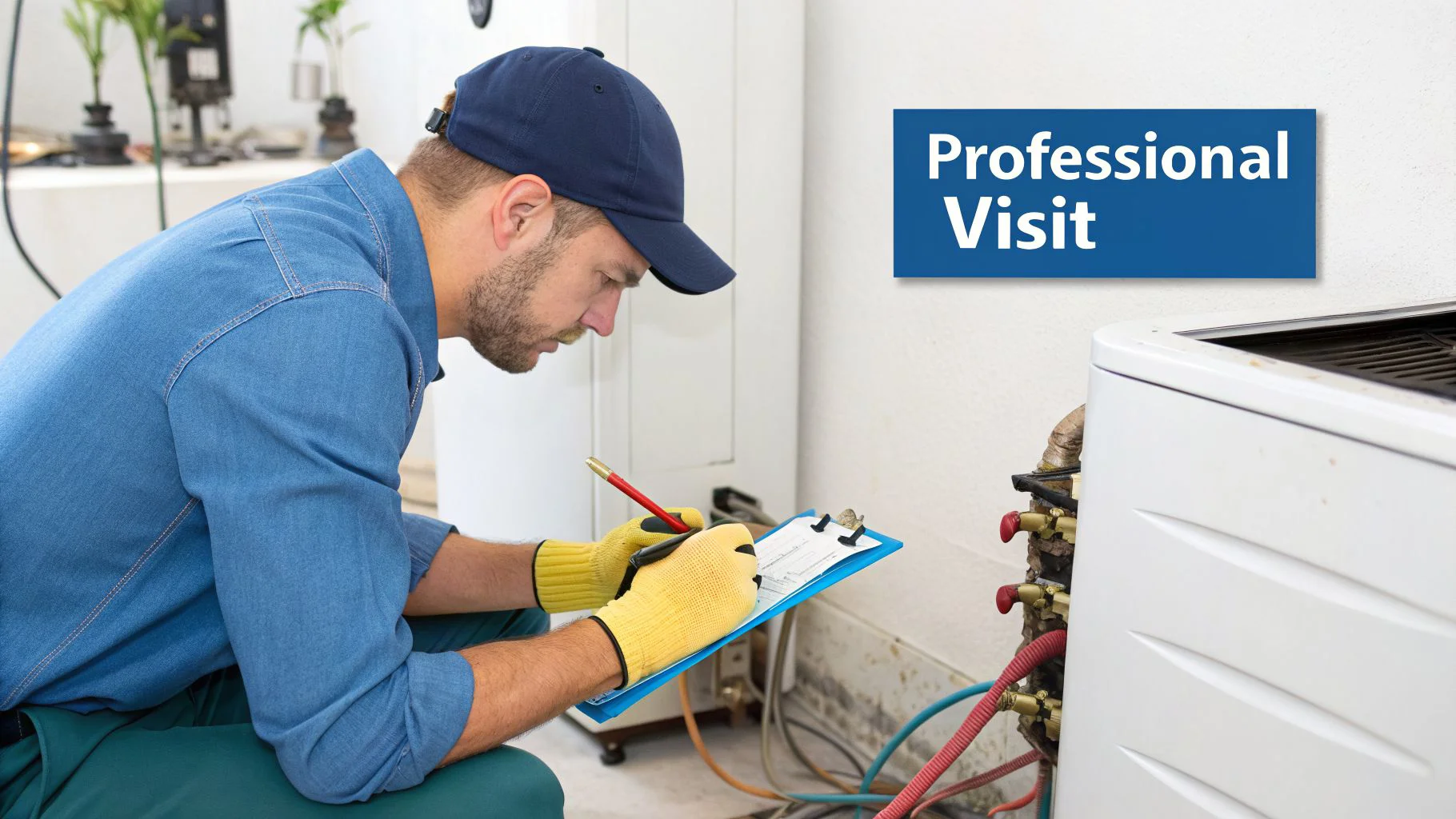
Knowing what happens during a service call can make the whole process a lot less stressful. When an HVAC technician shows up to fix your furnace, their visit isn't just about swapping a part. It's a methodical process designed to get things right and keep you safe.
The very first thing a pro will do is confirm the diagnosis. They won't just take your word for it that the ignitor is the problem, even if the symptoms point straight to it. Instead, they’ll run a few tests to be absolutely sure.
Diagnosis and Confirmation
This initial step is crucial. A good technician will pull out a multimeter to test the ignitor for electrical continuity and resistance. A healthy hot-surface ignitor should have a specific resistance reading, often somewhere between 40 and 90 ohms when it's cold. If the meter reads "infinite" resistance, it's a clear sign the part is broken and can't complete the circuit.
This quick test prevents you from paying for a part you don't need. The real issue could easily be something else, like a faulty control board or even just a dirty flame sensor. A professional can tell the difference.
The Repair Process Step-by-Step
Once they've confirmed the ignitor is the culprit, the hands-on work begins. The process is usually pretty quick, but it demands precision and care.
- Safety First: The technician will shut off both the electrical power to your furnace at the circuit breaker and the gas supply at the valve. This is a non-negotiable safety step.
- Accessing the Component: Next, they'll remove the furnace's access panels to get to the burner assembly, which is where the ignitor is housed.
- Careful Removal: After unplugging the wiring connector, they will carefully unscrew the old ignitor. They handle these with care because the ceramic material is brittle and can easily break, leaving debris inside your furnace.
- Proper Installation: The new ignitor is installed while wearing gloves. This is super important because the oils from your skin can create hot spots on the new part, causing it to burn out and fail prematurely. They'll secure the new part and reconnect the wiring.
The real value of a professional visit comes from the post-repair checks. A technician will restore power and gas, then run a full heating cycle to make sure the new ignitor glows, the burners light up correctly, and the furnace operates as it should.
This final check ensures there are no gas leaks and the entire system is functioning safely. It turns a simple part swap into a comprehensive service. If you're looking for help with your furnace, you can learn more about the full scope of professional HVAC repair and installation services to see the value they bring. This careful process is exactly why the professional cost to replace a furnace ignitor covers more than just the part itself.
Knowing what it costs to replace a furnace ignitor is good, but let's be honest—the best repair bill is no repair bill at all. The smartest way to manage your heating costs and dodge those surprise breakdowns is to shift from fixing problems to preventing them in the first place. A few simple habits can go a long way in extending the life of your ignitor and the rest of your furnace.
The single most effective thing you can do is schedule an annual professional furnace tune-up. Think of it like a regular oil change for your car. It’s designed to catch small issues before they snowball into major, expensive headaches. During a tune-up, a technician will clean out critical parts, especially the burner assembly where the ignitor lives.
All the dust, rust, and gunk that builds up over a season forces the ignitor to work harder and get hotter, which is what causes it to fail early. A little cleaning is a small investment that pays you back big time in reliability.
This yearly cleaning and inspection is also key to keeping your system running efficiently and safely. A clean furnace doesn’t have to struggle, which saves you money on energy bills and cuts down on wear and tear on every single part.
Simple Habits with a Big Impact
Beyond a yearly tune-up, what you do day-to-day really matters. The easiest and most impactful job on your list is changing the furnace air filter regularly. A clogged filter is like forcing your furnace to breathe through a coffee stirrer.
That restriction makes the whole system work way harder to move air around. This leads to longer run times and puts a ton of stress on components like the blower motor and, you guessed it, the ignitor. The more it has to cycle on and off, the faster it wears out.
Here are a few quick tips to keep your system happy:
- Check Your Filter Monthly: Just hold it up to a light. If you can’t see light through it, it’s time for a new one. This simple check can head off a whole list of problems.
- Keep Vents Clear: Make sure furniture, rugs, and drapes aren’t blocking your air vents. Good airflow is essential for keeping the system from overworking itself.
- Listen for Changes: Pay attention to any new or weird noises. Strange sounds are often the first cry for help from a part that's starting to fail, giving you a chance to act before it quits completely.
By getting into these preventative habits, you’re protecting your furnace from a lot of unnecessary strain. This basic maintenance helps you avoid a sudden breakdown and a surprise replacement bill, keeping your Central Minnesota home warm and your budget right where you want it.
Got Questions About Your Furnace Ignitor? We've Got Answers
Even after we’ve talked through the costs and what a repair looks like, you probably still have a few questions rolling around in your head. That's completely normal. This is where we’ll tackle some of the most common things homeowners ask about furnace ignitors, giving you quick, clear answers to help you feel confident about what’s next.
How Long Does a Furnace Ignitor Last?
A furnace ignitor doesn't last forever. Most modern hot surface ignitors, the ones we call silicon nitride types, are pretty tough and will usually last somewhere between five to seven years. The older, more fragile silicon carbide ignitors have a much shorter fuse, typically giving out after just three to five years.
Think of it like a lightbulb in a lamp you use every single day. The more it cycles on and off—especially during a brutal Central Minnesota winter—the faster it's going to burn out. While regular furnace maintenance can definitely help extend its life, it’s one of those parts that just wears down with normal use and will eventually need to be replaced.
Can a Bad Ignitor Cause Other Furnace Problems?
Absolutely. A faulty ignitor can definitely create a domino effect of other issues inside your furnace. When the ignitor fails to light the burners, your furnace will keep trying to start over and over again. This constant on-and-off process, known as short cycling, puts a ton of stress on other critical parts.
It's the mechanical equivalent of trying to start your car with a bad spark plug—you’ll just end up wearing out the battery and starter in the process. The extra work wears down the control board, blower motor, and safety sensors. What starts as a simple, relatively cheap ignitor problem can snowball into more complex and expensive repairs if you let it go.
Does a Home Warranty Cover Ignitor Replacement?
This is a really common question, and the honest answer is "it depends." Most standard home warranty plans do cover HVAC system components, and that often includes the furnace ignitor. But—and it's a big but—that coverage usually comes with some strings attached.
- Service Fees: You'll almost always have to pay a service call fee, which typically runs between $75 to $125, just to get a technician to your door.
- Coverage Limits: The warranty might put a cap on how much they're willing to pay for a repair. If the job costs more, you're on the hook for the difference.
- Maintenance Clauses: This is a big one. Many warranties require you to show proof of regular, professional maintenance. If you can't prove that your furnace has been serviced annually, they might have grounds to deny your claim.
Before you bank on your warranty picking up the tab, be sure to read the fine print. You need to know exactly what is and isn't covered.
Don't let a faulty ignitor leave you shivering. If you're dealing with furnace trouble here in Central Minnesota, the licensed pros at Neighborhood Plumbing, HVAC, and Electrical are ready to help. We give you upfront pricing and expert diagnostics to get your heat back up and running safely. Schedule your repair online or give us a call for 24/7 emergency service.