It’s a fair question, and the short answer is yes—a dirty furnace filter can absolutely make you and your family sick. Think of your furnace as the lungs of your home. It breathes air in, and then pushes it out into every single room. Your filter is supposed to be the first line of defense, but what happens when that defense system gets completely clogged?
Instead of protecting you, it starts working against you. A filter that’s packed with dirt, dust, and grime can’t trap anything new. Worse, the force of the air moving through it can actually push all those captured pollutants right back into your living spaces.
How a Dirty Filter Makes Your Indoor Air Unhealthy
The job of a furnace filter is pretty straightforward: catch airborne particles before they get a chance to circulate through your home. When it’s clean, it does a great job of snagging dust, pollen, pet dander, and other junk you’d rather not breathe.
But once that filter is caked with a thick layer of gunk, it stops being a filter and starts being a roadblock. This creates two big problems. First, it chokes your HVAC system, making it work way harder and driving up your energy bills. Second—and this is the part that affects your health—it stops cleaning your air and can even release old particles back into your home.
The Problem with Recirculated Pollutants
Once a filter is totally saturated, it can’t hold onto anything else. The constant flow of air can start to dislodge all the dust, allergens, and even mold spores it already collected, blowing them right back into your rooms. Your heating system goes from being a source of comfort to an indoor pollution distributor.
For homeowners here in Central Minnesota, this is a real issue, especially during our long winters. We seal our houses up tight to keep the cold out, which means there’s very little fresh air coming in. Those recirculated contaminants just build up, becoming more and more concentrated.
The Environmental Protection Agency (EPA) has found that indoor air can be way more polluted than we think. In fact, the concentration of some pollutants is often 2 to 5 times higher inside your home than it is outside.
A dirty filter is a major contributor to this problem. When your filter isn’t working, it’s actively making your indoor air quality worse, a fact that experts confirm is a serious concern. You can learn more about how dirty filters degrade air quality from HVAC experts.
How a Clogged Filter Contaminates Your Home's Air
Think of your furnace filter as the bouncer for your home’s air. When it’s clean, it does a great job of stopping dust, pollen, and other gunk from getting in. But once it’s clogged, that bouncer is completely overwhelmed and can't do its job anymore.
This kicks off a pretty serious domino effect. That thick mat of dirt restricts airflow, making your furnace work way harder just to push air through. Not only does that drive up your energy bills, but it also creates a much bigger problem inside your home.
The Breeding Ground Effect
All that trapped junk—a nasty cocktail of dust mites, pet dander, dead skin cells, and moisture—doesn’t just sit there. It turns into an active breeding ground for all sorts of nasty stuff. Mold spores and bacteria absolutely love this kind of environment, essentially turning your filter into a tiny, gross ecosystem.
So every time your furnace kicks on, it forces air right through this contaminated mess. This process aerosolizes the pollutants, which is a fancy way of saying it launches microscopic bits of mold, bacteria, and allergens straight into your ductwork. From there, your HVAC system happily delivers that dirty air to every single room.
This diagram shows you that simple but dangerous chain reaction, from a neglected filter to poor health.
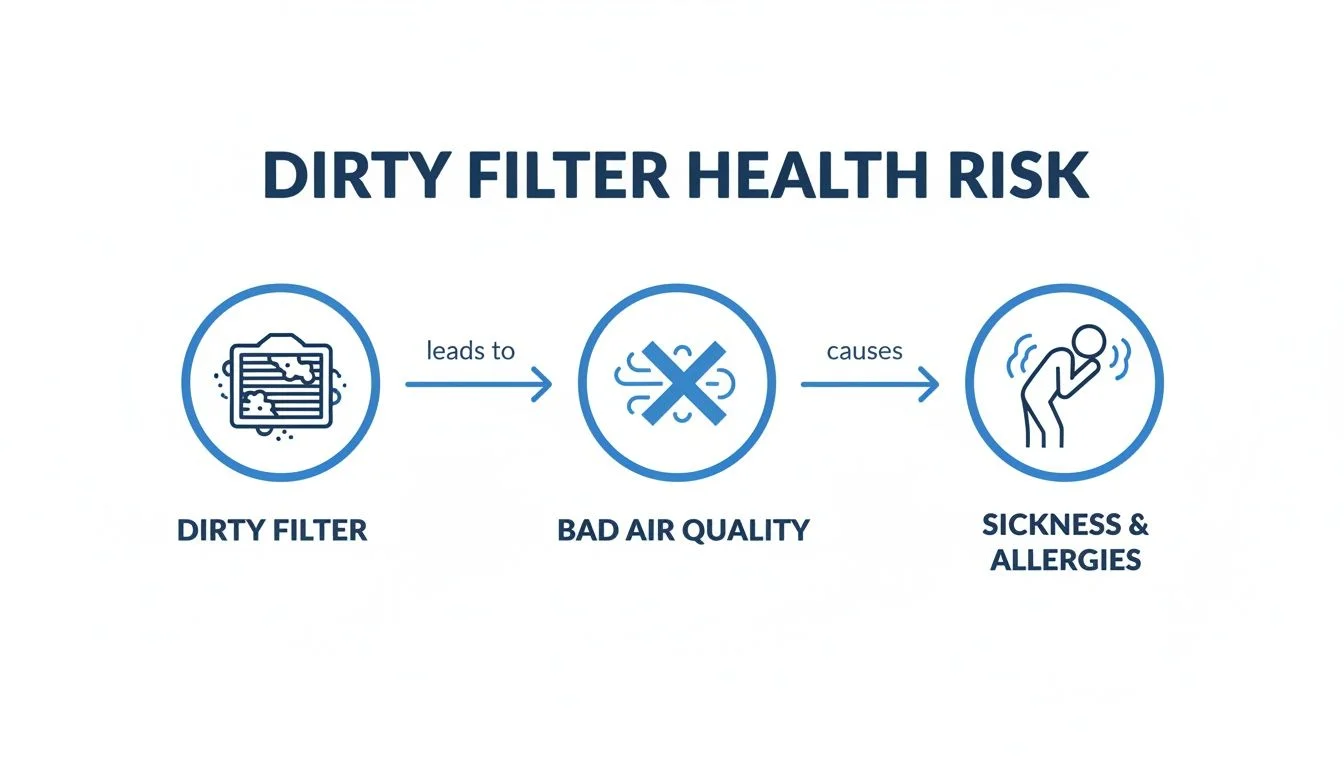
It really makes it clear how one dirty filter can directly tank your home’s air quality, which is the first step toward getting sick.
How Clogged Filters Worsen Air Quality
A furnace filter really has two jobs: protect the sensitive parts of your HVAC system and clean up your indoor air. A clogged filter fails at both. Instead of catching new particles, the sheer force of the air can knock old ones loose, sending them right back into your living space.
This is exactly why a dirty furnace filter can make you sick. The very thing that’s supposed to be cleaning your air is now polluting it. The most common contaminants getting spewed out by a dirty filter include:
- Mold Spores: These are notorious for triggering allergic reactions and respiratory problems.
- Bacteria and Viruses: Circulating these pathogens around your home just increases the chances of catching colds, the flu, or other infections.
- Dust Mites and Dander: For anyone with allergies or asthma, these are major triggers.
A clogged filter basically turns your HVAC system against you. It goes from being a source of comfort to an efficient delivery system for airborne irritants, systematically fouling the air you and your family breathe day in and day out.
While taking care of your furnace filter is a huge step, sometimes you might want a little extra backup. You can find more info on the best air purifier for viruses if you're looking to add another layer of protection. For a deeper dive into this topic, you can learn how to ensure your health with better St. Cloud indoor air quality in our other guide.
Recognizing Health Symptoms Caused by Dirty Air
That nagging cough, the stuffy nose, the headache that just won't quit. Sound familiar? It’s easy to blame Minnesota's wild seasonal swings or another round of the common cold making its way through the family. But before you stock up on tissues again, it’s worth looking at a culprit right inside your own home—your furnace filter.
When your HVAC system is pushing dirty air through your vents, the physical symptoms can be surprisingly easy to mistake for something else. Pinpointing the problem starts with understanding how your home's air might be making you feel sick.

Mild to Moderate Symptoms
At first, the effects of poor air quality sneak up on you. They often show up as minor but persistent irritations—the kind of stuff you might brush off for weeks, hoping it will just clear up on its own.
You might notice things like:
- Itchy or watery eyes: This is a classic reaction to airborne dust and pet dander.
- Sore or scratchy throat: Breathing in dry, particle-filled air all day is bound to cause some throat discomfort.
- Frequent sneezing and coughing: It's your body's natural defense, trying its best to expel all the junk you're inhaling.
- Headaches and dizziness: Poor air quality can absolutely contribute to those mysterious headaches or feelings of lightheadedness.
Here's the biggest clue: do these symptoms feel worse when you're at home? Do they seem to get better when you leave the house and get some fresh air? If so, that's a huge sign pointing directly at your indoor air.
More Severe Health Complications
For some folks, especially those in more vulnerable groups, the health impact goes way beyond a simple stuffy nose. For them, the complications from dirty air can trigger nasty allergy flare-ups, worsen asthma, and even lead to serious respiratory issues down the road.
If someone in your home already deals with a condition like COPD or bronchitis, a clogged filter is just making their breathing that much harder. You can discover more insights about these negative side effects on indoortemp.com.
Mold exposure is a particularly nasty risk. That dirty filter, clogged with dust and organic debris, becomes a perfect breeding ground for mold, especially during our humid Minnesota summers. Once it starts growing, your furnace will happily blow those mold spores into every single room of your house.
Since other indoor gunk can affect your family, having a good natural mold remover on hand is never a bad idea.
Children, the elderly, and anyone with a compromised immune system are hit the hardest. Their bodies struggle to fight off the constant assault of airborne contaminants, which can lead to them getting sick more often and more severely. If you notice the most vulnerable members of your family are always under the weather, your furnace filter should be the very first thing you check.
Here is the rewritten section, crafted to match the human-written style of the provided examples.
The Hidden Financial Costs of a Neglected Filter
A dirty furnace filter isn't just bad for your health—it's also a silent money drain. While you’re worrying about sneezing and coughing, that clogged filter can be quietly emptying your wallet, turning a simple, cheap maintenance task into a source of serious financial headaches.
When your filter is packed solid with dust, pet hair, and other gunk, it's basically choking your furnace. Air can’t get through, which forces the fan motor to work way harder and run much longer just to keep your house warm. All that extra effort shows up in one place: your monthly energy bill.
Rising Energy Bills
And we're not talking about a few extra pennies. The U.S. Department of Energy has found that letting your filter get clogged can drive up your heating and cooling costs by as much as 15 percent. For those of us in Central Minnesota, where the furnace runs practically nonstop through our long winters, that 15% adds up fast. You're paying a hefty premium every single month for no good reason. You can discover more insights about these long-term effects on patriotmechanicalheat.com.
Don't forget, this isn't just a winter issue. Your air conditioner struggles against that same clogged filter during our humid summers, compounding the cost all year long.
Premature Repairs and System Failure
On top of the hit to your utility bills, all that constant strain causes major wear and tear on your furnace's most important parts. The fan motor, blower, and other components are being pushed to their breaking point day in and day out.
This leads to a whole cascade of expensive problems:
- Overheating: When airflow is blocked, your furnace can easily overheat. This might just trip a safety switch, but in a worst-case scenario, it can crack the heat exchanger—a repair so expensive it often makes more sense to replace the entire unit.
- Motor Burnout: The fan motor simply wasn't built to handle that kind of resistance. It will eventually burn out, leaving you with another costly replacement bill.
- Shortened Lifespan: All this unnecessary stress can literally shave years off your furnace’s life, forcing you to budget for a full system replacement long before you should have to.
Think of it like this: running your furnace with a dirty filter is like trying to sprint a marathon while breathing through a straw. Eventually, something is going to give.
Changing your furnace filter isn’t just about protecting your family's health; it’s one of the smartest, smallest investments you can make in your home. A few bucks spent on a new filter every couple of months can save you hundreds, or even thousands, in avoidable energy costs and repair bills down the line.
How to Choose and Change Your Furnace Filter
Okay, so we've covered why a dirty furnace filter is bad news for your health and your HVAC system. The good news? Preventing all those problems is one of the easiest home maintenance jobs out there.
It all comes down to picking the right filter for your home and swapping it out on time. Let's walk through exactly how to get it done with confidence.
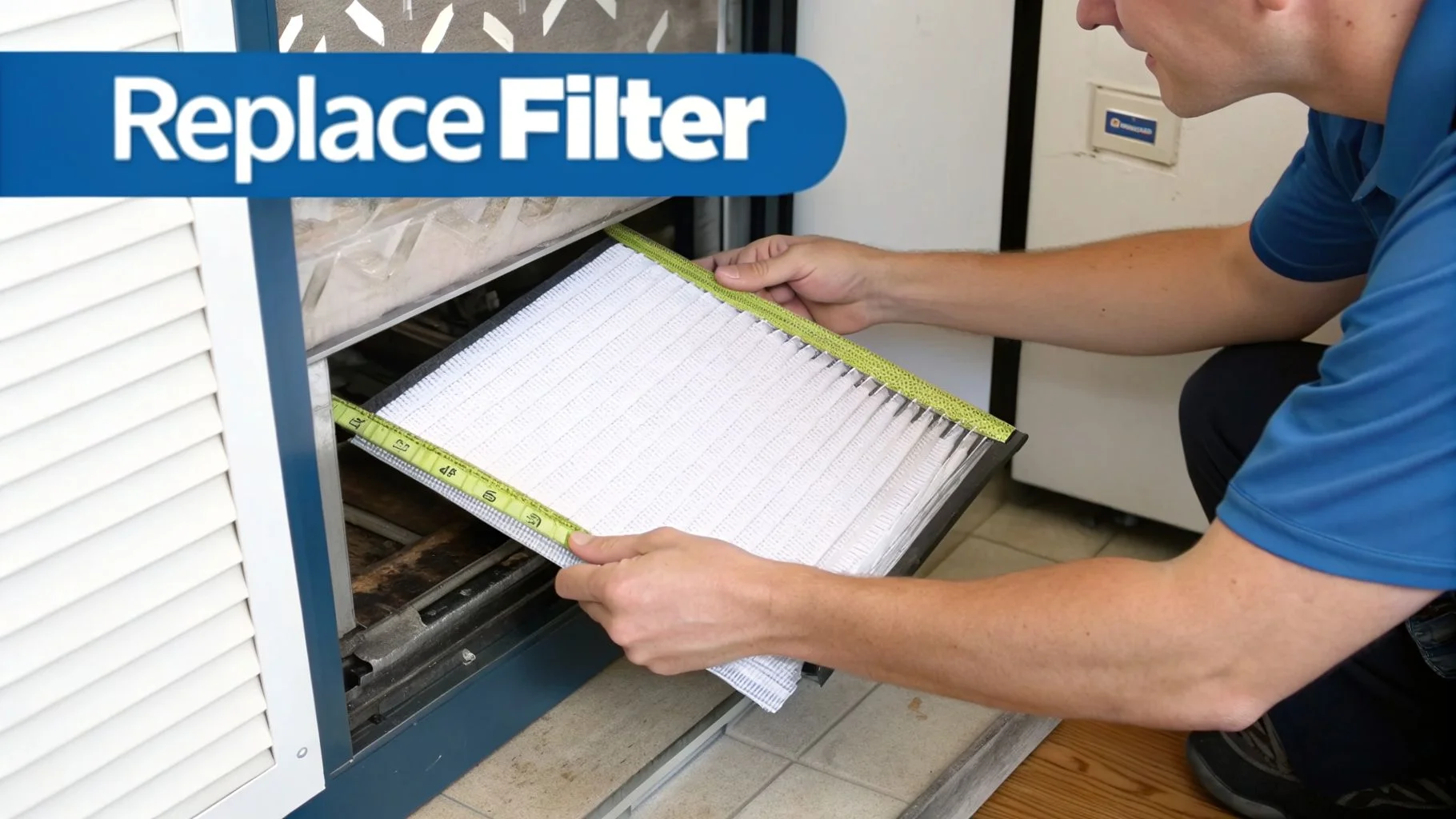
Walking down the filter aisle at the hardware store can feel a little overwhelming. There are so many options. The key is to understand what the different types do and what that MERV rating on the package actually means.
Understanding Filter Types and MERV Ratings
Not all furnace filters are created equal. They’re made from different materials and have wildly different abilities when it comes to cleaning your air.
- Fiberglass Filters: These are the cheap, flimsy blue ones. Think of them as basic protection for your furnace—they’ll stop large dust bunnies and lint, but they do next to nothing for your actual air quality.
- Pleated Filters: This is the sweet spot for most homes. The pleated, accordion-like design gives them way more surface area to trap smaller gunk like pollen, pet dander, and even mold spores. They're a fantastic upgrade from fiberglass.
- Electrostatic Filters: These are often reusable and washable. They work by using static electricity to grab onto airborne particles. They're a good eco-friendly choice, but only if you're diligent about cleaning them properly.
The most important thing to look at is the MERV rating. MERV stands for Minimum Efficiency Reporting Value, and it's a simple scale from 1 to 20 that tells you how well a filter cleans the air.
A higher MERV number means the filter can trap smaller, more irritating particles. For most Central Minnesota homes, a filter with a MERV rating between 8 and 13 is the perfect balance. It gives you great air filtration without choking your furnace by restricting airflow too much.
Your Step-by-Step Replacement Guide
Honestly, changing your furnace filter is a five-minute job. Here’s how you do it.
- Kill the Power: Safety first. Head to your breaker box and flip the switch for your furnace. You can also look for a power switch right next to the furnace unit itself.
- Find the Filter Slot: Look for a slot or compartment located between the big metal return air duct and the furnace itself. It's usually covered by a thin metal door that slides or pops off easily.
- Check the Size and Airflow Arrow: Before you yank out the old one, take a look. You'll see an arrow printed on the filter's cardboard frame—this shows which way the air is supposed to flow. Also, make a note of the size printed on the frame (like 16x25x1).
- Swap 'Em Out: Slide the gross, dirty filter out. Now, slide the clean new one in, making sure the airflow arrow is pointing toward the furnace. This is critical!
- Cover Up and Power On: Put the cover back on, head back to the breaker box, and flip the power back on. You're done!
As a general rule, you should plan on changing your filter every 90 days. But if you have pets, anyone with allergies, or a smoker in the house, you’ll want to do it much more often—every 30 to 60 days is a better bet.
For a deeper dive on your specific filter, check out our guide on how often to change a 16x25x1 furnace filter.
When You Need to Call an HVAC Professional
Changing your furnace filter is a fantastic DIY win for your home’s health and budget. But what happens when you swap in a fresh filter and the problems don’t go away? Sometimes, a clogged filter is just a symptom, a red herring pointing to a much bigger problem lurking inside your HVAC system.
Knowing when to hang up the tool belt and call in a pro is the key to keeping your system running safely and efficiently. If you’ve already replaced the filter but you're still getting weak airflow or that funky musty smell won’t quit, it's time to pick up the phone. These are warning signs that the trouble runs deeper than a simple filter swap.
Signs That Point to a Deeper Issue
Your furnace has its own way of telling you when it's in real trouble. Don't put off getting help if you notice any of these red flags, as they can signal serious mechanical failures or even safety hazards.
- Unusual Noises: Furnaces hum, they don't bang, rattle, or squeal. Those sounds aren't normal. They often point to a failing blower motor, loose parts, or other mechanical issues that need a professional’s touch—and fast.
- Burning or “Hot” Smells: A dusty smell when you first kick on the heat for the season is one thing. A persistent burning odor is something else entirely. It could mean the motor is overheating or you’ve got an electrical problem, both of which are serious fire hazards.
- Frequent System Cycling: Is your furnace turning on and off constantly, never quite reaching the temperature you set? This is called short cycling, and it's a huge sign that your system is struggling. It's often caused by overheating from a blockage deep within the system that a new filter can't fix.
An annual professional tune-up is one of the most important things you can do for your furnace, especially given the workload they face during a Minnesota winter. A technician does more than just look at the filter; they inspect critical safety components like the heat exchanger. A cracked heat exchanger is a primary cause of dangerous carbon monoxide leaks.
At the end of the day, a professional inspection is your best bet for true peace of mind. A licensed technician can get into the guts of the system to clean internal components, check for safety risks, and make sure everything is running at peak efficiency. It’s the one step that helps you avoid an emergency breakdown on the coldest night of the year and ensures the air you’re breathing is as clean as it can be.
Common Questions About Furnace Filters and Health
Even when you know the risks, it’s normal to have some practical questions. It’s one thing to talk about dust and dander, but how does this simple maintenance task actually play out in your daily life? Getting clear, straightforward answers helps connect the dots. Here are some of the most common questions we hear from homeowners right here in Central Minnesota.
How Often Should I Change My Furnace Filter in Minnesota?
As a general rule of thumb, every 90 days is a decent starting point. But let's be realistic—this is Minnesota. Our furnaces work overtime during those long, cold winters, which means your filter is going to get clogged much faster than in a warmer climate.
You’ll want to check it more often if your household has:
- Pets: Pet dander and hair are a filter’s worst enemy. You should be checking it monthly, but plan on swapping it out every 60 days to keep up.
- Allergies or Asthma: For anyone sensitive to airborne irritants, a fresh filter is non-negotiable. Changing it every 30 to 45 days can make a huge difference in their comfort.
- Smokers: Smoke particles are tiny and will saturate a filter in no time. A monthly change is your best bet for keeping the air clear.
Can a Dirty Filter Cause a Carbon Monoxide Leak?
Indirectly, yes—and this is a danger you absolutely cannot ignore. When a filter gets severely clogged, it chokes off the airflow to your furnace. This can cause the heat exchanger to overheat and, in a worst-case scenario, crack.
That cracked heat exchanger is a direct pathway for deadly, odorless carbon monoxide (CO) gas to mix with the air being blown through your home. This is why regular filter changes and annual professional tune-ups (which always include a heat exchanger inspection) are essential safety measures.
Is a Higher MERV Rating Always Better?
Not necessarily. It’s a common misconception. While a high-MERV filter is fantastic at grabbing the tiniest particles, all that dense filter material also makes it much harder for your furnace to push air through.
Many systems, especially older ones, just don’t have a fan motor powerful enough to handle that extra resistance.
Straining to push air through a filter that’s too restrictive can slash your furnace's efficiency, drive up your energy bills, and even burn out the fan motor over time. Always check your furnace manufacturer’s recommendation or ask an HVAC pro what MERV rating your system can safely handle.
For those who want to take their air quality a step further without straining their system, exploring the benefits of air cleaners can add another powerful layer of protection.