If your furnace keeps firing up and shutting down without ever really heating your home, you're dealing with "short cycling." It’s a classic sign that something is off. The problem could be as simple as a clogged air filter or a wonky thermostat setting, but it can also point to more serious issues like an overheating system or a failing safety component.
Your Furnace Keeps Shutting Off? It’s More Than an Inconvenience
That dreaded moment when you realize the heat isn't staying on during a Minnesota cold snap is more than just frustrating—it's a real concern for your family’s comfort and safety.
A furnace that constantly starts and stops isn't just failing to do its job; it's actively telling you it's under stress. Ignoring this warning can lead to sky-high energy bills, a much shorter lifespan for your system, and in the worst-case scenarios, serious safety hazards.
Figuring out why your furnace won't stay on is the first step toward a fix. The issue usually falls into one of a few common categories:
- Airflow Restriction: A dirty filter or blocked vents are the usual suspects. They can cause the furnace to overheat and trigger an automatic safety shutoff.
- Ignition or Flame Problems: Components like the flame sensor or pilot light are designed to shut the system down if they can't confirm a stable flame is present.
- Thermostat Glitches: Sometimes, the problem isn't with the furnace at all but with the little box on the wall controlling it.
- Mechanical or Electrical Failure: More complex issues, like a failing blower motor or a fried control board, definitely require a professional diagnosis.
The Real Cost of a Failing Furnace
When your furnace keeps shutting down, you're experiencing one of the most common and disruptive problems a homeowner can face. It’s not just you. Recent industry data shows that unplanned HVAC downtime costs U.S. homeowners and businesses around $50 billion annually.
For those of us here in Minnesota, the impact feels personal. A recent survey found that 47.1% of homeowners say their biggest fear is their furnace conking out during a bitter cold snap when it's needed most. The good news? Regular, preventive maintenance can slash the risk of system breakdowns by up to 75%—a small investment for massive peace of mind. You can find more details in this HVAC industry report.
Key Takeaway: Short cycling is a symptom, not the root problem. Think of it as your furnace's self-defense mechanism, protecting itself from a bigger issue like overheating. Addressing it quickly prevents more expensive, complicated repairs down the road.
This guide is designed to give you some clarity. We'll walk through the most common reasons your furnace won't stay on, helping you identify the simple DIY fixes and recognize when it’s time to call in a trusted professional. From checking your thermostat to inspecting the flame sensor, you'll gain the confidence to troubleshoot the issue safely and effectively.
DIY Fix vs Call a Pro When Your Furnace Keeps Shutting Down
Use this quick reference to understand the likely cause of your furnace problem and decide if it's a simple fix or a job for a certified technician.
| Symptom | Potential Cause | Your Next Step (DIY) | When to Call a Professional |
|---|---|---|---|
| Furnace runs for a few minutes, then shuts off | Dirty Air Filter or Blocked Vents | Check and replace the air filter. Ensure all vents and returns are open and unobstructed. | If the filter is clean and vents are clear, but the problem persists. |
| Furnace clicks on, but no flame appears | Faulty Ignitor or Pilot Light | Check if the pilot light is out (on older models). For electronic ignitors, listen for the "click." | If the pilot won't stay lit or the ignitor doesn't glow. |
| Furnace lights, but flame goes out after a few seconds | Dirty Flame Sensor | Carefully clean the flame sensor rod with light-grit sandpaper or steel wool. | If cleaning the sensor doesn't solve the issue. |
| Thermostat display is blank or inaccurate | Dead Batteries or Faulty Thermostat | Replace the thermostat batteries. Check the settings to ensure it's on "Heat." | If new batteries and correct settings don't help. |
| Blower motor runs, but no heat | Gas Supply Issue or Faulty Gas Valve | Check that the gas valve to the furnace is open. Check other gas appliances to confirm supply. | If the gas is on but the furnace still won't light. Never attempt to fix a gas valve yourself. |
| Loud banging or rattling noises before shutdown | Overheating Heat Exchanger or Blower Motor Issues | Shut off the system immediately. This could indicate a serious mechanical failure. | Immediately. A cracked heat exchanger can leak carbon monoxide. |
This table should help you quickly assess the situation. Simple issues like a dirty filter are easy enough for most homeowners to handle. But when you're dealing with gas components, electrical wiring, or persistent problems, it’s always smarter—and safer—to leave it to the pros.
Checking the Simple Stuff First: Your Thermostat and Air Filter
When your furnace won’t stay on, it's easy to jump to the worst conclusion. But before you start picturing a massive repair bill, let’s back up. I’ve seen it a hundred times: the real culprit is often one of two simple, overlooked components that run the whole show—the thermostat and the air filter.
Checking these two things first can save you a whole lot of time, money, and cold-weather stress.
Start with the Thermostat
Think of the thermostat as your furnace's brain. It tells the system when to kick on and when to shut off. If it's giving confusing signals, the furnace will start acting up, leading to the exact on-again, off-again problem you’re seeing. You’d be surprised how many service calls boil down to dead batteries or a wrong setting.
First, make sure the thermostat is actually set to HEAT. Then, check that the fan is set to AUTO, not ON. If the fan is set to ON, it's going to blow air all the time, even when the furnace isn’t heating. That’s a fast way to make your house feel chilly and drafty.
Next up, the batteries. A lot of digital thermostats will flash a low-battery warning, but sometimes they just die without notice, causing all sorts of erratic behavior. If the settings and batteries are good to go, the thermostat's calibration might be off. If the temperature it displays feels way different from how the room actually feels, it could be shutting the system down too early. While some can be recalibrated, an older, inaccurate thermostat is probably ready for retirement.
This quick flowchart can help you visualize the next steps.
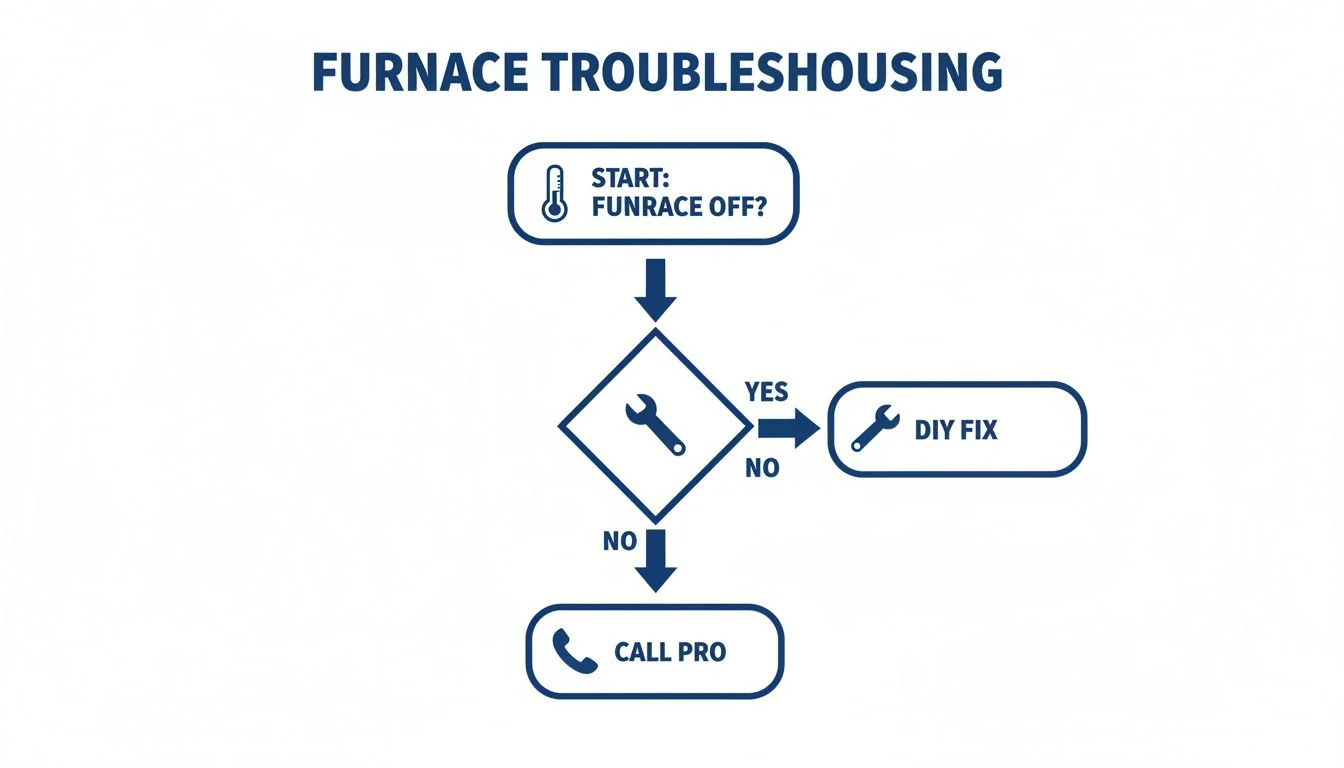
As you can see, a few simple checks are all it takes to separate a minor hiccup from a problem that needs a professional’s touch.
Inspect the Furnace Air Filter
If the thermostat isn’t the issue, your next stop is the furnace air filter. A clogged filter is the single most common cause of a furnace that won't stay running. It basically chokes off the airflow your furnace needs to work safely, like trying to breathe through a straw.
This blocked airflow traps heat inside the furnace, causing it to overheat in a hurry. When that happens, a built-in safety device called a limit switch trips and shuts the whole system down to prevent damage or a potential fire. Once it cools off, it’ll try to start again, and the whole frustrating cycle repeats.
Pro Tip: Here in Minnesota, you really need to check your furnace filter every month during the winter, especially if you have pets. A filter can look clean at a glance but be completely clogged with the fine dust and dander that kills airflow. To see just how much trouble a dirty filter can cause, check out our guide on how a dirty furnace filter can cause no-heat situations.
Swapping out the filter is a simple but incredibly important piece of maintenance. Just slide the old one out, take note of the size printed on the frame, and pop a new one in. Make sure the little airflow arrows on the new filter point toward the furnace itself. This five-minute fix solves countless "why won't my furnace stay on" mysteries every single year.
Inspecting the Flame Sensor and Ignition System
If your furnace kicks on, you hear the satisfying whoosh of the burners igniting, but then everything goes silent just a few seconds later, you’ve likely found your culprit.
This classic symptom almost always points to a problem with your flame sensor or the broader ignition system. These parts are non-negotiable safety features. When they aren't working perfectly, they do their job by shutting everything down to keep your family safe.
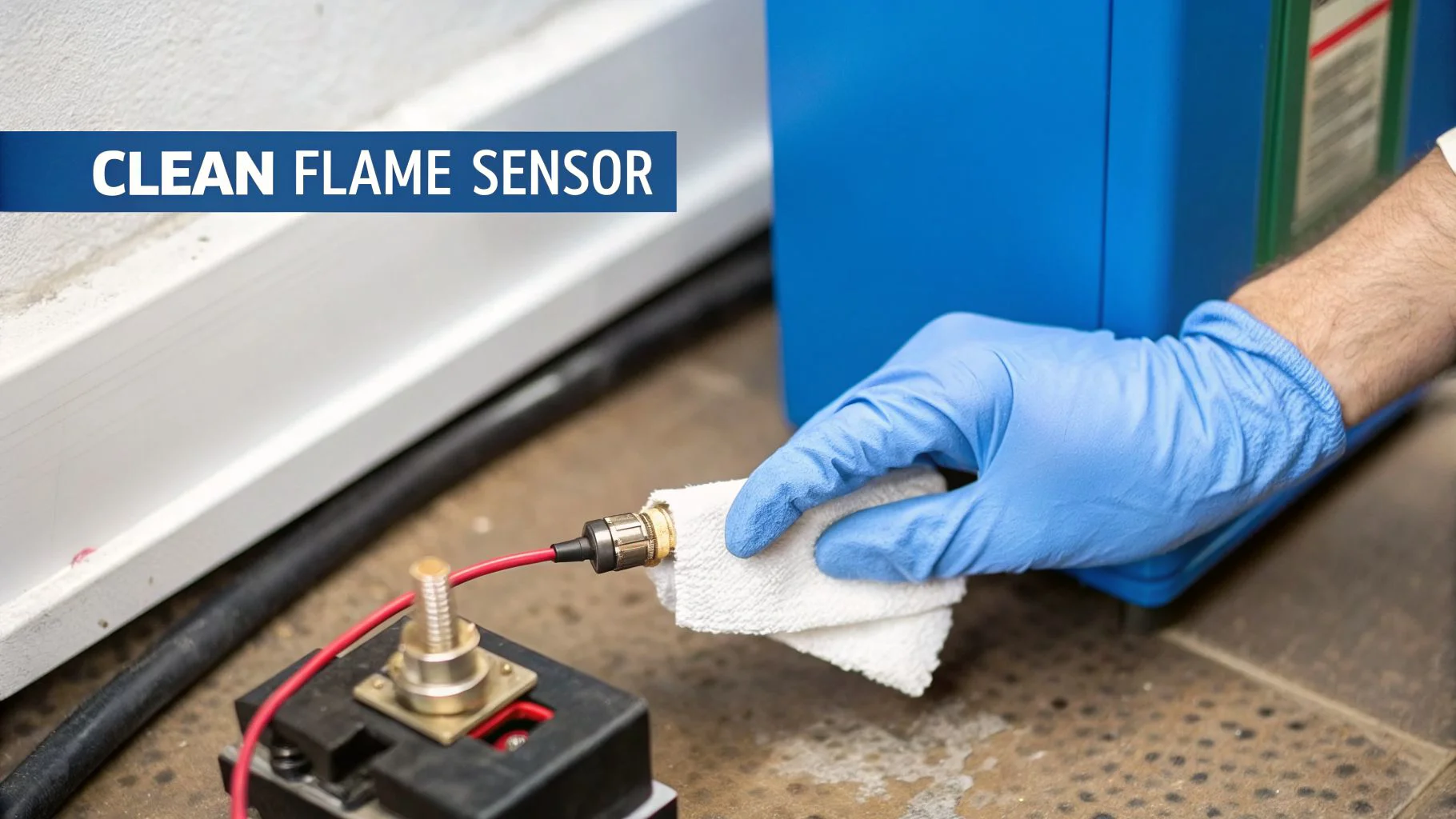
The flame sensor is a small, thin metal rod that sits right in the path of the flame. Its only job is to confirm that when the gas valve opens, a flame is actually present. If it can't "see" that flame, it tells the control board to immediately cut the gas supply. This prevents raw, unburned gas from filling your home.
Understanding Why Flame Sensors Fail
Over time, a layer of carbon buildup and grime coats the flame sensor. This residue acts like an insulator, preventing the sensor from detecting the heat from the flame. So even though your burners are lit and working just fine, the sensor is blind to them, triggering a safety shutdown. Honestly, it’s one of the most common reasons a furnace won't stay on.
For many homeowners, cleaning this little rod is a totally manageable DIY task. First, turn off all power to the furnace at the circuit breaker and shut off the gas supply line. Then, you can typically remove the sensor with a single screw.
Safety First, Always
Before you touch any internal furnace components, triple-check that the power is off. Shut down the system at both the thermostat and your home's electrical panel. An accidental startup while you're working can cause serious injury or damage.
Gently scrub the metal rod with a piece of light-grit sandpaper or a clean emery cloth until its metallic shine returns. Be sure to avoid touching the rod with your bare hands—the oils from your skin can bake onto it and cause the same problem all over again.
Once it's clean, reinstall it, restore power, and see if that solved the problem. For more detailed instructions, you can learn more about locating the flame sensor on a furnace in our dedicated guide.
When It’s Not the Flame Sensor
What if cleaning the flame sensor doesn't work? Or what if your furnace doesn't light at all? The issue might be with the ignition system itself. Furnaces use a few different methods to light the burners, and how you troubleshoot depends on which type you have.
- Hot Surface Ignitor: Most modern furnaces use an electronic ignitor that glows bright orange to light the gas. These are quite fragile and can crack over time. If you hear the furnace click on but don't see that tell-tale orange glow through the viewport, the ignitor has likely failed and needs to be replaced.
- Standing Pilot Light: Older furnaces use a small, continuously burning flame called a pilot light. If this flame goes out, the furnace won’t start. It could be as simple as a draft blowing it out, or the thermocouple—a safety device similar to a flame sensor—might be faulty. Relighting a pilot light is often straightforward, but if it won't stay lit, the thermocouple is the prime suspect.
While cleaning a flame sensor is a relatively safe job for a handy homeowner, replacing ignitors or thermocouples involves more complex electrical and gas components. If your furnace still won’t stay on after a gentle cleaning, it's the right time to stop the DIY efforts and call a professional technician for a safe and accurate diagnosis.
Diagnosing Overheating and Airflow Blockages
Does your furnace kick on, run for just a few minutes, then shut itself off? If it keeps repeating this frustrating cycle, you're almost certainly dealing with an overheating problem. This isn't a sign that your furnace is failing—quite the opposite. It means a critical safety feature is working perfectly.
Deep inside your unit, a high-limit switch is constantly monitoring the internal temperature. When things get too hot, it cuts the power to prevent a cracked heat exchanger or, even worse, a fire. The number one cause? Poor airflow. Your furnace creates a massive amount of heat, and it needs a constant stream of air to push that warmth through your home. If that air can't get through, the heat gets trapped, and the safety switch does its job.
We already talked about clogged filters, but sometimes the blockage is hiding in plain sight.
A Whole-Home Airflow Check
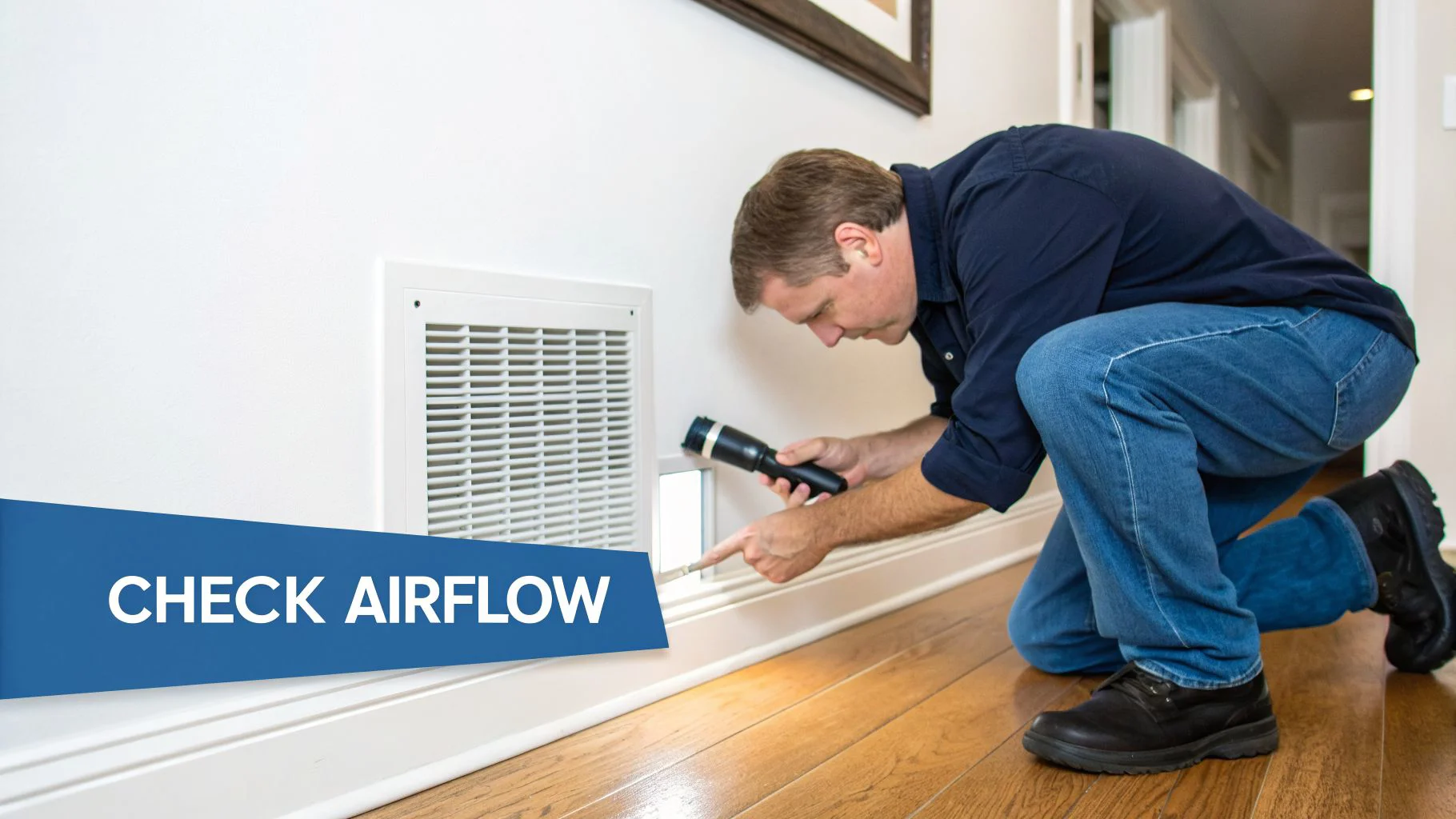
Before you start worrying about complex internal parts, take a walk around your house. You would not believe how many times the problem is just a couch pushed over a return vent or a stack of boxes blocking a register. Your HVAC system is a big loop—it has to suck in the same amount of air that it pushes out.
One common mistake homeowners make is closing vents in unused rooms to try and "save money." This actually messes up the delicate pressure balance in your ductwork, putting a major strain on the system and often causing it to overheat. As a general rule, make sure at least 80% of your vents are wide open and completely clear of obstructions.
When vents are blocked, your furnace's blower motor is forced to work against a wall of pressure. This not only causes overheating but can also burn out the motor, which is one of the most expensive parts to replace.
If your vents look clear, check for uneven heating. Are some rooms toasty while others feel like a freezer? That could signal a disconnected duct or a major blockage inside your walls. You can learn more about these symptoms in our guide on what to do when your furnace is overheating and shutting down.
Signs of a Failing Blower Motor
The blower motor is the powerful fan that actually moves all that warm air through your home. If it’s on its last legs, it won't be able to move enough air, and the furnace will overheat.
Keep an ear out for these tell-tale signs:
- A loud screeching or grinding noise: This is the classic sound of worn-out bearings.
- A humming or buzzing sound: This can mean the motor is getting power but is stuck and can't start spinning.
- Weak airflow from the vents: Even with a brand-new filter, the air just trickles out.
Fixing a blocked vent is easy, but anything involving a failing blower motor or a blockage deep in your ductwork is a job for a pro. If you’ve checked for airflow and the furnace is still short-cycling, it's time to give an expert a call.
When You Need to Call an HVAC Professional
Look, I'm all for homeowners getting their hands a little dirty. Many times, a furnace that won't stay lit is a simple fix you can handle yourself. But there's a fine line between a DIY win and a serious safety hazard.
Knowing when to put the tools down and pick up the phone is the most important part of furnace troubleshooting. Messing with complex mechanical parts, high-voltage electrical systems, or natural gas lines isn't just a risk to your furnace—it's a risk to your family.
Immediate Red Flags for a Service Call
Some symptoms are non-negotiable. If you see, hear, or smell any of the following, shut your furnace down at the breaker and call a professional right away. Don't second-guess it.
- Any Smell of Natural Gas: If you get a whiff of rotten eggs, that’s the smell of a potential gas leak. Don't touch any light switches or appliances. Get everyone out of the house immediately, and from a safe distance, call your gas company first. Then, call an HVAC technician.
- Loud Banging, Scraping, or Squealing: These are the sounds of a system in distress. A loud bang could be delayed gas ignition—basically, a small explosion inside your furnace that can crack the heat exchanger and leak deadly carbon monoxide into your home. Scraping or squealing often points to a failing blower motor.
- Flashing Error Codes: Take a look at your furnace’s control board, usually visible through a little window on the main panel. If you see a blinking light, that's not just a random flicker. It’s an error code. Your furnace is trying to tell you exactly what's wrong, and a trained technician can read that code to diagnose the problem in minutes.
A Quick Tip: If you have a high-efficiency furnace and see water pooling around its base, you likely have a clogged condensate line. It might seem like a minor plumbing issue, but this backup will trip a safety switch and shut the whole system down.
Navigating the Technician Shortage in Minnesota
Deciding to call a pro is one thing; getting one to your door is another. While many great companies offer 24/7 phone answering for home services for emergencies, the entire industry is stretched thin.
The U.S. HVAC industry is massive—valued at $156 billion—but it’s facing a serious labor problem. We're short about 110,000 qualified technicians, and another 25,000 leave the trade every year. For homeowners here in Central Minnesota, that translates to longer wait times and a lot more frustration, which is a key reason why 55% of negative HVAC reviews nationwide mention repair delays. You can read more about what's happening in the industry in this in-depth HVAC statistics report.
This is why experience and stability matter more now than ever. When your furnace gives out during a frigid Minnesota winter, you can't afford to be on a waiting list or have an inexperienced tech "learn on the job" in your basement.
As a fourth-generation company, Neighborhood Plumbing, HVAC, and Electrical has seen it all. Our team has the deep-seated knowledge to get the diagnosis right the first time, whether it's a fried control board or a tricky airflow problem. We’ve built our name on being the reliable, safe, and effective solution that keeps your family warm and your investment protected.
Got More Furnace Questions? We've Got Answers
After you’ve done the basic checks, it’s totally normal to still be scratching your head. When a furnace acts up, the little details can make all the difference. We get these questions all the time from homeowners, so let’s clear up a few of the most common ones.
Think of this as your go-to furnace FAQ. We'll dig into the follow-up concerns that usually pop up after that first round of troubleshooting.
How Often Should I Really Change My Furnace Filter in Minnesota?
For a standard 1-inch filter, every one to three months is a decent rule of thumb. But let's be real—Minnesota winters push our furnaces to the limit. During the peak season from November to March, you should be checking it monthly. This is especially true if you have pets or anyone with allergies at home.
A filter doesn't have to look like a fuzzy blanket to be clogged. Even fine dust you can barely see is enough to choke off airflow, forcing your furnace to overheat and shut itself down. It’s the cheapest insurance you can buy for a warm house.
Can a Bad Thermostat Really Make My Furnace Shut Off?
Absolutely. A wonky thermostat is one of the most common and frustrating reasons a furnace short cycles. It can send bogus temperature readings, have a weak battery that causes it to send scrambled signals, or just lose its calibration over time.
Basically, it might tell your furnace the house is warm enough when you’re still shivering. It's a simple little device that can create a very confusing headache.
A Quick Diagnostic Tip: If you think the thermostat is the culprit, try turning the heat up by five degrees. If the furnace still shuts off quickly without even trying to reach that new temperature, the thermostat probably isn't the only problem.
Is It Safe to Clean My Own Flame Sensor?
If you’re comfortable with basic DIY projects, then yes, cleaning a flame sensor can be perfectly safe—as long as you follow the rules. The two non-negotiable safety steps are: turn off all power to the furnace at the circuit breaker, and shut off the gas supply before you touch anything.
Once that's done, you can gently scrub the little metal rod with fine steel wool or an emery cloth to get the carbon gunk off. But if you feel even a little bit hesitant, the smartest and safest move is always to call a pro.
What Does That Loud Banging Noise Mean?
A loud bang or boom right before your furnace shuts down is a serious warning sign. That noise is often caused by delayed ignition, which happens when gas builds up inside the combustion chamber for a few seconds before it finally ignites. It's a mini-explosion that can do real damage to critical parts, especially your heat exchanger.
This is not a DIY fix. A cracked heat exchanger can leak deadly carbon monoxide into your home. If you hear that sound, shut your furnace off immediately and call a certified HVAC technician for an emergency service call.
Don't let furnace problems leave you in the cold. The experienced, licensed technicians at Neighborhood Plumbing, HVAC, and Electrical are ready to diagnose the issue correctly and provide a safe, lasting solution. Schedule your furnace repair or tune-up online today!