That sudden pop from your furnace can be startling, right? It’s often just your system’s way of communicating. In most cases, that furnace popping noise is simply the sound of your metal ductwork expanding and contracting as it heats up and cools down. Sometimes, though, it can signal a more serious issue that needs a closer look.
Decoding the Pop: What Your Furnace Is Trying to Tell You
Hearing an unexpected noise from a major appliance is never comforting, especially in the middle of a cold Minnesota winter. When your furnace makes a popping sound, it's easy to jump to the worst conclusion. The good news? Not every sound is a code red for your heating system.
Think of it like a mechanic listening to a weird noise coming from your car’s engine. Some sounds are just part of normal operation, while others are clear signs of a problem that needs fixing. We'll walk you through the most common causes, so you can tell the difference between a harmless quirk and a genuine warning sign.
To make things a bit clearer, here’s a quick rundown of the different sounds you might hear, what they typically mean, and what you should do about them.
Quick Guide to Furnace Popping Sounds
| Type of Pop | Most Likely Cause | Homeowner Action |
|---|---|---|
| Loud Bang at Startup | Delayed Ignition (gas buildup) | Turn off the furnace immediately. Call a professional for inspection. |
| Rhythmic Popping | Thermal Expansion in Ductwork | Generally normal. Check for blocked vents or dirty filters. |
| Irregular Rattling/Popping | Loose Components | Check for loose panels. If the noise is internal, call for service. |
| Muffled Pops During Operation | Dirty Burners or Clogged Filter | Check and replace your air filter. Schedule a professional cleaning. |
This table should help you get a better handle on the situation, but let's dive into the specifics of what's actually going on inside your system.
Understanding the Common Causes
A lot of popping noises are perfectly normal, but knowing which ones to watch for is key to keeping your home safe and giving you some peace of mind. Here are the main culprits we'll explore:
- Thermal Expansion: The most common cause. This is just your metal ductwork flexing as it heats up and cools down.
- Delayed Ignition: A more concerning issue where a small gas buildup ignites with a mini-boom.
- Dirty Components: Clogged filters or dirty burners can mess with airflow and cause parts to overheat.
- Loose Parts: Sometimes, the noise is nothing more than a simple mechanical rattle that needs tightening.
By understanding these potential issues, you can take the right steps to ensure your furnace operates safely and efficiently. An informed homeowner is better equipped to prevent small problems from becoming costly and dangerous emergencies.
We'll break down each of these issues so you can feel more confident about identifying the problem. Our goal is to be your go-to local expert, helping you understand exactly what's happening with your heating system and when it's time to call Neighborhood Plumbing, HVAC, and Electrical for professional help.
The Most Common Culprit: Thermal Expansion in Your Ductwork
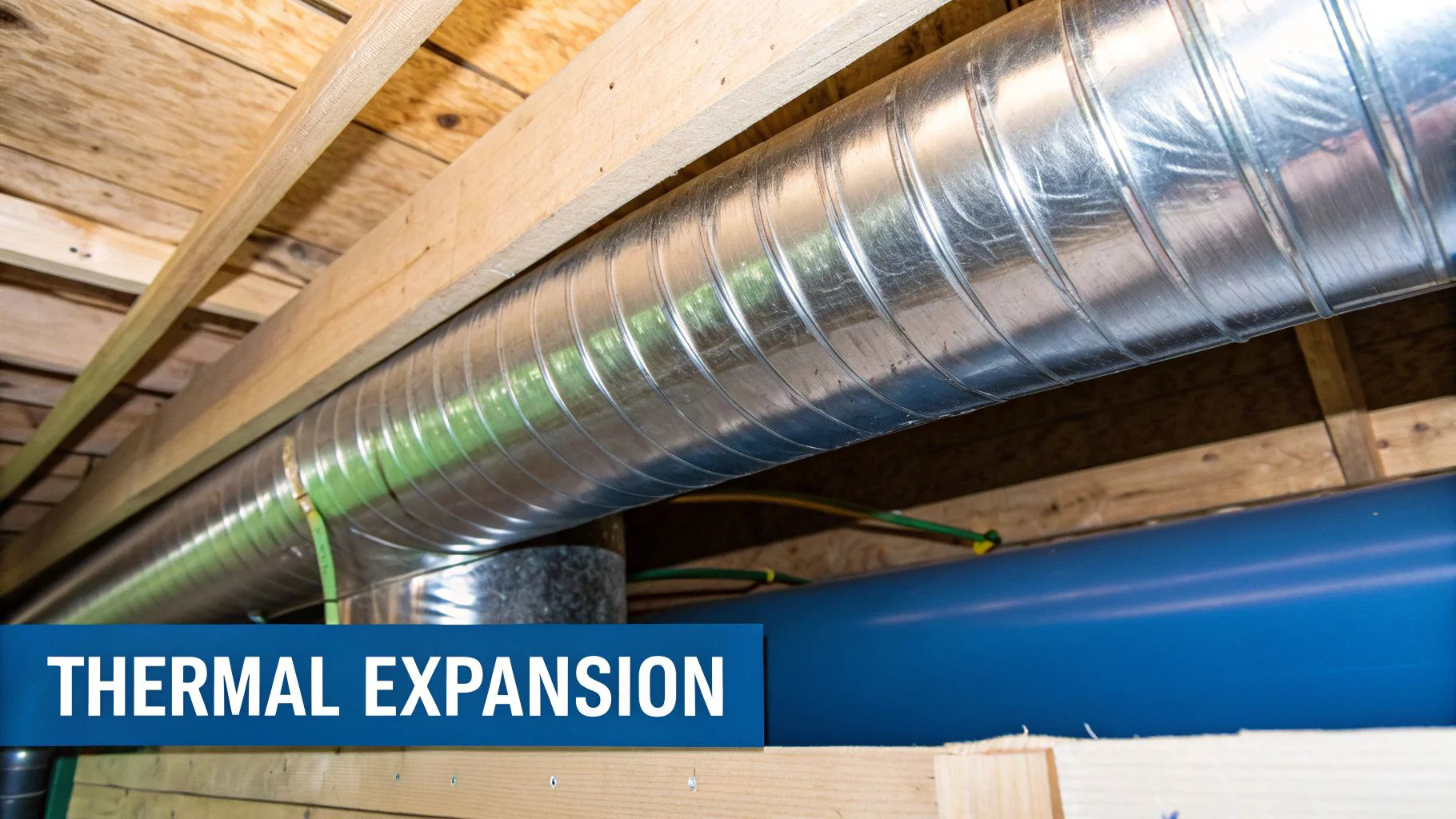
If you've ever heard a distinct pop or bang a few minutes after your furnace kicks on, you’re not alone. More often than not, this startling sound has a surprisingly simple—and harmless—explanation: thermal expansion. This is, by far, the leading reason for a furnace making popping noises.
Think about a glass jar of homemade jam cooling on the counter. As it cools, the metal lid contracts and makes that satisfying 'pop' to signal it has sealed. Your home's ductwork operates on the same principle, just on a much larger scale.
Your ducts are typically made of sheet metal, a material that naturally expands when heated and contracts when it cools. When your furnace turns on, it sends a rush of hot air through the cold duct system. This rapid temperature change causes the metal to expand quickly, creating a popping or banging sound as it flexes against your home’s wooden framework.
The Science Behind the Sound
When your furnace fires up on a chilly Minnesota night, that blast of hot air causes the metal ductwork to expand slightly. HVAC experts note this can stretch ducts by up to 1/8 inch for every 10 feet of length for every 100°F temperature change. It doesn't sound like much, but it’s enough to create a noticeable noise.
Then, as the heating cycle ends, the metal cools and contracts back to its original shape, often with another sharp snap or pop. In homes with metal ducts—which make up about 85% of residential HVAC systems in the U.S.—this is a familiar winter soundtrack.
Is This Popping Noise a Problem?
For the most part, the popping sound from thermal expansion is completely normal and not a cause for concern. However, the volume and frequency of the noise can be influenced by a few things:
- Ductwork Design: Undersized ducts or those with long, straight runs are often more prone to making noise.
- Older Homes: The way ductwork was installed and secured in older homes can sometimes lead to more pronounced sounds as the house settles over time.
- Airflow Restrictions: A dirty air filter or blocked vents can restrict airflow, causing the furnace to work harder and the ducts to heat up more than usual, which can amplify the noise.
While generally harmless, a sudden and significant increase in popping sounds could signal a new airflow problem. If the noise becomes much louder or more frequent than it used to be, it might be a sign that something is preventing air from moving freely.
Making sure your ductwork is clean can sometimes help quiet things down by improving overall airflow. You can read more about the many benefits of St. Cloud duct cleaning in our dedicated guide. If you've checked for simple obstructions and the noise persists or worsens, it's a good idea to have a professional take a look.
When a Popping Noise Signals a Deeper Problem
While the common popping from thermal expansion is usually harmless, not every furnace noise should be ignored. Sometimes, a specific type of pop is your furnace’s way of signaling a more serious mechanical issue that requires immediate attention. It’s a good idea to learn the difference, since catching these sounds early can help you prevent a much bigger, more expensive problem down the line.
These warning sounds are different from the rhythmic creaks of your ductwork settling. They’re often sharper, louder, and happen right as the furnace tries to kick on. We'll walk through three critical issues: delayed ignition, dirty burners, and problems specific to oil furnaces. These aren't DIY fixes—they almost always point to underlying safety concerns.
The Danger of Delayed Ignition
Have you ever turned on a gas grill and had it take a few extra seconds to light? When it finally catches, you hear a sudden whoosh or a small boom. This is exactly what’s happening inside your furnace during a delayed ignition.
Instead of igniting smoothly, a small cloud of unburned gas builds up inside the combustion chamber. When the ignitor finally sparks, this pocket of gas ignites all at once, creating a loud bang or pop. It's not just a startling sound; it's a small explosion happening inside your furnace.
This repeated stress can cause significant damage over time, potentially leading to a cracked heat exchanger—a serious safety hazard that could leak carbon monoxide into your home. If you hear a loud bang moments after your furnace kicks on, it's a clear sign to shut the system down and call a professional immediately.
This issue is often caused by something restricting the immediate flow and ignition of fuel, which leads us right into the next common culprit.
Dirty Burners and Inefficient Combustion
Think of your furnace’s burners as the spot where fuel and air mix to create heat. Over time, these burners can get clogged with soot, dust, and other debris. This buildup disrupts the smooth flow of gas, preventing it from igniting properly and cleanly.
When burners are dirty, they can cause several problems, including:
- Delayed Ignition: As we just covered, dirty burners are a primary cause of gas buildup.
- Reduced Efficiency: The furnace has to work harder to produce the same amount of heat, which drives up your energy bills.
- Soot Production: Incomplete combustion creates extra soot that can coat the inside of your furnace, including the all-important heat exchanger.
A professional cleaning can often solve this, restoring safe and efficient operation. You can learn more about the common causes of furnace repairs and how maintenance prevents them in our detailed guide.
Popping Noises in Oil Furnaces
While they're less common in modern Minnesota homes, oil furnaces have their own unique reasons for making popping noises. The most frequent cause is air getting into the fuel lines. When an air bubble travels with the oil to the burner, it can cause a "sputter" or a "pop" as it ignites.
This usually points to a potential leak in the oil supply line or a problem with the fuel filter. Ignoring this can lead to inconsistent heating and, eventually, cause the furnace to shut down completely. This is a job for a technician experienced with oil systems, as it involves bleeding the air from the lines and making sure the entire fuel delivery system is properly sealed.
Understanding the Safety Risks Behind the Noise
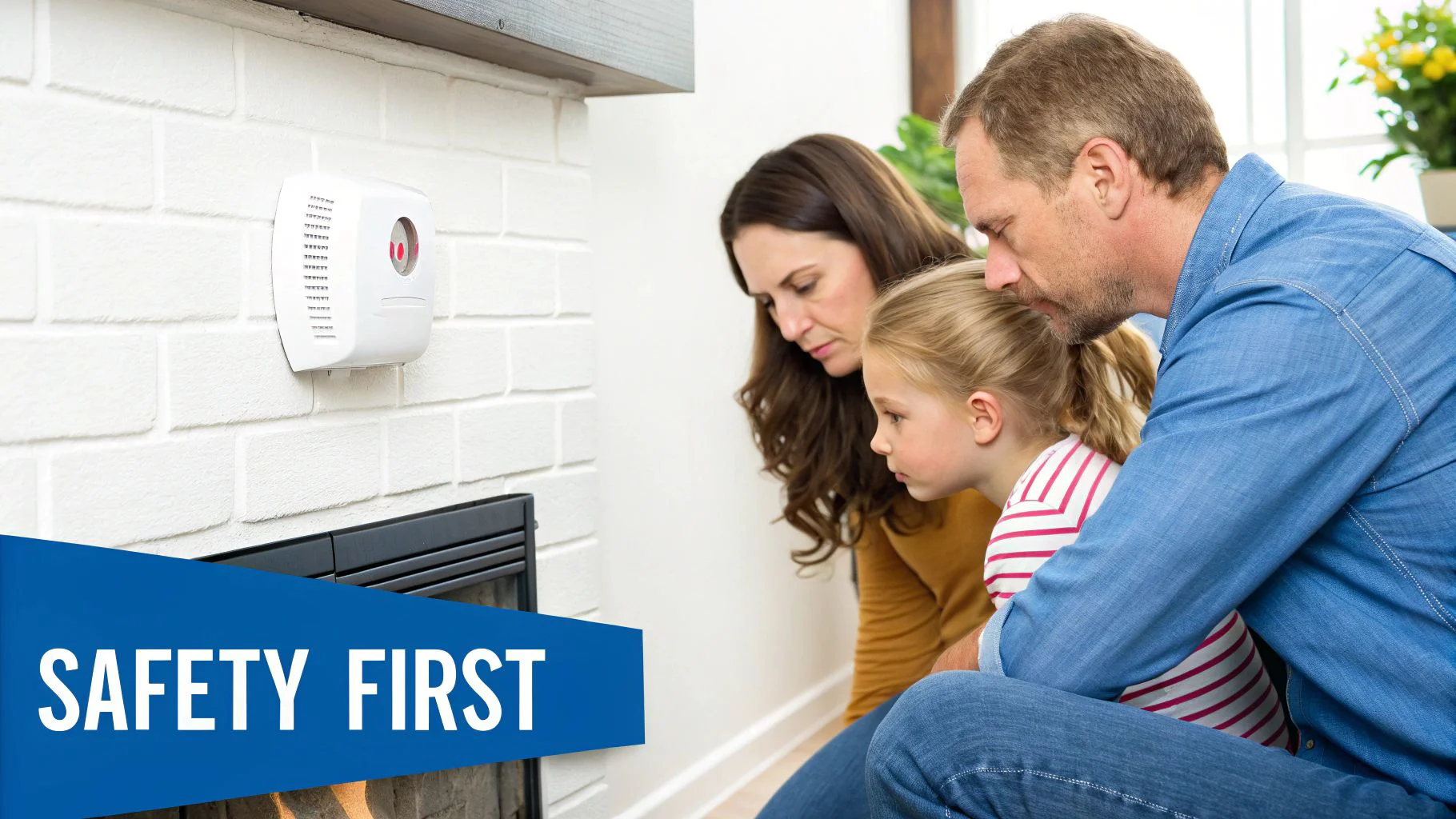
While many furnace sounds are harmless, certain popping noises are more than just an annoyance—they can be whispers of a much bigger, more dangerous problem. It's critical to understand what's at stake, because ignoring the wrong kind of sound can put your family’s health and safety on the line.
The two biggest dangers hiding behind a malfunctioning furnace are carbon monoxide leaks and fire hazards. Issues like a cracked heat exchanger or a severe delayed ignition aren't just simple mechanical failures; they're urgent warnings. That popping noise you hear might just be the only heads-up you get.
This is especially true here in Minnesota, where we seal our homes up tight to brace for the winter. That's great for keeping warm and saving on energy, but it also means dangerous gases can build up fast if there’s a leak.
The Invisible Threat of Carbon Monoxide
One of the most serious risks from a faulty furnace is a carbon monoxide (CO) leak. CO is a colorless, odorless gas that’s a natural byproduct of burning fuel. When your furnace is running correctly, these fumes are safely channeled outside through the flue. No problem.
But a cracked heat exchanger changes everything. Think of the heat exchanger as the firewall separating the air you breathe from the toxic exhaust your furnace produces. If that wall cracks—often due to age or overheating, which can cause popping or banging noises—it creates a direct path for CO to mix into your home’s air supply.
Even small amounts of CO can cause serious health problems, from headaches and dizziness to severe, life-threatening conditions. This is exactly why having working carbon monoxide detectors on every level of your home, especially near bedrooms, is absolutely non-negotiable.
You can get a deeper dive into how this dangerous gas can escape your furnace in our detailed article, which explains if a furnace can leak carbon monoxide.
Fire Hazards from Furnace Malfunctions
The other major safety concern is the risk of fire. While it's less common, certain malfunctions that cause popping noises can create the perfect storm for a fire to start.
A severe delayed ignition, for example, is basically a small explosion inside your furnace every time it kicks on. That repeated force can damage internal parts, mess with the electrical wiring, and potentially ignite anything combustible nearby.
Similarly, dirty burners or faulty wiring can cause the system to overheat and lead to electrical shorts. Realizing that a loud bang coming from the furnace isn't normal is the first step toward preventing a disaster. If you ever smell gas or something like burning plastic along with a popping noise, shut your furnace off immediately at the main switch and call for emergency service.
What You Can Check Before Calling a Professional
When you hear that first pop from your furnace, the natural reaction is to reach for the phone and call for backup. But before you do, there are a few simple and perfectly safe checks you can run through yourself. You don’t need any special tools or technical know-how, and these steps can often solve the problem right then and there—or at least give you a better idea of what’s happening.
Start with the most common and easiest-to-fix culprit: the air filter. A dirty, clogged filter is one of the top reasons for restricted airflow. This forces your furnace to work way too hard, causing it to overheat and making your ductwork expand and contract with a loud pop. Think of it like trying to breathe through a thick blanket—it’s a struggle.
Just find the filter slot on your furnace, slide out the old one, and pop in a new one of the right size. It’s amazing how many furnace issues this one simple step can solve. Plus, you should be doing this every 1-3 months anyway to keep things running smoothly.
Inspect Vents and Your Thermostat
Next up, take a quick walk around your house. Do a quick visual check of all your air vents, including both the supply registers (where the warm air comes out) and the return vents (where air gets sucked back in). Make sure none of them are blocked by furniture, rugs, curtains, or anything else. Good airflow is everything for a quiet, efficient furnace.
While you're at it, give your thermostat a look. Is it set to "heat"? Is the temperature set higher than the current room temperature? Sometimes a simple setting mistake or even dead batteries in a digital model can make the system cycle improperly, leading to some strange noises.
Here’s a quick checklist to run through:
- Check the Air Filter: Is it clogged with dust and debris? A fresh filter is the #1 fix for airflow problems.
- Inspect All Vents: Are they open and clear? Move any couches, boxes, or rugs that are blocking them.
- Verify Thermostat Settings: Confirm it's switched to "heat." If it's a digital model, make sure the batteries are good.
Safety First: It is absolutely critical that you never try to inspect or mess with the internal parts of your furnace yourself. This means staying away from the wiring, gas lines, burners, and pilot light. These systems are complex and can be dangerous if you don't know what you're doing.
By running through these simple checks, you can take care of the basic fixes and rule out the easy stuff. Before calling in a pro, looking over a comprehensive HVAC maintenance checklist can also help you spot other minor issues or at least describe the problem more clearly to a technician.
If the popping noise is still happening after you’ve done all this, then you know it's something more serious. That's your cue to call the experts at Neighborhood for a safe and professional diagnosis.
When to Call Your Local HVAC Experts
It's one thing to handle a simple filter change, but some furnace issues are definitely not DIY projects. Knowing when to step back and call in a pro is crucial for protecting your system from serious damage and, more importantly, keeping your family safe. If you spot any of these warning signs, don’t hesitate to make the call.
A loud bang or boom right when the furnace kicks on is a major red flag. This isn't your ductwork settling; it’s likely delayed ignition, a potentially dangerous problem that needs a licensed technician's eyes on it immediately. Your best move is to shut the furnace down completely and pick up the phone.
Another urgent signal is any popping sound that comes with a distinct smell of natural gas or a burning odor. Smells like these point to either a gas leak or an electrical issue—both of which are serious fire and safety hazards.
Once you've done the basic checks, this simple decision tree can help you figure out if it's time to bring in an expert.
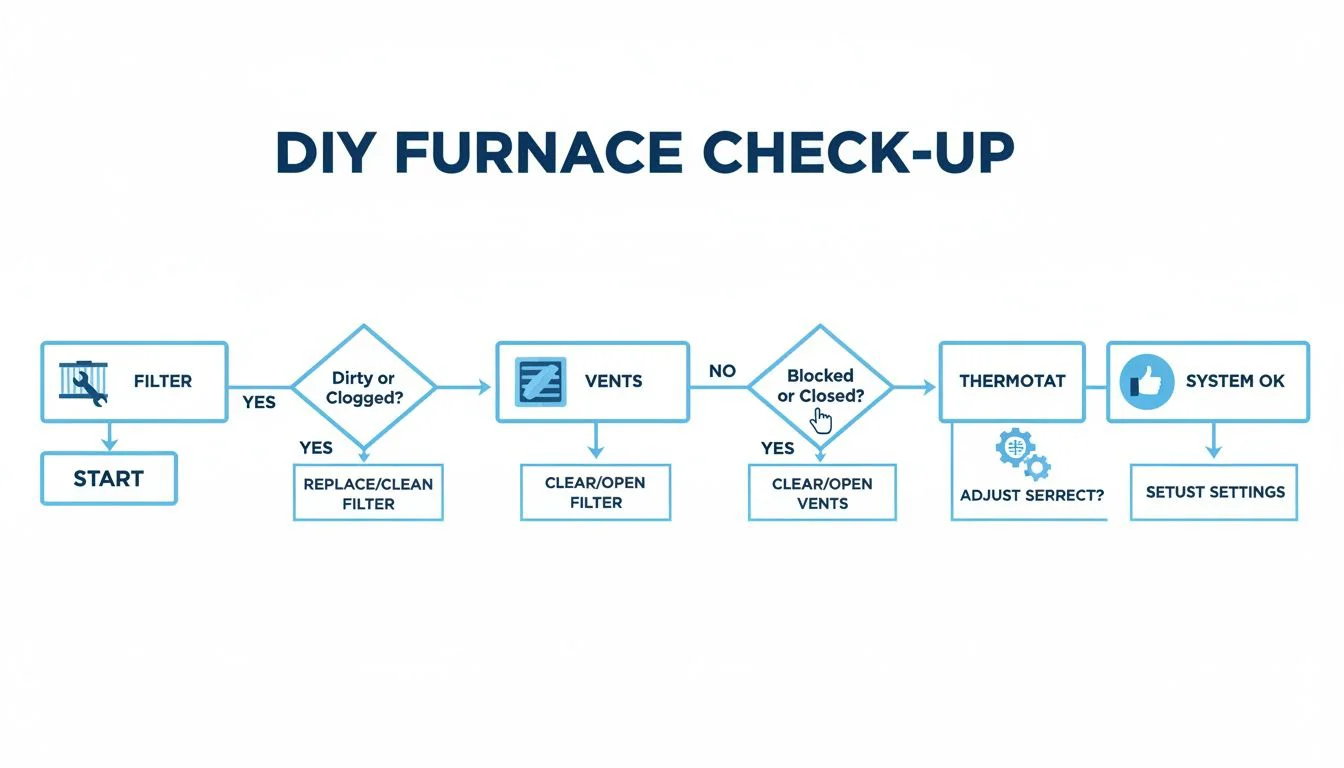
As the flowchart shows, if the simple fixes don't quiet things down, the next logical step is to have a professional take a look.
When Professional Diagnosis Is Best
Even if the sound doesn't seem like an emergency, a professional diagnosis is still the smartest move in a few situations.
- Persistent Popping: You’ve changed the filter and made sure the vents are clear, but the noise just won't quit. This almost always points to an internal problem that a DIY fix won't solve.
- Inconsistent Heating: The popping sound is happening alongside uneven heating, or you notice the system is kicking on and off more often than usual.
- Increased Noise Level: If the popping has suddenly gotten much louder or more frequent, that’s a clear sign something has changed for the worse inside the unit and needs to be investigated.
When you call Neighborhood Plumbing, HVAC, and Electrical, our certified technicians run a full diagnostic to find the exact reason your furnace makes a popping noise. We’ll walk you through the repair options and give you clear, upfront pricing so you can make an informed decision for your Minnesota home.
Frequently Asked Questions About Furnace Noises
Even after you have a good idea of what’s causing that popping noise, it’s natural to have a few more questions. Here are some of the most common things Minnesota homeowners ask us about strange furnace sounds, repair costs, and when it might be time to say goodbye to an old unit.
How Much Does It Cost to Fix a Popping Furnace?
The cost really depends on what's causing the problem. A simple fix, like cleaning or replacing a dirty flame sensor during a routine service call, might only run you $150 to $300.
However, if we’re dealing with a more serious issue like a faulty gas valve or a cracked heat exchanger, the repair costs could jump to anywhere from $400 to over $1,500. Any good technician will give you clear, upfront pricing after they’ve had a chance to diagnose the furnace properly.
Can Regular Maintenance Prevent Popping Noises?
Absolutely. Annual maintenance is the single best thing you can do to prevent the issues that cause popping in the first place.
During a professional tune-up, a technician will clean the burners, inspect the heat exchanger for stress, and make sure your ductwork has proper airflow. If the popping points to a bigger buildup of dust and debris, you might want to look into professional furnace and duct cleaning services.
This kind of proactive care catches the small problems before they become loud, dangerous, and expensive ones. It's what keeps your system running reliably all winter long.
Is Popping a Sign I Need a New Furnace?
Not necessarily. Popping is often caused by a specific part that can be repaired or replaced. Don't jump to conclusions just yet.
However, if your furnace is over 15-20 years old, you're calling for repairs more and more often, and this popping noise is just the latest symptom on a growing list, it might be more cost-effective to consider a replacement.
If you're tired of that persistent popping noise or just want to schedule a preventative tune-up, you can trust the certified experts at Neighborhood Plumbing, HVAC, and Electrical. Contact us today, and we'll send a technician out to give you a thorough diagnosis and reliable service.