If you find yourself asking, "Why does my furnace filter get dirty so fast?" you're definitely not alone. The simple answer is that your HVAC system is working overtime to capture a massive amount of airborne particles, usually from culprits like pets, leaky ductwork, high system usage, or just plain old household dust.
Think of your filter as the lungs of your home. The more air it breathes in, the dirtier it's going to get.
Your Quick Guide to a Constantly Dirty Furnace Filter
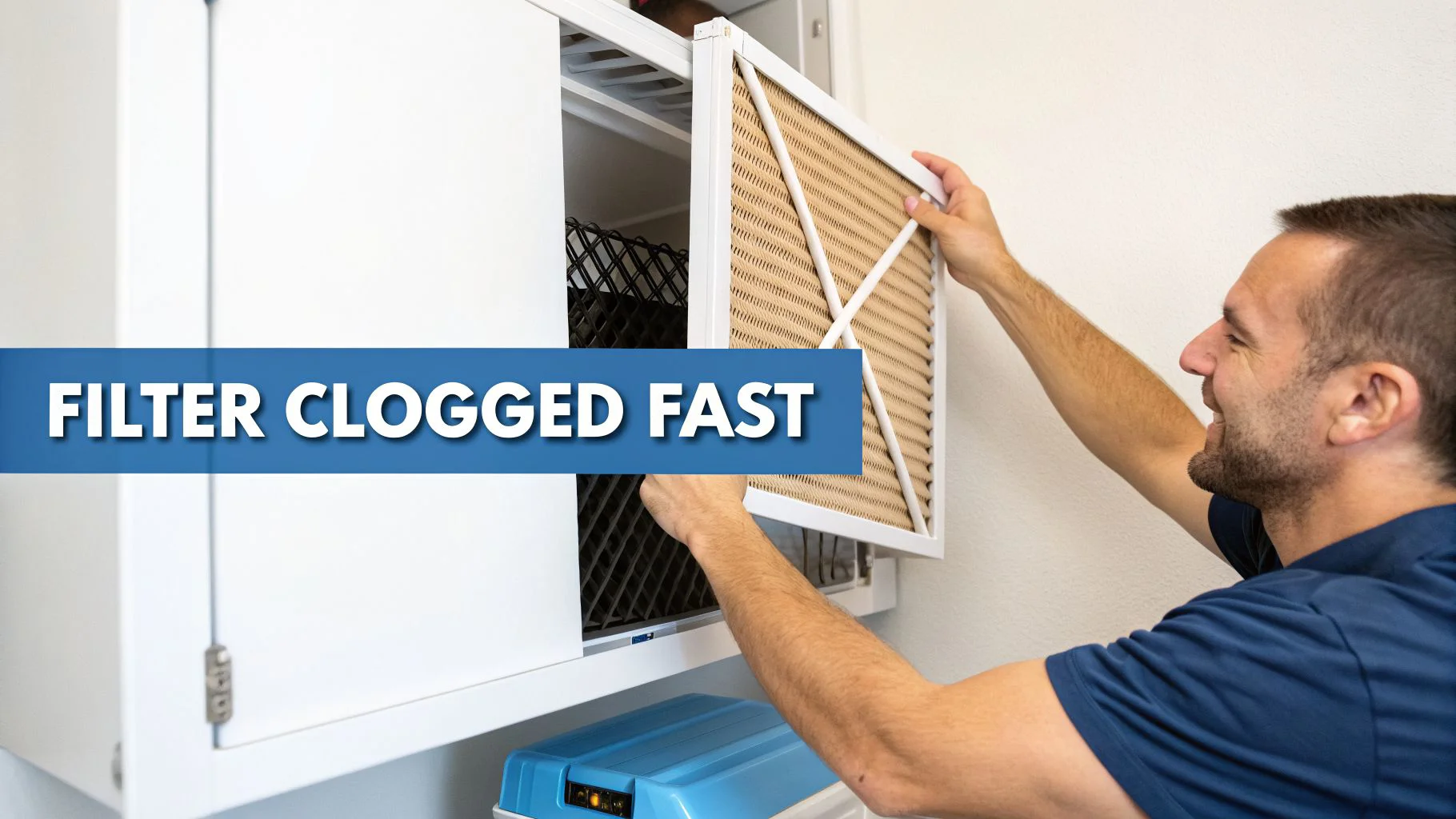
It's a frustrating cycle for so many Central Minnesota homeowners: you pop in a fresh, clean furnace filter, and just a few weeks later, it's already caked in a layer of gray gunk. This isn't just an annoyance—a clogged filter chokes your system's airflow, tanks your furnace's efficiency, and can even drive up your energy bills. Figuring out the root cause is the first step to breaking that cycle.
This guide is your roadmap. We’ll walk through the most common culprits, from the particle-producers hiding inside your home to the unique challenges our intense Minnesota seasons throw at our HVAC systems.
Common Causes and Quick Fixes
More often than not, the reason your filter is clogging up so fast is a combination of things. For example, a home with a couple of dogs will naturally have a lot more dander and fur floating around. Combine that with a furnace fan that’s set to "ON" instead of "AUTO," and you've got a filter that’s working 24/7, capturing particles nonstop.
Key Insight: A typical home loses a staggering 20-30% of its conditioned air through duct leaks. Leaky return ducts are the real troublemakers here, since they can suck dusty, unfiltered air straight from basements, attics, and crawlspaces right into your HVAC system, overwhelming your filter in no time.
To help you get to the bottom of this quickly, I've put together a table summarizing the top five reasons your filter gets dirty so fast. It also gives you an immediate action you can take for each one. We’ll dive deeper into these topics as we go.
Top 5 Reasons Your Furnace Filter Clogs Quickly
| Common Cause | Impact on Filter Life | Quick Solution |
|---|---|---|
| Pets & Household Activity | Can cut filter life by 50% or more due to constant dander and dust. | Vacuum weekly with a HEPA-filter vacuum and groom pets regularly to reduce shedding. |
| Leaky Ductwork | Clogs filters 2-3 times faster by pulling in dirty, unfiltered air. | Inspect visible duct joints for gaps and seal them with mastic or foil tape. |
| High System Usage | Constant fan operation can reduce a 3-month filter's life to 4-6 weeks. | Set your thermostat fan to "AUTO" instead of "ON" to run only during heating cycles. |
| Construction/Remodeling | Fine dust from projects can clog a new filter in a matter of days. | Cover return air vents in the work area and change the filter immediately after the project ends. |
| Incorrect Filter Type | A high-MERV filter in the wrong system can clog quickly and restrict airflow. | Choose a MERV 8-11 filter for a good balance of filtration and airflow in most homes. |
Each of these issues can make a huge difference in how often you're swapping out filters. By tackling the most likely offenders first, you can get your system back to running efficiently and keep your air cleaner, longer.
The Hidden Culprits Inside Your Home
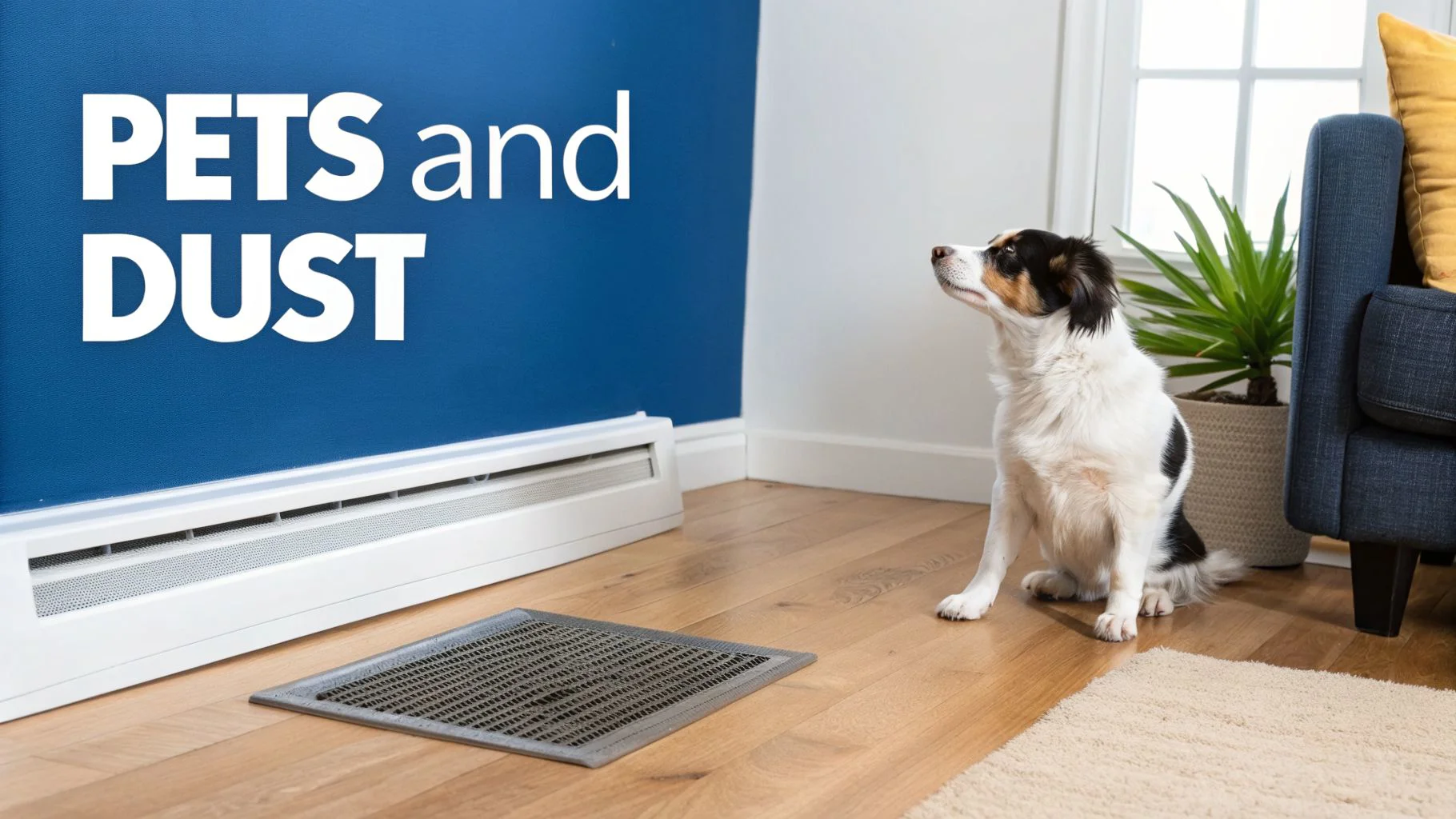
Sometimes, the real reason your furnace filter gets so dirty has nothing to do with the furnace itself. The answer is usually right there in your everyday life.
Think of your filter like the kitchen sponge for your home’s air. An empty house is like a neat kitchen—it stays clean longer. But a home bustling with family, pets, and activity? That’s like a kitchen after a big holiday meal. It needs constant cleanup.
Everyday activities are the biggest source of airborne particles. Cooking sends grease and food particles into the air, smoking introduces fine ash, and just walking around stirs up dust that’s settled on the floor. All of it gets pulled into your return air vents and ends up stuck to your furnace filter.
Your Furry Friends Are Particle Factories
We love our pets, but they are a major reason filters get dirty fast, especially here in Central Minnesota where we spend so much time indoors during the winter. The biggest issue is the constant shedding of fur and dander, which can clog a filter up to 30% faster than in a pet-free home.
This is why we tell homeowners with pets to check their filters every month instead of relying on the standard 90-day schedule. It makes a huge difference.
Real-World Impact: In a home with two large dogs, a standard pleated filter that’s supposed to last three months can be completely choked out in just 30 to 45 days. The fine dander and coarse fur create a dense mat that blocks airflow, forcing your furnace to work way harder than it should.
This overload doesn't just stress your furnace; it affects your family's health. Pet dander is a common allergen, and once a filter is clogged, it can't do its job. That dander just keeps circulating, which is a big problem for anyone with asthma or respiratory sensitivities.
Dust, Dander, and Daily Life
Beyond pets, the number of people in your home and your cleaning habits play a huge role. A busy family is constantly kicking up dust and creating new particles.
- Human Activity: We all shed skin cells and hair constantly, which adds to the dust load in your home.
- Textiles and Fabrics: All that cozy stuff—clothing, blankets, rugs, and furniture—releases tiny fibers into the air every time you move.
- Carpets as Reservoirs: Carpets are basically giant sponges for dust and allergens. They trap dust mites, pet dander, and pollen. Learning about reducing allergens from carpets can take a serious load off your furnace filter.
Regular cleaning, especially vacuuming with a HEPA-filter vacuum, helps grab these particles before your HVAC system has to deal with them. By understanding where all this gunk comes from, you can take a few simple steps to clean up your air.
Want to learn more? Check out our guide to ensure your health with better St. Cloud indoor air quality.
How Your HVAC System Affects Filter Lifespan
If you’ve dealt with all the usual household dust suspects and are still asking, "why does my furnace filter get dirty so fast?" it might be time to look at the machine itself. Sometimes, the problem isn't just the particles floating around your home, but the very system responsible for moving all that air.
Think of your HVAC system like your home's respiratory system. The furnace is the lungs, the ducts are the airways, and the filter is supposed to keep contaminants out. If the airways are leaky or the lungs are working too hard, the system gets overwhelmed.
Leaky Ducts: The Hidden Dust Tunnels
One of the most common—and sneakiest—culprits is leaky ductwork. According to ENERGY STAR, a typical home can lose 20% to 30% of its conditioned air through gaps and poor connections in the duct system. While leaky supply ducts (the ones blowing air out) are bad for your energy bill, leaky return ducts are a total nightmare for your filter.
Return ducts are the ones that suck air back toward the furnace to be heated or cooled again. They're under negative pressure. When these ducts have leaks and run through unfinished spaces like basements, crawlspaces, or attics, they don't just pull air from your living room. They start vacuuming up dirty, unfiltered air from these dusty spots.
System-Level Insight: A small, unnoticed gap in a return duct in your basement can act like a vacuum, constantly feeding your furnace a diet of dust, insulation fibers, and whatever else is floating around down there. This creates a never-ending cycle of contamination that clogs your filter two to three times faster than normal.
This is a huge reason a furnace filter gets dirty so fast, even in a house that seems spotless. To get a better handle on this, check out our guide on the many benefits of St. Cloud duct cleaning.
Common System Settings and Sizing Issues
Beyond leaky ducts, a few other HVAC factors can dramatically shorten your filter's life. These issues often have simple fixes but can cause major headaches if you ignore them.
- Constant Fan Operation: Setting your thermostat's fan to "ON" instead of "AUTO" forces air through the filter 24/7. This alone can turn a 90-day filter into a 30-day filter simply by tripling its workload.
- Incorrectly Sized Filter: A filter that doesn't fit snugly in its slot is almost useless. It allows air—and all the debris in it—to sneak right around the edges. This not only clogs the filter unevenly but lets dirt build up on sensitive internal parts like the blower motor and evaporator coils.
- Oversized Furnace: A furnace that's too powerful for your home will "short-cycle," turning on and off in frequent, powerful bursts. This turbulent airflow stirs up more dust and yanks it into the system far more aggressively than a properly sized unit would.
These mechanical issues directly impact how hard your filter has to work. And it's not just about the filter; other parts of your HVAC system can contribute to particle buildup. You can explore solutions for dusty air vents to see how it all connects. Recognizing these system-level clues helps you realize that your dirty filter might just be a symptom of a larger, fixable problem.
Why Minnesota Seasons Clog Your Filter Faster
If you live in Central Minnesota, you know our HVAC systems are the unsung heroes of our homes. They battle everything from sub-zero deep freezes to swampy summer heatwaves. This constant, heavy-duty work is a huge reason your furnace filter gets dirty so fast, because each season throws its own unique junk into the air.
Think of your filter as a bouncer at a very busy club. In a milder state, that bouncer might check a few IDs every hour. Here in Minnesota, there's a line around the block for months on end, and that bouncer is working overtime trying to keep the trouble out. It’s no wonder it gets overwhelmed quickly.
Winter: The Furnace Marathon
Our long, brutal winters are the number one culprit. When the temperatures tank, your furnace isn’t just running—it’s running a marathon. For weeks, sometimes months, it cycles almost nonstop just to keep your home from feeling like an icebox. This means it's pulling way more air through the system than it does during the mild days of fall or spring.
More runtime means more air gets filtered, which means more dust, pet dander, and random household fluff gets trapped. A filter that might last a full 90 days in a gentler climate can get completely choked out in just 30 days during a Minnesota January. It’s not that your house is suddenly dirtier; it's that your system is working three times as hard to do its job.
In the heart of Central Minnesota, from Foley to Forest Lake, your furnace filter dirties fast because of intense seasonal usage during harsh winters, where systems run non-stop and clog filters twice as quickly as in milder climates. Expert sources recommend changing filters every 30 days in peak heating seasons versus 60-90 days in shoulder months, as furnaces capture more dust per hour when operating longer. Discover more insights about HVAC filter replacement schedules on Indoortemp.com.
This constant operation is exactly why you'll notice your filter looking grim right when the snow starts to fly.
Summer and Shoulder Season Invaders
Once winter finally loosens its grip, the airborne assault just changes tactics. Summer brings a whole new lineup of filter-clogging particles to the party.
- Pollen and Allergens: Spring and early summer unleash a massive cloud of pollen from trees, grasses, and weeds. Those tiny particles float right into your home through open doors and windows, and your AC filter is the last line of defense keeping them out of your lungs.
- Humidity and Mold Spores: Our sticky, humid summers are the perfect breeding ground for mold and mildew. Your air conditioner is constantly working to pull that moisture out of the air, but in the process, it can circulate microscopic mold spores that your filter has to catch.
- Agricultural and Construction Dust: Come fall, harvesting season can kick up a ton of field dust that travels for miles. At the same time, summer is prime time for construction and remodeling projects, which release fine dust and debris that can absolutely wreck a standard filter in no time.
Every season in Minnesota brings a new wave of contaminants. Once you get the hang of this cycle, you can start changing your filter more proactively, keeping your air cleaner and your HVAC system running smoothly all year long.
Choosing The Right Filter And Replacement Schedule
Walking down the filter aisle at the hardware store can feel a little overwhelming. With all the numbers, ratings, and different materials, how do you pick the right one? The key is understanding the MERV rating, which stands for Minimum Efficiency Reporting Value.
Think of it like the thread count on bedsheets. A basic, low-MERV filter is like a low-thread-count sheet—it’s breathable but lets a lot of fine dust and particles slip right through. On the other hand, a high-MERV filter is like a high-thread-count sheet; it’s much denser and does an amazing job catching tiny things like pollen, pet dander, and even some bacteria.
But here’s the catch: a higher MERV rating isn't always the best choice. If a filter is too dense for your HVAC system, it can choke off the airflow. This forces your furnace to work way harder than it should, leading to higher energy bills and potential damage. It's all about finding that sweet spot for your home.
Furnace Filter Comparison Guide
For most homes here in Minnesota, a filter with a MERV rating between 8 and 11 hits that perfect balance. It delivers excellent filtration without putting unnecessary strain on your system. The type of filter material you choose also makes a big difference in how long it lasts and how well it performs.
Each type has its own set of pros and cons, along with a different replacement timeline. To make it easier, here’s a quick comparison to help you find the best fit for your home.
| Filter Type | MERV Rating | Best For | Replacement Cadence |
|---|---|---|---|
| Fiberglass | 1-4 | Basic equipment protection in homes with low dust and no allergy concerns. | Every 30 days |
| Pleated | 7-12 | Great balance for most homes, effectively capturing pet dander, pollen, and dust. | Every 60-90 days (or monthly in homes with pets) |
| Electrostatic | 4-10 | Eco-friendly option for those who prefer a washable, reusable filter. | Wash every 30 days |
Ultimately, pleated filters with a MERV 8-11 rating are what I recommend for the vast majority of homeowners. They offer the best bang for your buck, trapping common household irritants without restricting your system's airflow.
Creating A Personalized Replacement Schedule
Your home is unique, so your filter replacement schedule should be, too. That "change every 90 days" guideline printed on the filter packaging? It's just a starting point. A schedule that actually matches your lifestyle is what you need.
Here’s how to tailor it:
- Homes with Pets or Smokers: Check your filter monthly. No exceptions. Pet dander and smoke particles are notorious for clogging filters in a hurry.
- Homes with Allergies/Asthma: Plan on changing it every 45-60 days. This will help keep your indoor air quality high and reduce the airborne irritants that trigger symptoms.
- "Average" Homes (No pets, no allergies): You can stick closer to the guideline. Inspect it every 60 days and replace it at least every 90 days.
The seasons in Central Minnesota also play a huge role. Your HVAC system works a lot harder during the bitter cold of winter and the humid heat of summer, which means your filter is trapping more debris.
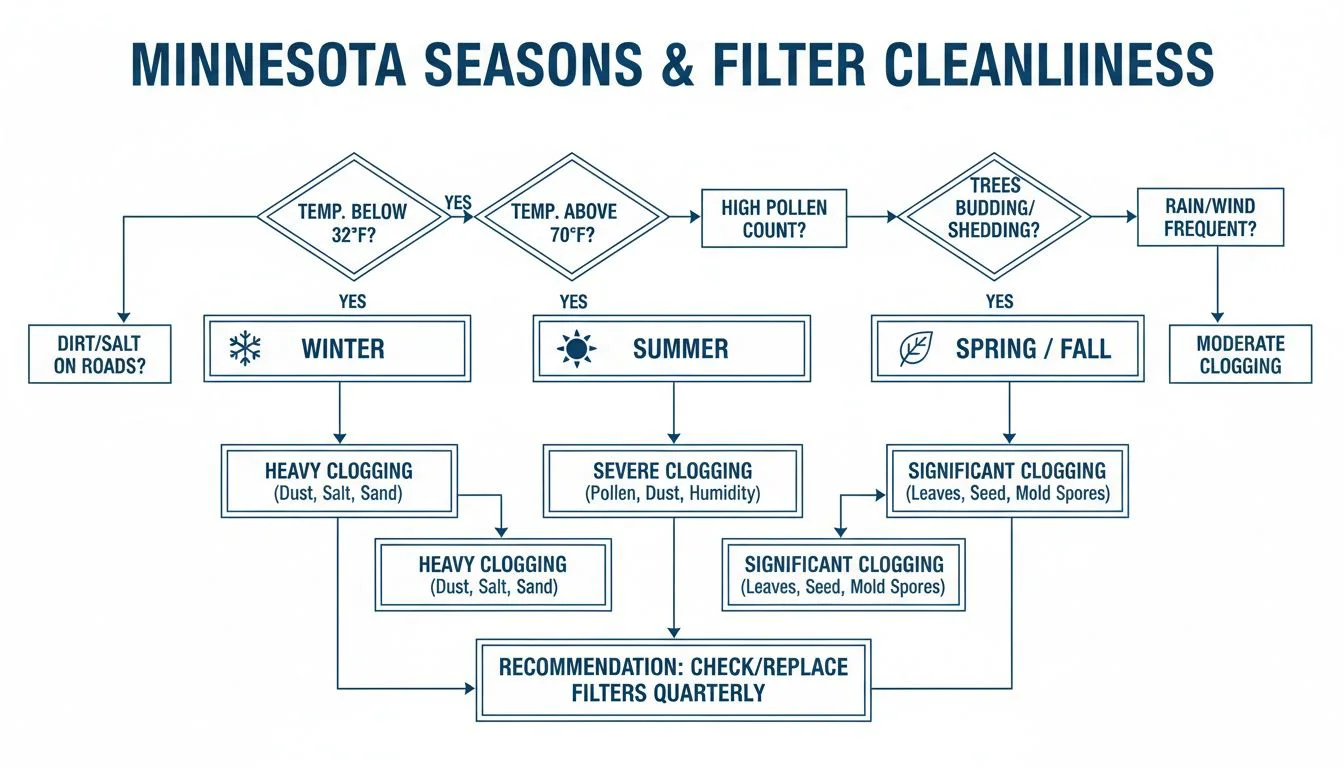
This chart gives you a good visual for how your filter checks should align with the seasons. You’ll want to inspect it more often during those peak months than in the milder spring and fall. By paying attention to seasonal demands and your home’s specific needs, you can build a smarter schedule that keeps your furnace happy and your air clean. For a deeper dive, check out our guide on how often to change a 16x25x1 furnace filter.
When a Dirty Filter Signals a Deeper Problem
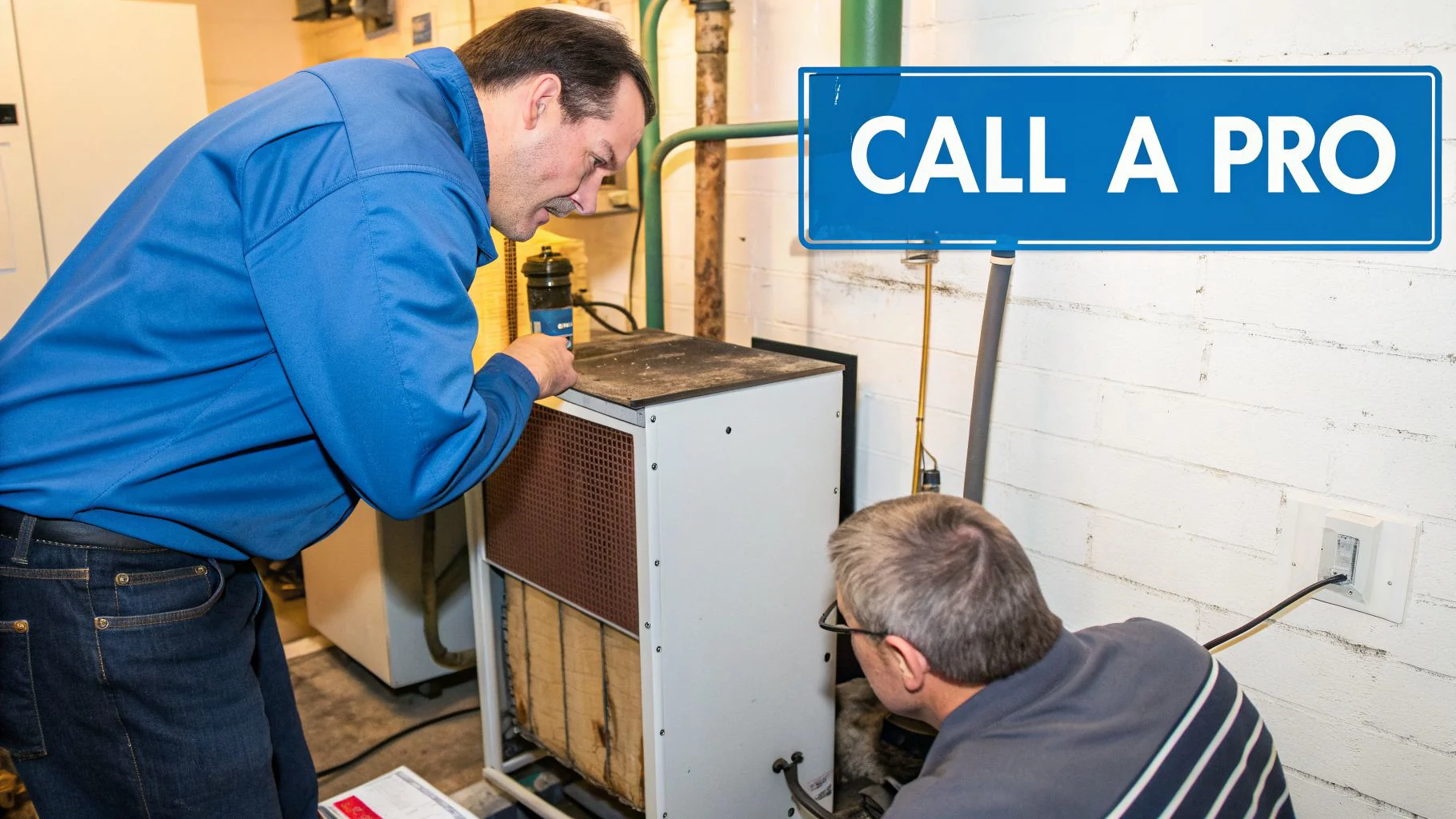
While swapping out a filter is an easy DIY fix, there are times when a constantly dirty filter is actually a distress signal from your HVAC system. Think of it as the "check engine" light for your furnace. Ignoring it can turn a small, fixable issue into a catastrophic—and expensive—failure down the road.
If you've tried everything—more frequent cleaning, using the right filter, adjusting the fan—and your filters still look like they’ve been through a dust storm after just a few weeks, it's time to look for other symptoms. These are the red flags that mean you should stop troubleshooting and call a licensed HVAC technician.
Clear Signs It’s Time to Call a Professional
Pay close attention to how your system is behaving, especially right after you've put in a fresh, clean filter. Your home might be telling you it needs expert help.
- Unusual Noises: Is your furnace suddenly grinding, squealing, or making loud banging sounds? This can point to a strained blower motor or other failing mechanical parts that are working way too hard.
- Weak Airflow: If air is barely trickling out of your vents even with a brand-new filter, you could have a serious blockage deep in your ducts or a problem with the fan itself.
- Sudden Energy Bill Spikes: A furnace that has to fight against a hidden obstruction or a failing component is going to burn through a lot more energy just to keep up.
These symptoms often point to a deeper issue that no amount of filter-changing can solve.
Expert Warning: A severely restricted system forces the blower motor to work under extreme strain. Continuing to run it in this condition can lead to overheating and burnout, a repair that can cost hundreds or even thousands of dollars to fix.
A professional tune-up is the best way to get to the bottom of these problems. A good technician can inspect your entire system, from the ductwork to the internal components, to find the true culprit behind your dirty filters. This not only gets your efficiency back on track but also ensures your system is operating safely for years to come.
Furnace Filter FAQs
Even after you get the hang of furnace maintenance, a few questions always seem to pop up. Let's tackle some of the most common ones I hear from homeowners.
Is It Normal For a "90-Day" Filter To Get Dirty In Just One Month?
This is probably the number one question people ask, and the answer is yes, absolutely. That 90-day rating you see on the package is really just an estimate based on perfect, lab-like conditions.
But your home isn't a lab. Here in Minnesota, our furnaces run constantly in the winter. Add in a couple of pets, maybe some hardwood floors that keep dust swirling, and that filter is going to clog up way faster. Think of the 90-day label as a "best-case scenario," not a strict rule.
Why Does My Filter Get So Dirty With Hardwood Floors?
This is a great question because it seems backward—shouldn't less carpet mean less dust? Not quite. Carpet is basically a giant trap, grabbing onto dust, pet dander, and dirt and holding it there until you vacuum.
Hardwood floors do the opposite. They don't hold onto anything. Every little speck of dust and fur just sits on the surface, waiting for a footstep or a draft to kick it right back into the air. From there, your HVAC system’s return vents suck it all up and send it straight to the filter. Your filter suddenly has a much bigger job to do.
Key Takeaway: With hardwood floors, your furnace filter becomes the main dust trap in your home. That's why folks with hardwood often find themselves changing filters monthly instead of quarterly.
Can a High-MERV Filter Damage My Furnace?
It sure can. Using a filter with a MERV rating that’s too high for your furnace is like asking it to breathe through a thick wool sweater—it’s just too restrictive. A super-dense filter makes it hard for air to pass through, forcing your furnace's blower motor to work overtime.
This constant strain can cause the system to overheat, drive up your energy bills, and even lead to the motor failing prematurely. For most homes, a MERV 8-11 filter hits the sweet spot. It offers great filtration without suffocating your furnace. If you're not sure what's right for your system, it's always best to ask a professional.
If you're dealing with a filter that gets dirty too fast or suspect there's a deeper issue with your HVAC system, the licensed technicians at Neighborhood Plumbing, HVAC, and Electrical are here to help. We can diagnose airflow problems, inspect your ductwork, and make sure your system is running safely and efficiently. Schedule your service today by visiting https://4neighborhood.com.