A frozen furnace almost always traces back to one of two things: a blocked condensate line or clogged exterior vents. When that happens, your high-efficiency system can't drain properly, leading to a complete shutdown. This guide will walk you through the symptoms and the immediate, safe steps you can take to prevent serious damage.
Your Immediate Frozen Furnace Action Plan
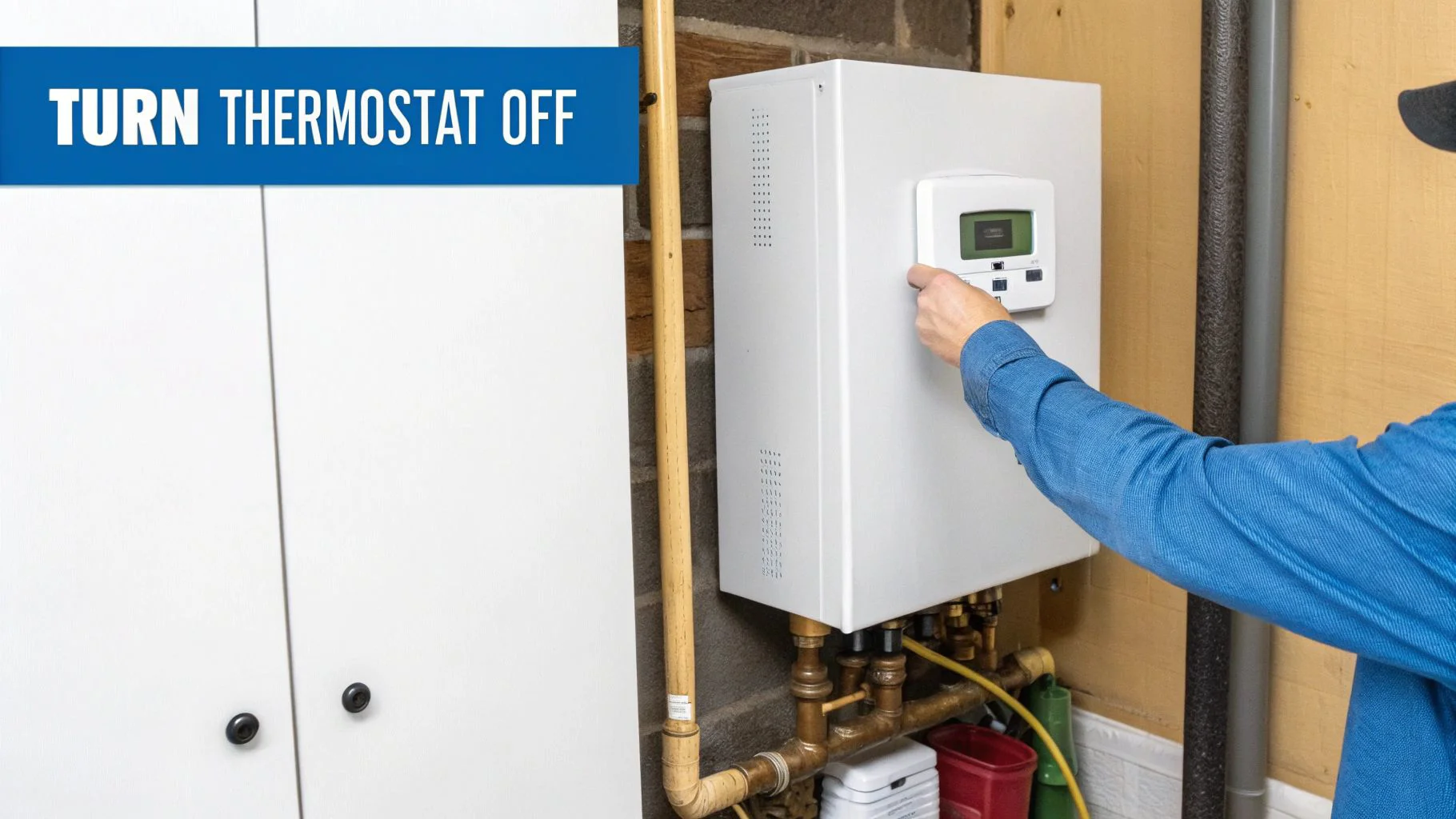
It’s a feeling every Minnesotan dreads—the heat cuts out in the middle of a brutal cold snap. It's more than just an annoyance; it’s a household emergency. A frozen furnace can feel overwhelming, but a calm, methodical approach is your best bet.
Before you do anything else, go straight to your thermostat and turn the system completely off. Setting it to "Off" stops the furnace from trying to fire up again and again, which can fry expensive internal parts like the inducer motor when it's already struggling.
Common Causes We See in Central Minnesota
A furnace doesn't just freeze for no reason. It's a symptom of a specific problem, almost always involving moisture and freezing temperatures.
High-efficiency condensing furnaces—which are standard in most homes from St. Cloud to Blaine—are designed to extract so much heat that the exhaust gases cool down and create condensation. This water has to drain away. When it can't, trouble starts.
Here are the most frequent culprits we find on service calls:
- Blocked Condensate Line: This small PVC pipe is the number one cause. If the drain line freezes solid, water backs up right into the furnace, tripping a safety switch that shuts the whole system down.
- Clogged Exhaust Vents: Heavy snow drifts, ice buildup from freezing rain, or even a curious animal's nest can block the exterior PVC intake or exhaust pipes. This chokes the airflow and causes the system to lock out for safety.
- Improper Drainage Slope: The condensate line needs a steady downward slope to let gravity do its job. If it was installed improperly without enough of an angle, water can easily pool up and freeze.
This 'frozen furnace' nightmare hits thousands of homeowners annually in cold climates. Industry reports show that over 30% of furnace breakdowns in northern states during January and February stem from freezing, leading to emergency calls that can spike repair costs by 40-60%.
When you discover your furnace isn't working and you suspect it's frozen, knowing what to do immediately is crucial. The following checklist summarizes the first-response actions to protect your system from further harm.
Frozen Furnace Immediate Action Checklist
| Symptom | Immediate Action | Why It Matters |
|---|---|---|
| No heat, furnace is silent | Turn the thermostat to the "Off" position. | Prevents the furnace from trying to restart, which could damage motors and other components. |
| Visible ice on exterior vents | Gently clear snow and ice from around the PVC pipes. | Restores proper airflow. Without it, the furnace's safety sensors will keep it shut down. |
| Gurgling sounds from furnace | Inspect the condensate drain line for visible blockages or ice. | Gurgling often means water is backing up. Identifying the blockage location is the first step to thawing. |
| Water pooling on the floor | Shut off power to the furnace at the breaker box and clean up the water. | This is a major safety issue. It indicates a significant leak or overflow that could cause electrical hazards or water damage. |
Following these steps can help you safely manage the situation until you can fully diagnose the problem or get a professional technician on-site.
Symptoms You Might Notice
Before the heat quits entirely, your furnace might give you a few warning signs. A quick visual check or just listening for odd sounds can help you catch a problem before it gets worse.
A gurgling sound coming from the unit, for instance, is a classic sign that water is backing up somewhere it shouldn't be. Another dead giveaway is seeing visible ice on or around the PVC pipes leading out of your house. If you spot frost or a solid chunk of ice near the vent termination, you've probably found your culprit.
If a frozen condensate line ends up bursting, it's critical to know what to do about a water leak to prevent even more serious damage to your home.
Finding The Real Cause Of Your Frozen Furnace
Before you can safely thaw anything, you need to play detective for a few minutes. Pinpointing the exact reason your furnace froze up is the most critical step—it tells you what to do next and, more importantly, how to stop it from happening again next week.
A frozen furnace isn't just a minor headache; it's a huge problem, especially in places like Central Minnesota where sub-zero temps can turn a reliable system into a block of ice overnight. During a cold snap, we see a massive spike in service calls for frozen components—it can account for up to 25% of our calls when the temperature really plunges.
The good news? The clues are usually right in front of you. A quick visual check is often all it takes to find the culprit.
Check Your Exterior Vents First
Your investigation should start outside your house. High-efficiency furnaces have two PVC pipes, usually white, that stick out from the side of your home. One is the intake, which pulls in fresh air for combustion, and the other is the exhaust, which vents cooled gases.
Think of these vents as your system's lungs. If they can't breathe, the furnace will shut itself down as a safety measure.
Minnesota winters are brutal on these vents, and they're incredibly prone to blockages. Keep an eye out for:
- Heavy Snow Drifts: After a big storm, it’s common for snow to completely bury these low-sitting pipes.
- Ice Buildup: Freezing rain or melting snow that drips from the roof can easily form a solid cap of ice right over the vent opening.
- Animal Nests: In the fall, small critters sometimes decide these pipes are the perfect spot for a winter home, creating a stubborn blockage.
A partially clogged vent creates a dangerous domino effect. If the furnace can't get enough air, it might short-cycle or fail to ignite. But if the exhaust is blocked, it can cause the system to overheat and shut down, leading to the internal condensate freezing from the lack of heat.
Gently clear away any snow or ice you see. If you think an animal has built a nest in there, it’s probably best to call a professional to get it removed safely without damaging the pipe.
Trace The Condensate Drain Line
If your exterior vents look clear, your next stop is the condensate drain line. Honestly, this is the most common offender when it comes to a frozen furnace.
This small tube, which can be flexible or rigid PVC, is designed to carry water produced during the heating cycle away from your furnace. It usually drains into a floor drain, a utility sink, or a small box called a condensate pump.
Your mission is to follow this line from where it leaves the furnace all the way to where it ends. Look for any obvious signs of an ice blockage. You might see a section of the pipe that’s bulging, covered in frost, or completely solid with ice.
Real-World Scenario: We got a call from a homeowner in Forest Lake whose heat went out after a night of single-digit temperatures. The exterior vents were totally clear. By tracing the thin condensate line through their chilly basement, they found a low spot where the pipe sagged just a little bit. That small dip was enough for water to pool and freeze into a solid three-inch ice plug, which backed water up into the furnace and tripped the safety switch.
Finding this blockage is half the battle. Once you’ve located the ice, you know exactly where to focus your thawing efforts.
If you can't find any visible ice on the vents or along the parts of the condensate line you can see, the problem might be more complex. The blockage could be hidden inside a wall, or the issue might be with an internal component like a frozen evaporator coil. If that's the case, it's time to stop and call a pro.
How To Safely Thaw Your Furnace Condensate Line
So you've played detective and tracked down the ice blockage in your furnace's condensate line. Good job. Now for the hands-on part. Getting the line thawed out is usually pretty simple, but the key here is to do it safely. Your goal is to gently melt the ice, not damage the PVC pipe and create a much bigger headache for yourself.
First, let's go over what not to do. Never, ever use an open flame like a blowtorch or propane heater on a PVC pipe. That kind of intense, direct heat will crack the plastic in a heartbeat, turning your simple fix into an emergency call. Also, don't try to chip away at the ice with sharp tools; you're just asking to puncture the line. A gentle approach is always the right one.
Gathering Your Simple Thawing Tools
You really don't need a professional-grade toolkit for this. A few things you probably already have lying around the house will do the trick just fine.
- A hairdryer or a heat gun on its lowest setting: This will be your main tool for applying gentle, even heat.
- Warm, damp cloths or towels: These are great for wrapping around the pipe to slowly transfer warmth and melt the ice.
- A bucket or a shallow pan: Absolutely essential for catching the water as the ice melts. You don't want a slippery, hazardous mess on your utility room floor.
- A pitcher of warm water (not boiling): This is perfect for pouring over stubborn blockages on the exterior part of the pipe.
Having this stuff ready to go before you start will make the whole process a lot smoother.
This simple flow is a good reminder of where to check before you even start the thawing process.
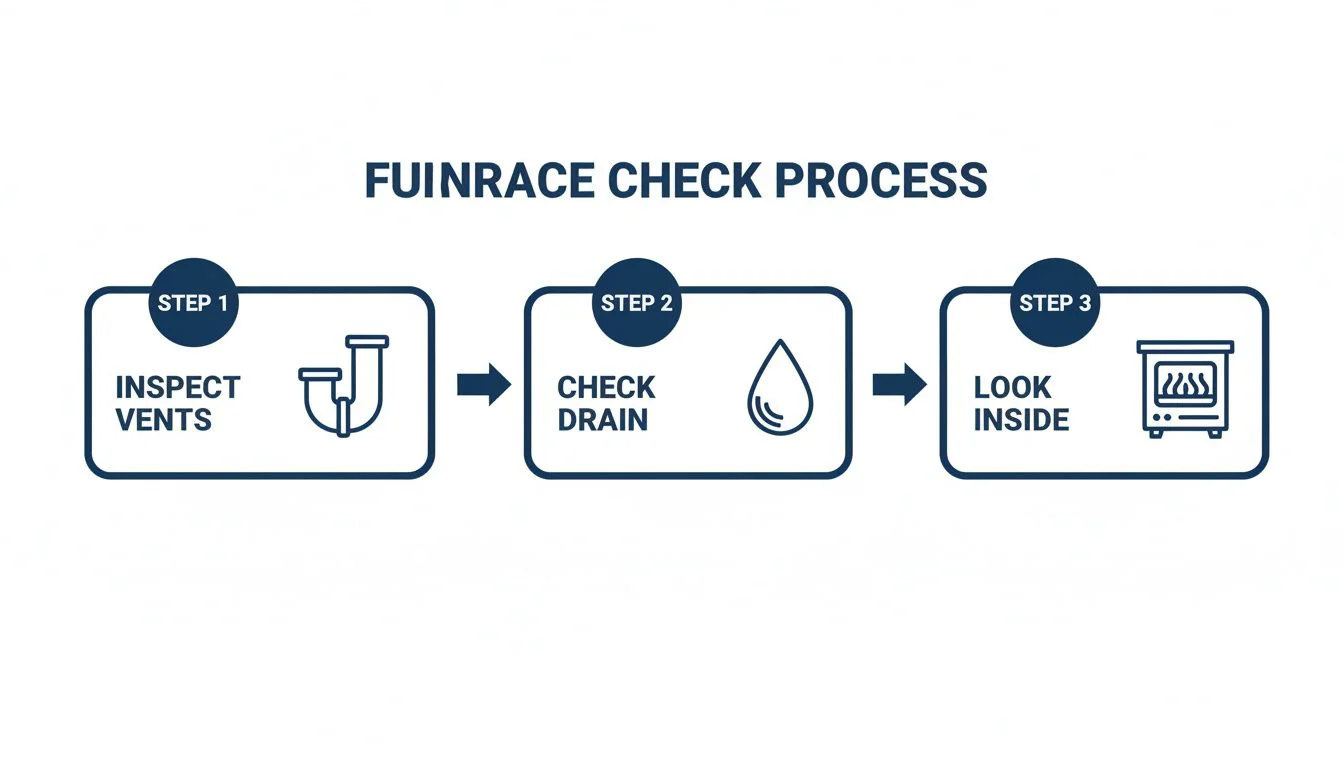
This visual guide emphasizes checking vents and drains first, which helps confirm the blockage's location before applying heat.
The Correct Thawing Technique
This is the most important rule of the whole process: start at the end of the pipe and work your way back toward the furnace. Begin applying heat where the condensate line terminates—whether that’s a floor drain, a utility sink, or where it pokes out of the side of your house.
Why is this so critical? Because it gives the melting ice an escape route. As the ice turns to water, it needs a clear path to drain away. If you start in the middle or near the furnace, you're just melting ice into a trapped pool of water that can easily refreeze, making the clog even worse.
Pro Tip: Place your bucket right under the spot you're working on. As you use the hairdryer, keep it moving back and forth along a section of the pipe. Don't just hold it in one spot, or you risk overheating and warping the PVC.
As you slowly work your way along the pipe, you’ll eventually hear a satisfying gurgle or see a sudden rush of water release into your bucket. That's the sound of success! You've cleared the main blockage. Even after the water starts flowing, it’s smart to run the hairdryer along the entire length of the pipe one last time to melt any leftover ice crystals.
Addressing an Exterior Blockage
What if you've figured out the ice jam is right where the pipe exits your house? This happens all the time in Central Minnesota, especially when blowing snow and frigid winds hit that constant drip of condensation.
For an outdoor clog, pouring warm water is usually the fastest way to get things moving.
- Find the Pipe's Exit: Locate where the PVC pipe pokes out of your house, usually low to the ground near the foundation.
- Pour Gently: Carefully pour warm—not boiling—water over the end of the pipe. Boiling water can cause thermal shock and crack the cold PVC.
- Watch for Flow: Keep pouring until you see water and slushy ice start to run freely out of the pipe. It might take a few pitchers to get it completely clear.
Once it's cleared, make sure the area around the pipe exit is free of snow and ice so it doesn't just freeze up again right away. Clogged drains can present a variety of challenges, and knowing when to call a professional is key, especially if you run into more complex issues.
After you've successfully thawed the line and water is draining properly, you can flip the power back on at the breaker box and turn up your thermostat. Your furnace should kick back on like normal. But this is just the immediate fix—the next important step is figuring out how to stop it from happening again.
Knowing When To Call An HVAC Professional
Knowing your limits is a key part of any successful DIY project, and this is especially true when you’re dealing with something as critical as your furnace. While thawing a simple, visible condensate line is often manageable for a homeowner, there are clear red flags that signal it’s time to put down the hairdryer and call a licensed HVAC technician.
Trying to tackle a complex issue on your own can quickly lead to more expensive damage or, worse, create a serious safety hazard for your family. Calling a professional isn't about giving up; it's the smartest and safest choice for protecting your home and your investment in its comfort system.
Red Flags That Demand A Professional
Sometimes, the signs of a bigger problem are obvious. If you run into any of these scenarios after your initial check, your next move should be to call for help. These situations usually point to issues that go far beyond a simple ice blockage and require specialized diagnostic tools and expertise to fix safely.
- The Frozen Pipe Is Hidden: If you can't see the ice blockage because the condensate line runs through a finished wall or ceiling, don’t start guessing. A professional can trace the line and access it with minimal damage to your home.
- You See Signs of Water Damage: Puddles on the floor are one thing, but if you see water stains on the ceiling below the furnace or damp drywall around the unit, it suggests a bigger leak that has probably been happening for a while.
- The Furnace Still Won't Start: Let’s say you successfully thawed the visible lines and confirmed water is draining properly. Your system should kick back on. If it stays dead or flashes an error code, the real problem could be a tripped safety sensor, a damaged motor, or an electrical issue that needs a pro's touch.
Think of it this way: a landlord in Chisago City might find their tenant's 'frozen furnace' is actually a seized inducer fan caused by ice buildup. This exact scenario is quite common, as 20-25% of multifamily HVAC failures in Central Minnesota are tied to winter freezes. While the average fix is around $450, attempting a DIY repair on a motor could lead to a full system replacement. Learn more about the industrial furnace market on futuremarketinsights.com.
DIY Fix vs. Professional Repair: A Quick Guide
It can be tough to decide whether to grab your tools or your phone. This table should help you quickly figure out if the problem you're seeing is safe for a DIY approach or if it's time to get a professional on the line.
| Symptom or Scenario | Can I DIY This? | When to Call a Pro |
|---|---|---|
| Visible ice on the exterior PVC vent pipe | Yes. This is often a straightforward fix with warm water or a hairdryer. | If the ice returns quickly, suggesting a deeper airflow or drainage problem. |
| Furnace won't start after a visible thaw | No. This points to a possible electrical or sensor issue. | Immediately. Don't try to bypass safety controls or mess with wiring. |
| Water stains on ceilings or walls | No. This signals a long-term leak that requires finding the source. | Immediately. A pro needs to assess the extent of the leak and potential water damage. |
| Frozen pipe is inside a wall or ceiling | No. You could cause significant damage trying to find and access it. | Immediately. Technicians have tools to locate and access hidden lines safely. |
| Furnace is making strange noises (grinding, banging) | No. These sounds often indicate a serious mechanical failure. | Immediately. Shut the system off to prevent further damage and call for service. |
| You smell gas or a burning odor | NO! | IMMEDIATELY. Turn off the gas supply, leave your home, and call your gas company and an HVAC tech from a safe location. |
Ultimately, if you have any doubt, it's always safer and often cheaper in the long run to call in an expert.
The Risks Of A DIY Repair Gone Wrong
Attempting a repair beyond your skill level can have serious consequences. A high-efficiency furnace isn't like a simple appliance; it's a complex piece of equipment with interconnected electrical and mechanical parts.
Messing with the wrong component can lead to some scary and expensive outcomes:
- Cracked Heat Exchanger: This is the big one. Mishandling internal parts or causing the system to overheat can damage the heat exchanger. If it cracks, it can leak dangerous, odorless carbon monoxide into your home.
- Electrical Damage: Your furnace uses high-voltage connections. Improperly resetting the system or messing with wiring without proper training can easily short out the main control board—the furnace's brain—turning a small issue into a repair that costs hundreds.
- Voided Warranties: Many manufacturer warranties become void if an unlicensed person performs repairs. What could have been a covered repair might suddenly become a full, out-of-pocket expense for you.
When you're dealing with a frozen furnace in communities from Mora to Blaine, choosing the right professional is critical. You'll want an experienced team that can respond quickly and diagnose the problem accurately. If you need guidance, our post on how to pick the best HVAC contractor in St. Cloud can help you make an informed decision.
Proactive Steps To Prevent A Frozen Furnace
Alright, you've successfully thawed the ice and your heat is back on—now for the most important part. Preventing this from happening again is all about being proactive, especially when you’re staring down a Central Minnesota winter. A few simple, seasonal checks can be the difference between a warm, worry-free home and a frantic middle-of-the-night emergency.
Think of it as winterizing your furnace. Just like you'd insulate pipes or seal up drafts, your furnace needs a little extra attention to handle sub-zero temperatures reliably. The good news? Most of these steps are simple and only take a few minutes of your time.
Insulate Your Condensate Line
The condensate line is almost always the prime suspect in a frozen furnace situation. This small PVC pipe often runs through unheated spaces like a cold basement corner, crawlspace, or garage, making it incredibly vulnerable to freezing. Insulating this line is your single most effective defense.
You can find foam pipe insulation sleeves at any local hardware store. They're inexpensive and a breeze to install—just cut them to length and wrap them around the entire exposed length of the condensate drain pipe. This simple barrier helps keep the water flowing by protecting it from that frigid ambient air.
To really get ahead of freezing issues, it helps to understand broader strategies. For homeowners looking to protect all their plumbing, learning How to Prevent Pipe Freezing: Essential Tips for Homeowners offers valuable insights that apply throughout your whole house.
Check The Slope And Maintain Clear Vents
Proper drainage is all about gravity. Your condensate line needs a consistent, gentle downward slope from the furnace to its final drain point. If there are any low spots or sags in the line, water will pool there, creating a perfect spot for an ice plug to form.
Take a moment to visually inspect the pipe's entire run. If you notice a dip, you might need to add a pipe hanger or support to correct the angle. The goal is a steady decline with no "valleys" where water can settle.
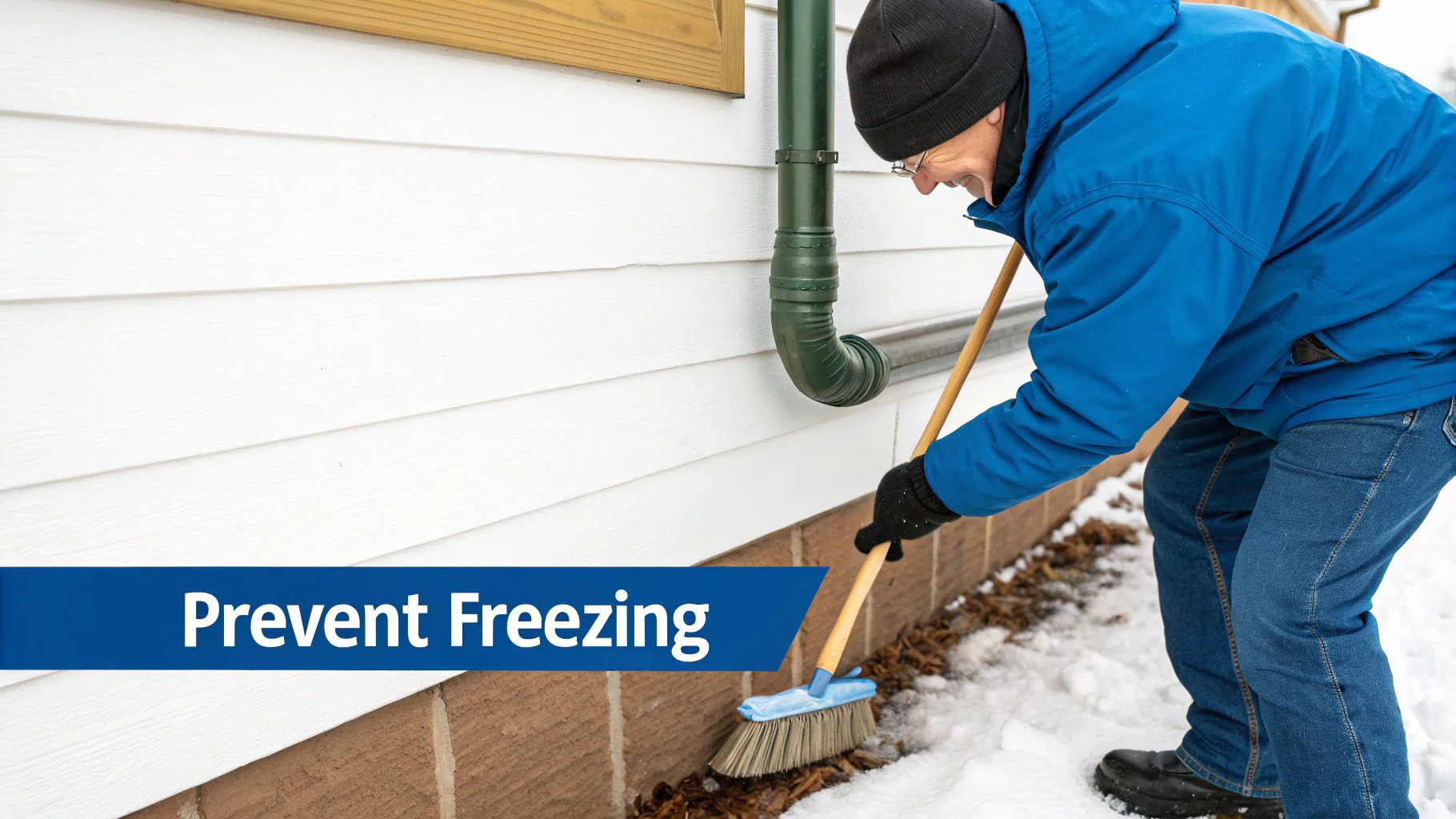
Also, make your exterior vents part of your regular snow-clearing routine. After every significant snowfall, take a walk outside and make sure both the intake and exhaust pipes are completely free of snow and ice. A small snowdrift pushed up against the house by the wind is all it takes to block them.
A Proactive Homeowner's Seasonal Checklist
- Early Fall: Insulate the condensate line before the first freeze hits.
- After Every Snowfall: Clear a wide area around your exterior PVC vents. Don't just clear the opening; give it at least a two-foot radius.
- Monthly Check: Visually inspect the condensate line for proper downward slope and make sure it isn't clogged with debris at the drain point.
Schedule An Annual Professional Tune-Up
While these DIY checks are crucial, nothing replaces a professional's trained eye. An annual heating tune-up is the best investment you can make to prevent a frozen furnace and ensure your system runs efficiently and safely all winter long.
During a tune-up, a licensed technician does much more than a simple filter change. They perform a comprehensive inspection designed to catch potential problems before they escalate into costly breakdowns. For instance, a technician will:
- Inspect and clean the entire condensate system, including the internal trap and the full length of the drain line, removing any sediment or buildup that could cause a clog.
- Check the furnace's internal pressure switches and sensors to ensure they are functioning correctly. A faulty switch could fail to shut the system down properly, leading to more severe freezing issues.
- Confirm proper combustion and airflow by measuring gas pressure and exhaust output, ensuring your vents aren't partially obstructed in a way you can't see from the outside.
Think of it as a wellness check for your home's most vital winter appliance. A technician can spot a poorly sloped drain line or an early sign of a component failing long before it leaves you in the cold. Understanding why you need heating tune-ups now, before the season's worst weather arrives, is key to a reliable system.
By combining these simple DIY maintenance habits with an annual professional inspection, you build multiple layers of protection. This proactive approach makes it highly unlikely you'll ever have to deal with the stress and frustration of a frozen furnace again, so you can stay warm and comfortable no matter what a Minnesota winter throws at you.
Common Questions About Frozen Furnaces
Once you’ve handled the immediate stress of a frozen furnace, your mind probably starts racing with questions. It’s only natural. Understanding the "why" and "what if" helps you feel more in control and get ahead of the problem next time. We hear a lot of the same questions from homeowners across Central Minnesota, so let’s get you some clear answers.
Can A Frozen Furnace Cause Permanent Damage?
Yes, it absolutely can, and that’s why you can’t just ignore it. When the water in your condensate line freezes, it expands. The most obvious risk is a cracked or burst PVC pipe, which is annoying but a relatively simple fix.
The real trouble starts when that backed-up water and ice get inside the furnace itself. When that happens, some of the most expensive and critical parts are at risk.
- The Inducer Motor: This is a small fan that helps push exhaust gases out. It’s often the first component to get wrecked by backed-up water.
- The Control Board: Think of this as the furnace’s brain. Water and electronics don't mix, and a shorted-out board means a dead furnace and a costly replacement.
- The Heat Exchanger: In really bad situations, repeated freezing and thawing can stress the metal of the heat exchanger. This can cause cracks, creating a serious safety issue that could lead to carbon monoxide leaks.
How Do I Stop Vents From Getting Blocked By Snow?
This feels like a constant battle during a Minnesota winter, but a few good habits can make a huge difference. You have to treat your furnace vents just like your dryer vent—they need to be clear to work safely.
After every big snow, make a point to get out there and shovel around your intake and exhaust pipes. Don’t just clear the opening. You need to create at least a two-foot radius around them. Otherwise, the next big gust of wind will just blow snow right back over them.
A great long-term fix is to have a vent snorkel or a screened vent cap installed. These simple extensions raise the pipe openings higher off the ground, making them much harder for snow drifts to bury in the first place.
Is It Normal For My Furnace To Produce Water?
If you have a high-efficiency condensing furnace, then yes—producing water is a sign it’s doing its job correctly. These furnaces are designed to wring every last bit of heat from the combustion gases. In the process, those gases cool down so much they turn back into liquid water, or condensation.
This water, which is slightly acidic, gets collected in a trap and drained away through the condensate line. It’s proof your furnace is running efficiently. The problem only starts when that drain line gets blocked and the water has nowhere to go but back into your system.
What Does A Professional Service Call Cost?
The cost for an emergency call for a frozen furnace can vary. A simple job of thawing the line and checking the system will be on the lower end. If a part like the inducer motor got damaged and needs to be replaced, the cost will obviously be higher.
But here’s the thing: prevention is always cheaper than a cure. A scheduled annual tune-up is a small, predictable cost that lets a technician catch potential freezing risks early. They can spot things like an improperly sloped drain line or a clogged trap long before it becomes a no-heat emergency in the middle of a January cold snap. Think of it as a little insurance policy for your home’s comfort and your peace of mind.
Dealing with a furnace problem in the dead of winter isn’t something you should have to figure out on your own. If you're not sure what to do about a frozen furnace or want to schedule a preventative tune-up, the licensed experts at Neighborhood Plumbing, HVAC, and Electrical are ready to help 24/7. Visit us at https://4neighborhood.com to book your service and keep your home warm all season long.